TL;DR
Covered calls are for shares you plan to keep anyway: you sell one call on 100 shares you own to earn a premium while you hold them, give up any gain above the call's strike in exchange, and buy the call back before it expires, as this backtest does, if you don't want the buyer to take your shares.
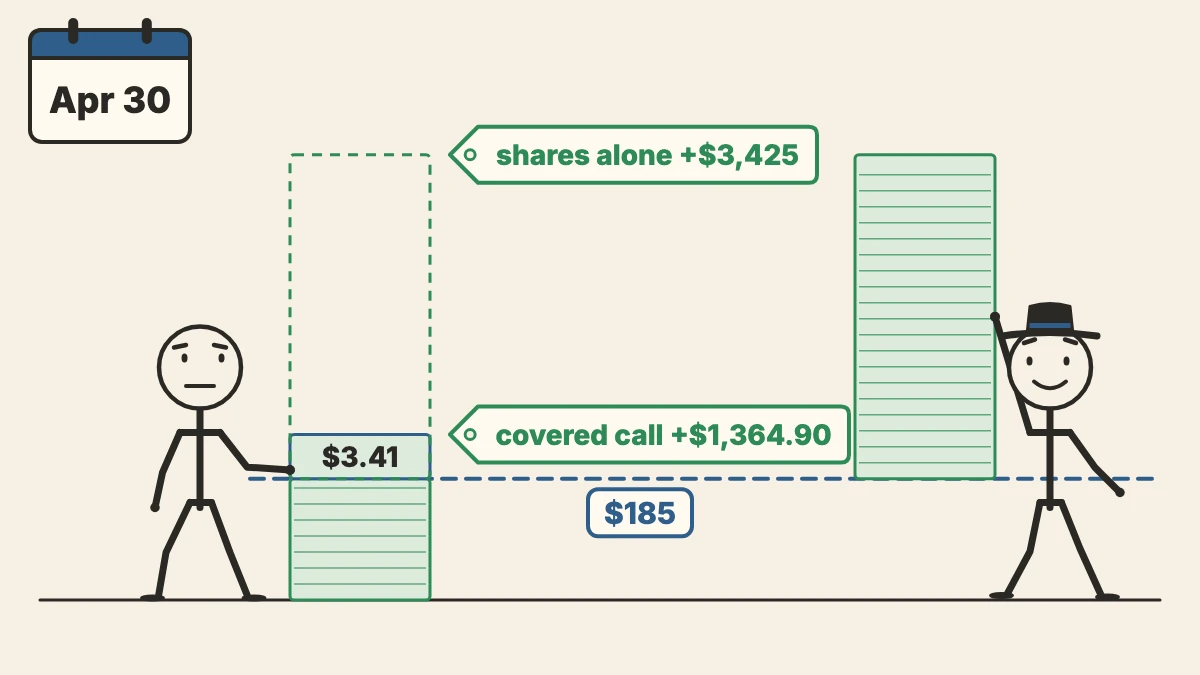
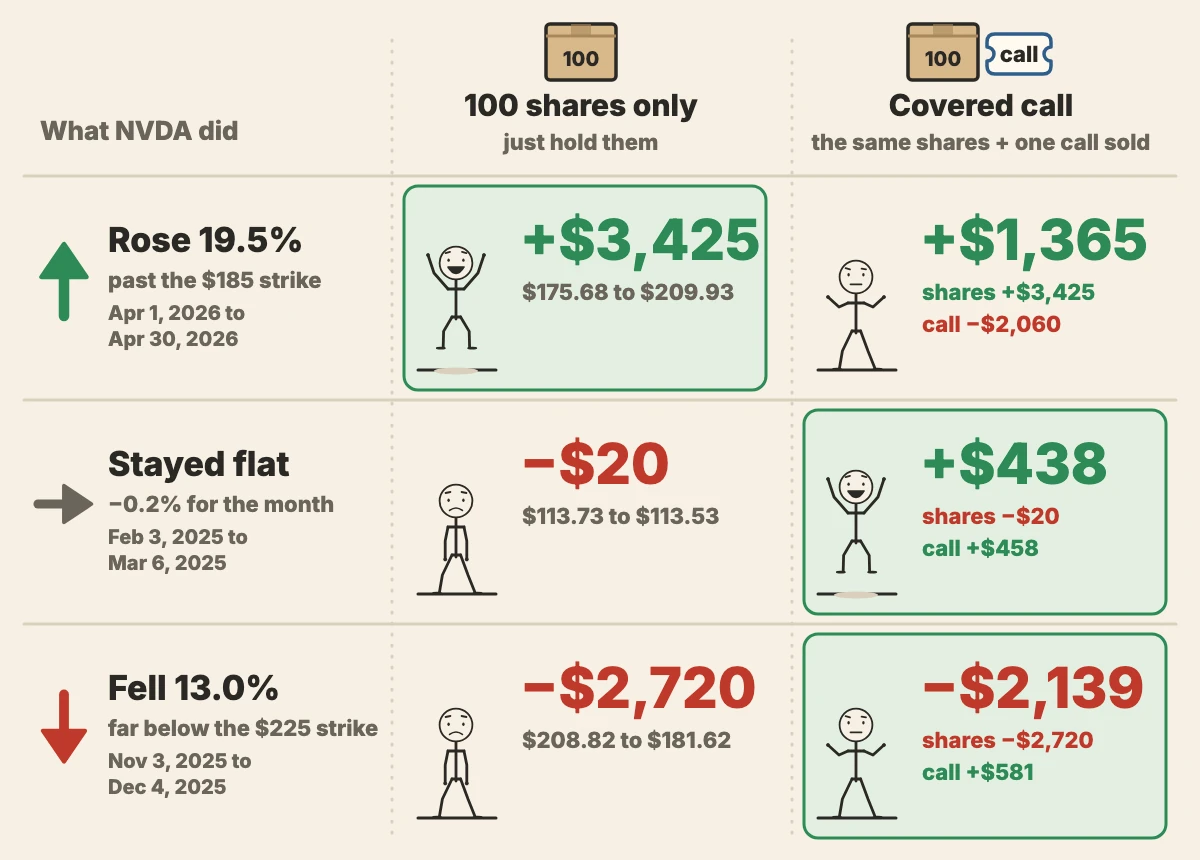
In a covered call backtest on NVDA between July 1, 2024 and October 30, 2026, the account made +$7,671.22 on $100,000, including $57.00 of dividends, while the same 100 shares gained $8,118.64 in price alone. The calls added income in 19 of 28 months and cost $2,060.10 in April 2026, when NVDA rose 19.5%.
Covered call explained: the shares rise past the strike and the call takes the rest
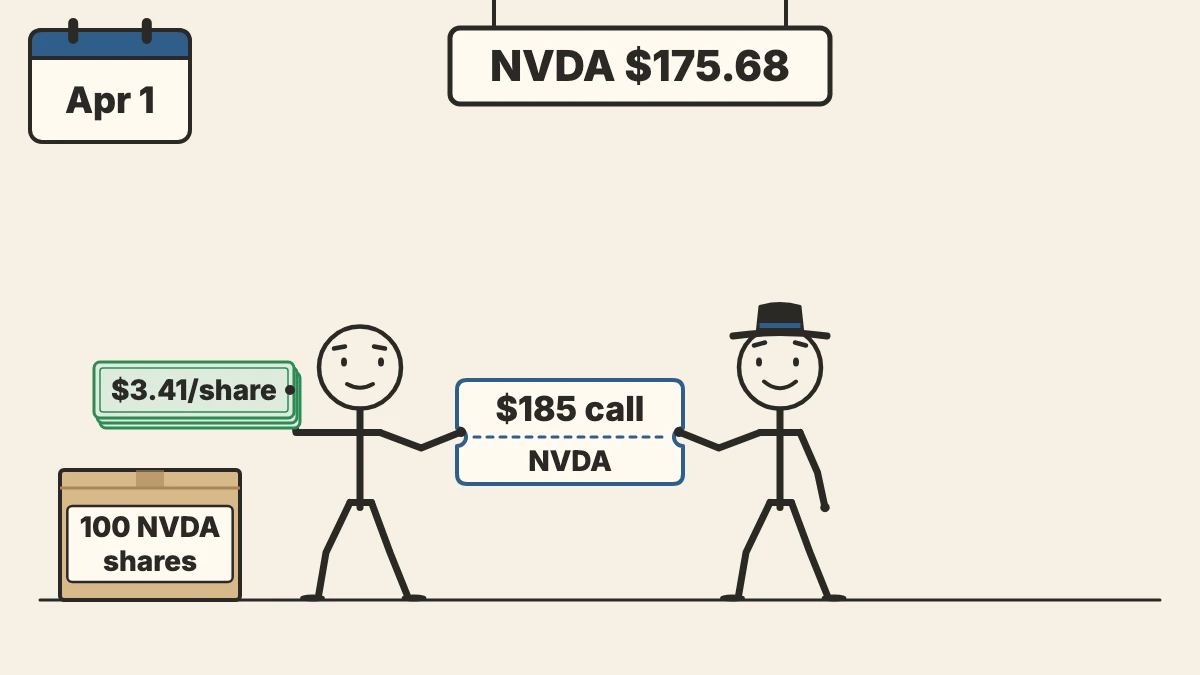
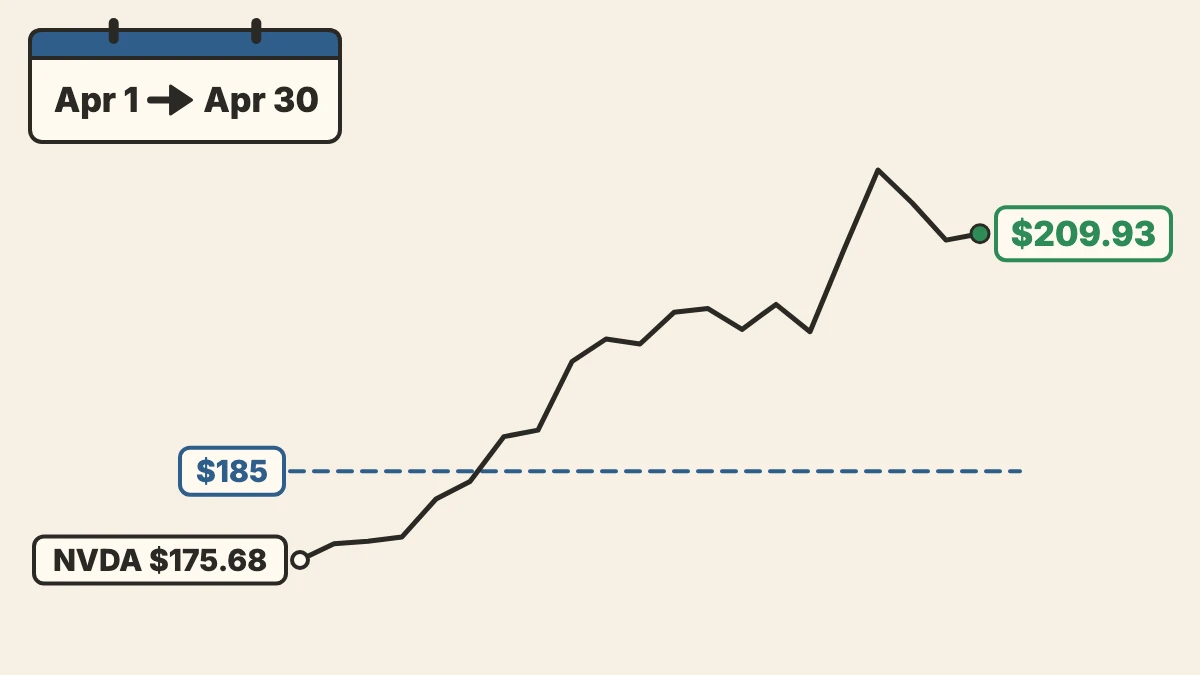
A covered call means selling calls on stock you own: you hold 100 shares and sell one call against them. The buyer pays you the premium, which is the option's price. The strike is the price at which you agree to sell your shares, and the expiration is the day that agreement ends.
If the stock ends below the strike, the call expires worthless and you keep the premium. If it ends above, your gain stops at the strike. The pictures show the backtest month where that cap cost the most.
Covered call vs just holding the shares: three real NVDA months
How the covered call backtest was run
Starting with $100,000 of cash, the backtest bought 100 NVDA shares on July 1, 2024 at $123.33, with $12.35 in fees, and held them to October 30, 2026. In the first 7 days of each month with no call open, it sold one 0.30-delta call expiring 28 to 42 days out and bought it back 1 day before expiration. A 0.30 delta means the call's price moved about $0.30 for each $1 NVDA moved. Each option fill came from a recorded quote, at least halfway from the midpoint toward the worse side of the quote. Fees were $0.65 per contract on every fill.
Run it yourself: backtest a covered call strategy on any stock
Backtest a covered call
Covered call: 100 shares plus one call a month
Create this options portfolio on NVDA and backtest it with daily data from 2025-10-31 to 2026-10-30, $100,000 starting cash: buy 100 shares when none are held, then in the first 7 days of each month when no option is open, sell one call at 0.30 delta expiring 28 to 42 days out, and buy it back 1 day before expiration. Show me every trade and the account curve.
Exact request settings
{
  "name": "Options for beginners I2: 100 NVDA shares plus a monthly 0.30-delta covered call, 28 to 42 days to expiration",
  "strategies": [
    {
      "name": "Buy 100 NVDA shares when none are held",
      "action": {
        "type": "Buy",
        "amount": {
          "type": "number of assets",
          "amount": 100
        },
        "targetAsset": {
          "name": "NVDA",
          "type": "Stock",
          "symbol": "NVDA"
        }
      },
      "condition": {
        "lhs": {
          "type": "PositionValue",
          "targetAsset": {
            "name": "NVDA",
            "type": "Stock",
            "symbol": "NVDA"
          }
        },
        "rhs": {
          "type": "Value",
          "value": 0
        },
        "type": "Base",
        "comparison": "equal"
      }
    },
    {
      "name": "Sell one NVDA 0.30-delta covered call each month",
      "action": {
        "type": "OpenOption",
        "builder": {
          "legs": [
            {
              "direction": "short",
              "optionType": "call",
              "strikeSelector": {
                "distance": 0.3,
                "distanceType": "delta"
              },
              "expirationSelector": {
                "preference": "nearest",
                "maxDaysToExpiration": 42,
                "minDaysToExpiration": 28
              },
              "fallbackStrikeSelector": {
                "distance": 5,
                "distanceType": "percent"
              }
            }
          ],
          "underlyingSymbol": "NVDA"
        },
        "allocation": {
          "type": "contracts",
          "amount": 1
        }
      },
      "condition": {
        "type": "And",
        "conditions": [
          {
            "lhs": {
              "type": "OptionPositionCount",
              "underlying": "NVDA"
            },
            "rhs": {
              "type": "Value",
              "value": 0
            },
            "type": "Base",
            "comparison": "equal"
          },
          {
            "lhs": {
              "type": "Date"
            },
            "rhs": {
              "type": "Value",
              "value": 7
            },
            "type": "Base",
            "comparison": "lessThanOrEqual"
          },
          {
            "lhs": {
              "type": "DaysSinceStrategyFired"
            },
            "rhs": {
              "type": "Value",
              "value": 20
            },
            "type": "Base",
            "comparison": "greaterThanOrEqual"
          }
        ]
      }
    },
    {
      "name": "Sell NVDA options 1 day before expiration",
      "action": {
        "type": "CloseOption",
        "quantity": {
          "type": "all"
        },
        "triggers": [
          {
            "type": "dte",
            "maxDte": 1
          }
        ],
        "underlyings": [
          "NVDA"
        ]
      },
      "condition": {
        "lhs": {
          "type": "OptionPositionCount",
          "underlying": "NVDA"
        },
        "rhs": {
          "type": "Value",
          "value": 1
        },
        "type": "Base",
        "comparison": "greaterThanOrEqual"
      }
    }
  ],
  "initialValue": 100000
}Free accounts can run one daily options backtest a month, up to a year long, so the default dates are the last 12 months of this run.
Pick a stock, the dates, a strike and an expiration. The request buys 100 shares and sells one call a month, and the defaults are the rules of the NVDA backtest above with your stock in place of NVDA.
No comments yet.