Can earlier defense reduce GEM's worst losses?
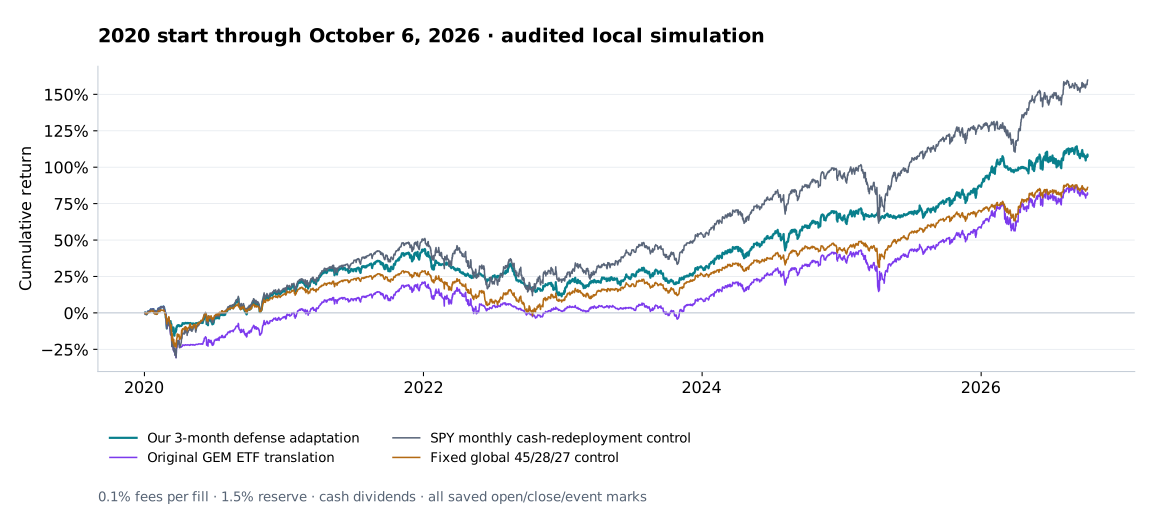
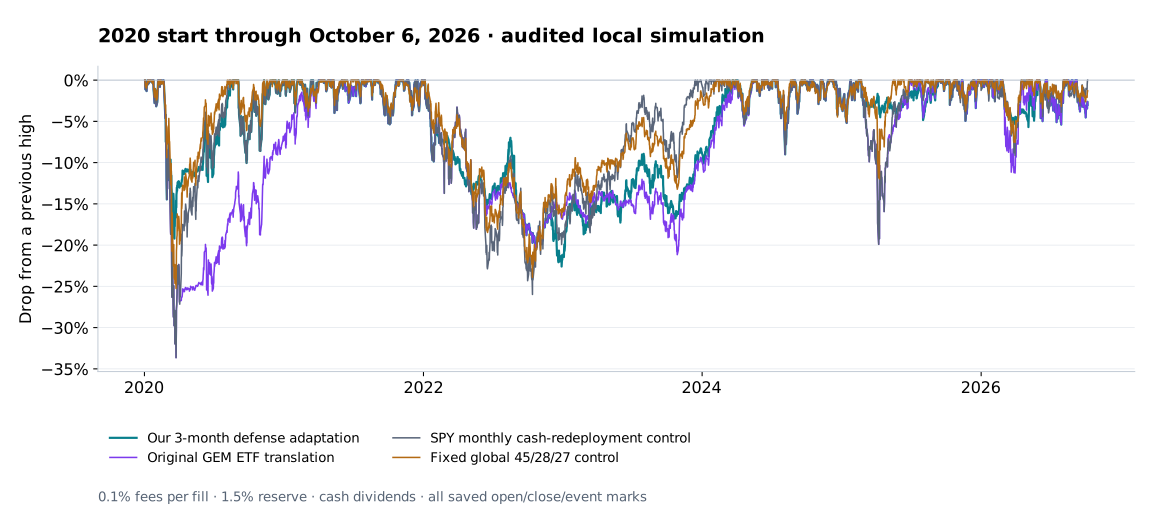
Our earlier-defense adaptation returned 107.90% from January 2, 2020 through October 6, 2026, with a 22.60% maximum observed drop. Original GEM translated to ETFs returned 81.68% with a 33.64% drop. The matched SPY control gained 159.77%, also with a 33.64% drop. The adaptation improved this window's defensive profile while sacrificing growth against SPY.
Gary Antonacci's published Global Equities Momentum combines absolute momentum with relative strength. We implemented that source model, inspected its actual delayed exits, and tested one change: use three completed months for the US-equity-versus-bills defense decision instead of twelve. The twelve-month US-versus-international ranking stays unchanged. This change is NexusTrade's research adaptation, not Antonacci's original rule or recommendation.
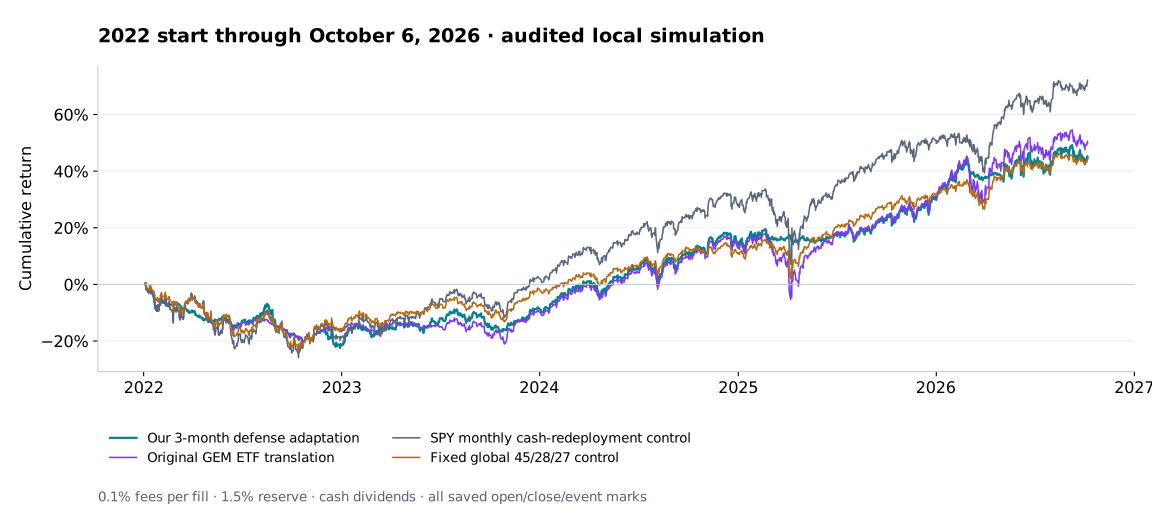
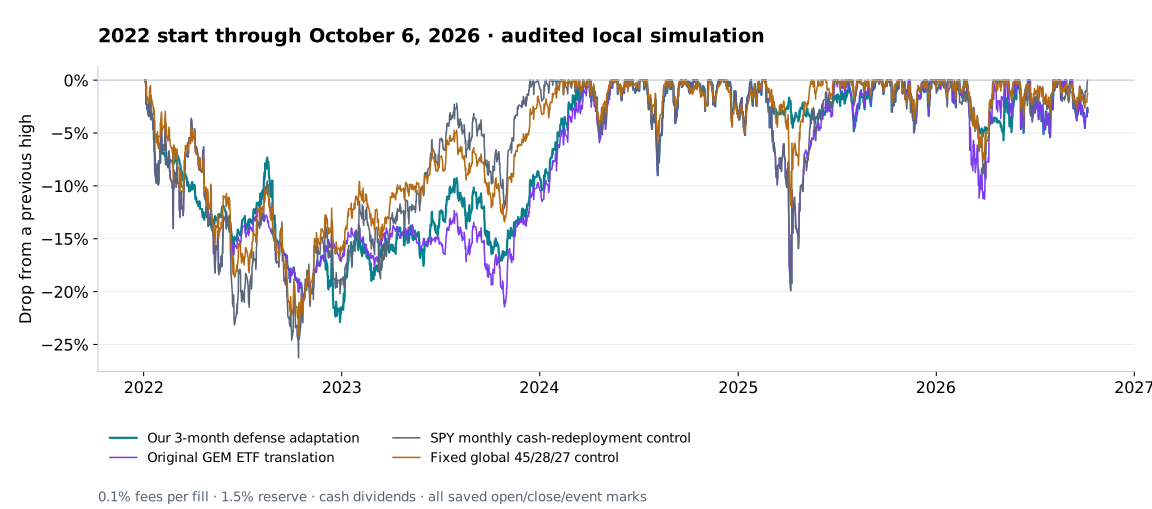
The recent start also had a smaller drop, but the 2022 start earned less and fell further than original GEM. All three starts and both static controls are shown below. The evidence supports a defensive research example, with a visible cost when bonds fall or equities rebound.
The broad comparison: January 2020 to October 2026
Scroll sideways to compare all columns. Select a heading to sort.
| Our 3-month defense adaptation | 107.90% | 22.60% | 0.886 |
| Original GEM ETF translation | 81.68% | 33.64% | 0.575 |
| SPY monthly cash-redeployment control | 159.77% | 33.64% | 0.816 |
| Fixed global 45/28/27 control | 86.11% | 25.25% | 0.725 |
No matching rows. Clear the filter to see all records.
January 2, 2020 to October 6, 2026. Returns are cumulative, not annualized. Sharpe uses daily close returns, 252 periods and a zero risk-free rate.
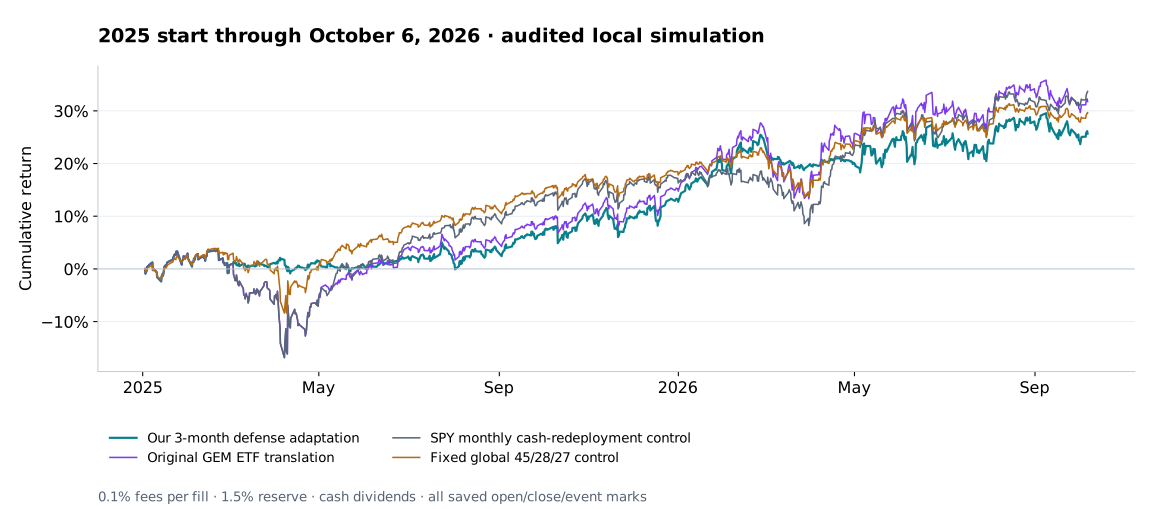
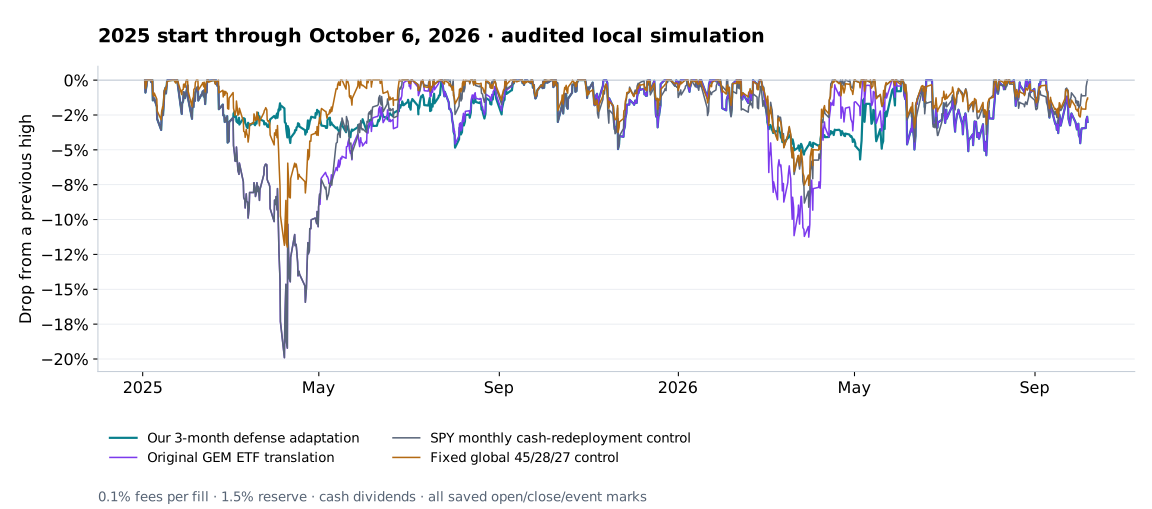
Recent results and the weaker 2022 start
From January 2, 2025, earlier defense returned 25.66% with a 5.69% drop, versus original GEM's 31.75% and 19.91%. SPY returned 33.67%. The fixed global mix returned 29.66% with an 11.98% drop and a higher daily-close Sharpe than the adaptation.
Starting January 3, 2022, the adaptation returned 44.72% with a 22.88% drop. Original GEM returned 49.94% with a 21.44% drop. Bond defense was still exposed to the stock-and-bond downturn; a quicker exit did not improve every market regime.
Scroll sideways to compare all columns. Select a heading to sort.
| 2022-01-03 | Our 3-month defense adaptation | 44.72% | 22.88% | 0.706 |
| 2022-01-03 | Original GEM ETF translation | 49.94% | 21.44% | 0.626 |
| 2022-01-03 | SPY control | 72.15% | 26.25% | 0.757 |
| 2022-01-03 | Fixed global 45/28/27 | 44.38% | 24.06% | 0.691 |
| 2025-01-02 | Our 3-month defense adaptation | 25.66% | 5.69% | 1.085 |
| 2025-01-02 | Original GEM ETF translation | 31.75% | 19.91% | 0.922 |
| 2025-01-02 | SPY control | 33.67% | 19.91% | 1.073 |
| 2025-01-02 | Fixed global 45/28/27 | 29.66% | 11.98% | 1.298 |
No matching rows. Clear the filter to see all records.
Each start is a separate $10,000 book ending October 6, 2026. Starting weights can make a year's return differ from the continuing broad book.
The source rule and the one rule we changed
The source's US, all-country ex-US and aggregate-bond indexes are represented here by SPY, ACWX and AGG; BIL represents Treasury bills for the absolute comparison. ACWX includes developed and emerging non-US markets. The fixed global control uses the current source benchmark's 45% US stocks, 28% non-US stocks and 27% aggregate bonds, rather than the older article's five-year government-bond comparison.
Antonacci's source reports index total returns with reinvested income. Our execution translation uses ex-date cash-adjusted total returns for signals, while the portfolio receives actual payable cash and redeploys it monthly. ETF prices, fees, a reserve and next-open fills make this a separate measurement from the author's published index record.
Scroll sideways to compare all columns. Select a heading to sort.
| Absolute momentum | SPY 12-month total return must exceed BIL's | SPY 3-month total return must exceed BIL's |
| Relative momentum | Choose stronger SPY or ACWX over 12 months | Unchanged |
| Defense | AGG when the absolute test fails | Unchanged |
| Timing | Completed calendar months; monthly decision | Unchanged |
| Execution in this study | Next actual month's opening; SPY wins exact relative ties | Unchanged disclosed choices |
No matching rows. Clear the filter to see all records.
What the actual switches changed
At February 2020's close, SPY's twelve-month return still exceeded bills, so original GEM kept SPY at the March 2 opening. The three-month comparison failed and our adaptation moved to AGG. Across the same March 2 to April 1 opening boundaries, its net NAV changed -0.97% versus -16.59% for original GEM. This is the specific delayed-defense event that motivated the experiment.
The earlier switch also helped across the March 3 to May 1, 2025 opening interval: +0.30% for the adaptation versus -5.64% for original GEM. Protection has an opportunity cost. From March 2 to May 1, 2026, the adaptation's AGG interval lost 1.76% while original GEM's ACWX exposure gained 1.32%.
Those intervals come from the saved books at identical switch-opening boundaries, including filled trades, fees and paid cash. They are event explanations, not additional optimized tests. The adaptation was chosen after examining this historical record; these results are development evidence, not an untouched future test.
Year-by-year results keep the bond losses visible
Scroll sideways to compare all columns. Select a heading to sort.
| 2020 | 15.36% | -2.70% | 16.76% | 12.78% |
| 2021 | 23.62% | 23.62% | 28.28% | 13.76% |
| 2022 | -20.74% | -16.12% | -18.00% | -15.62% |
| 2023 | 16.37% | 8.67% | 25.79% | 17.21% |
| 2024 | 24.55% | 24.55% | 24.55% | 12.48% |
| 2025 | 13.85% | 15.88% | 17.46% | 18.51% |
| 2026 through Oct 6 | 11.46% | 14.81% | 14.92% | 10.03% |
No matching rows. Clear the filter to see all records.
Calendar-year changes in the continuing January 2020 books. The 2026 row is partial. No new book is initialized for these annual rows.
Fees, cash and the audit boundary
Read the calculation and execution assumptions
Each book begins with $10,000, fractional shares, a 1.5% reserve and 0.1% fees per filled notional. Orders sell before buying, obey cash affordability and use actual opening prices. Free cash earns no interest. No taxes, borrowing, external contributions or extra spread estimate are modeled; fund expenses are reflected in traded prices.
Dividend entitlement uses holdings before the ex-date opening. Payments are credited once at the first observed tick at or after their stored payable time, and remain cash until the monthly rebalance. A stored 16:00 New York payable timestamp is a civil-date convention, rather than proof that issuer cash was available at that intraday time. Half-day or closed-day timing can defer credit to the next observed opening. Payments after the endpoint are excluded from terminal NAV.
All twelve books have separate saved-ledger accounting review covering signals, causal fills, fees, quantities, cash and NAV. The figures and downloads retain all saved marks. Market drops use an initial-capital peak and every recorded open, close and event; they do not reconstruct intraday high/low extremes. Daily-close Sharpe uses a zero risk-free rate. No native NexusTrade-engine backtest is claimed for this package.
The SPY and fixed global controls follow the same monthly reserve and cash-redeployment clock. They are fee-bearing controls, rather than frictionless index returns. The original and failed comparisons remain part of the report.
What the editable research portfolio represents
The separately prepared paper portfolio is inactive, starts empty and holds editable rules for the earlier-defense research adaptation. Its historical signals end October 6, 2026. Date guards stop the expired series from issuing new actions; a verified continuing refresh is required before using it as an ongoing pilot. An empty account's performance card can show 0%; the historical comparisons belong to the research notes.
This public case study documents independent research inspired by Antonacci's published model. It conveys no author endorsement, creator-managed subscription, completed forward trades or automated income. Portfolio access and copy setup are governed separately from this report.
No comments yet.