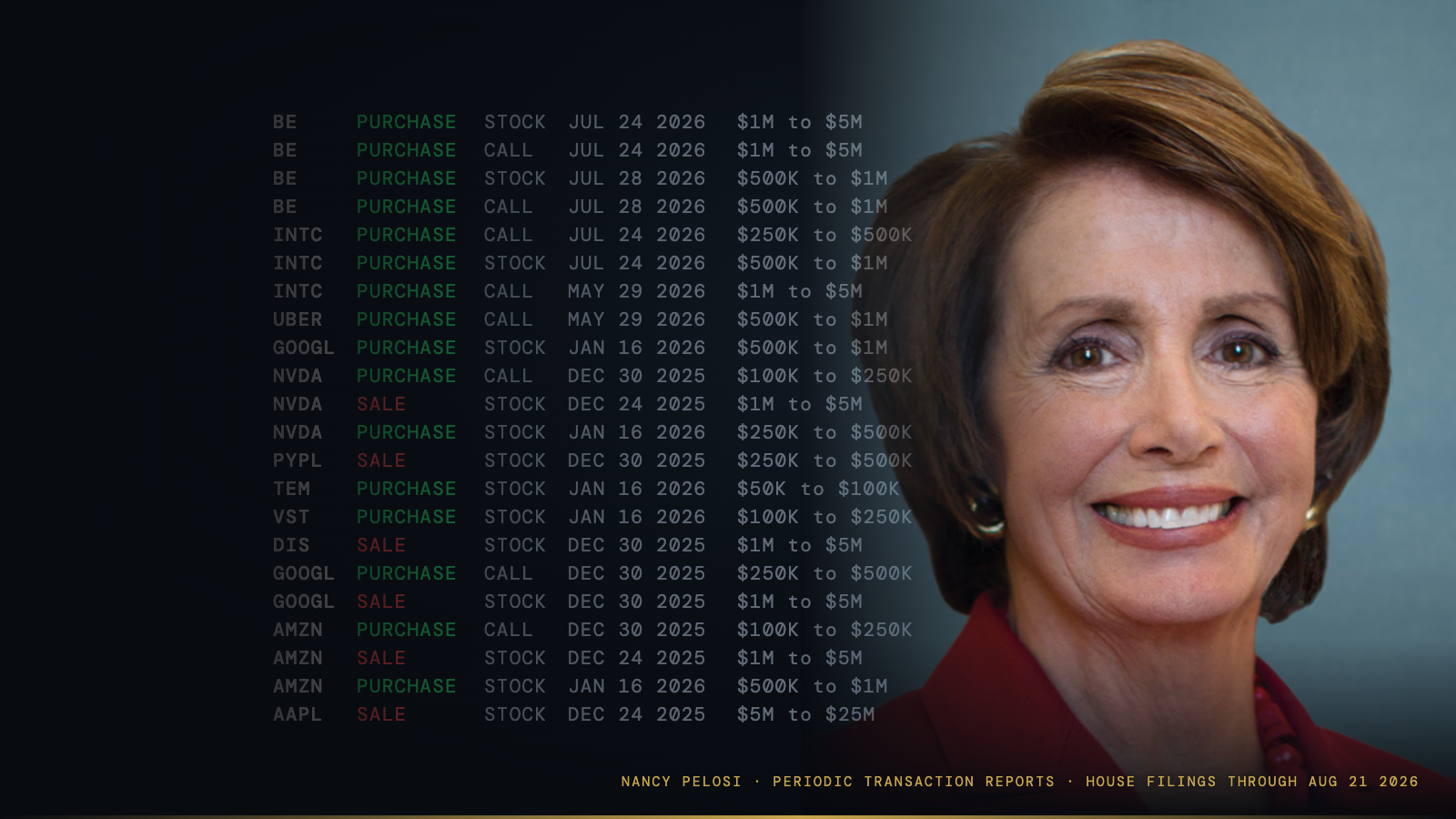

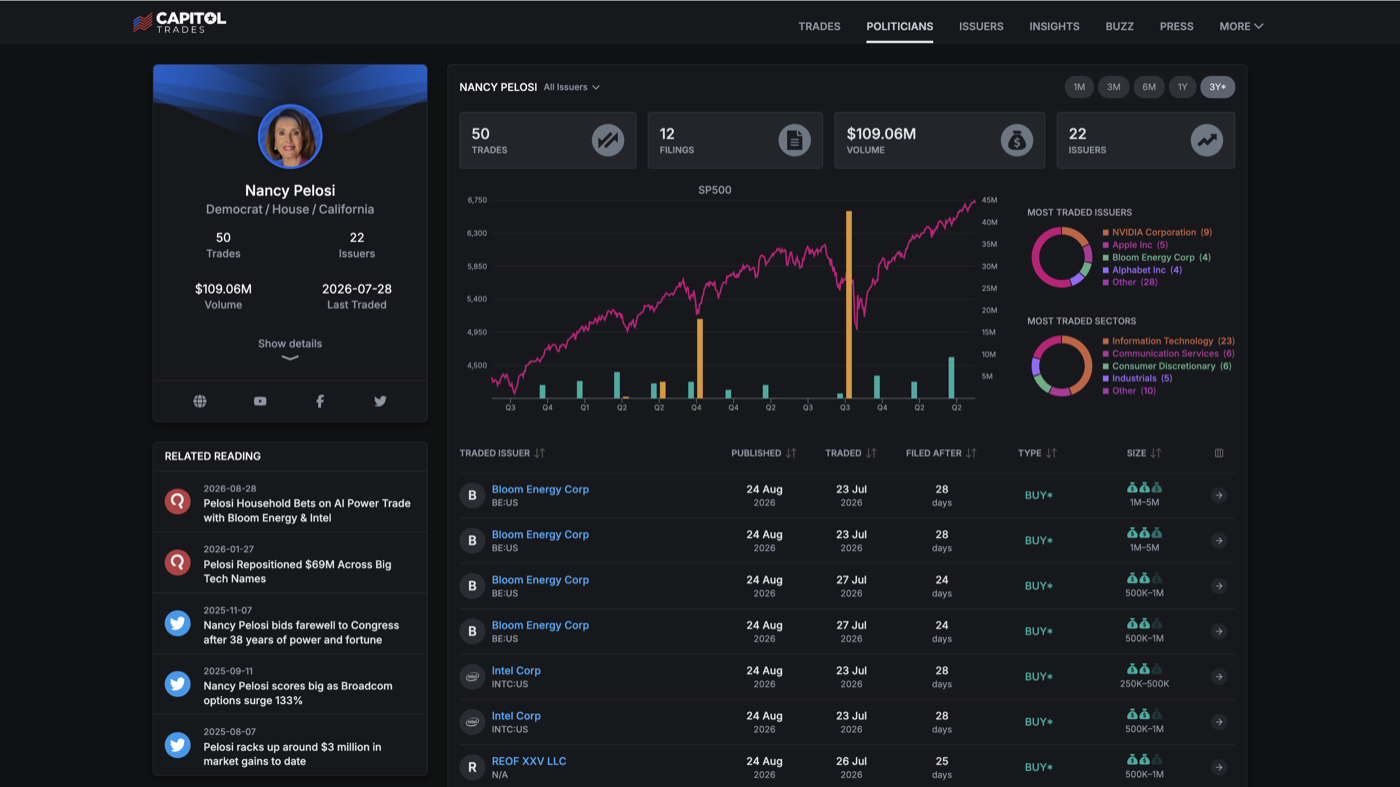
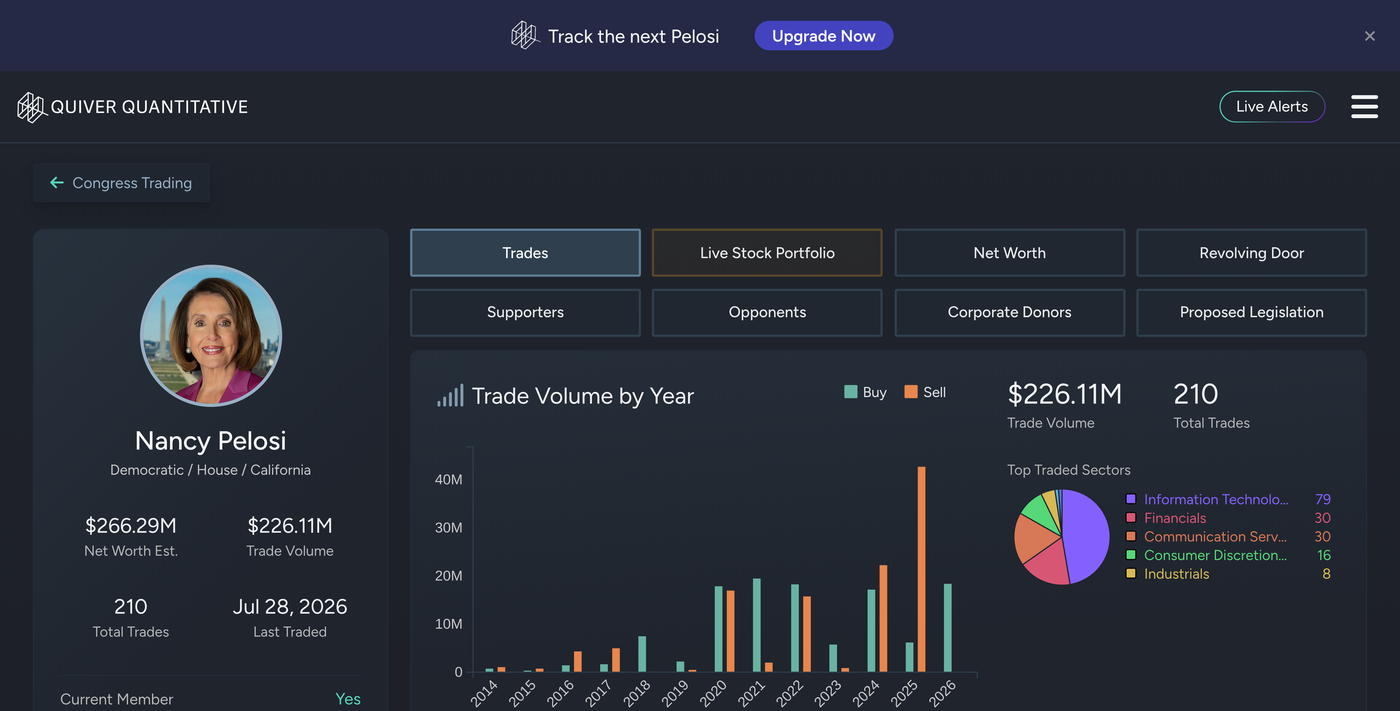
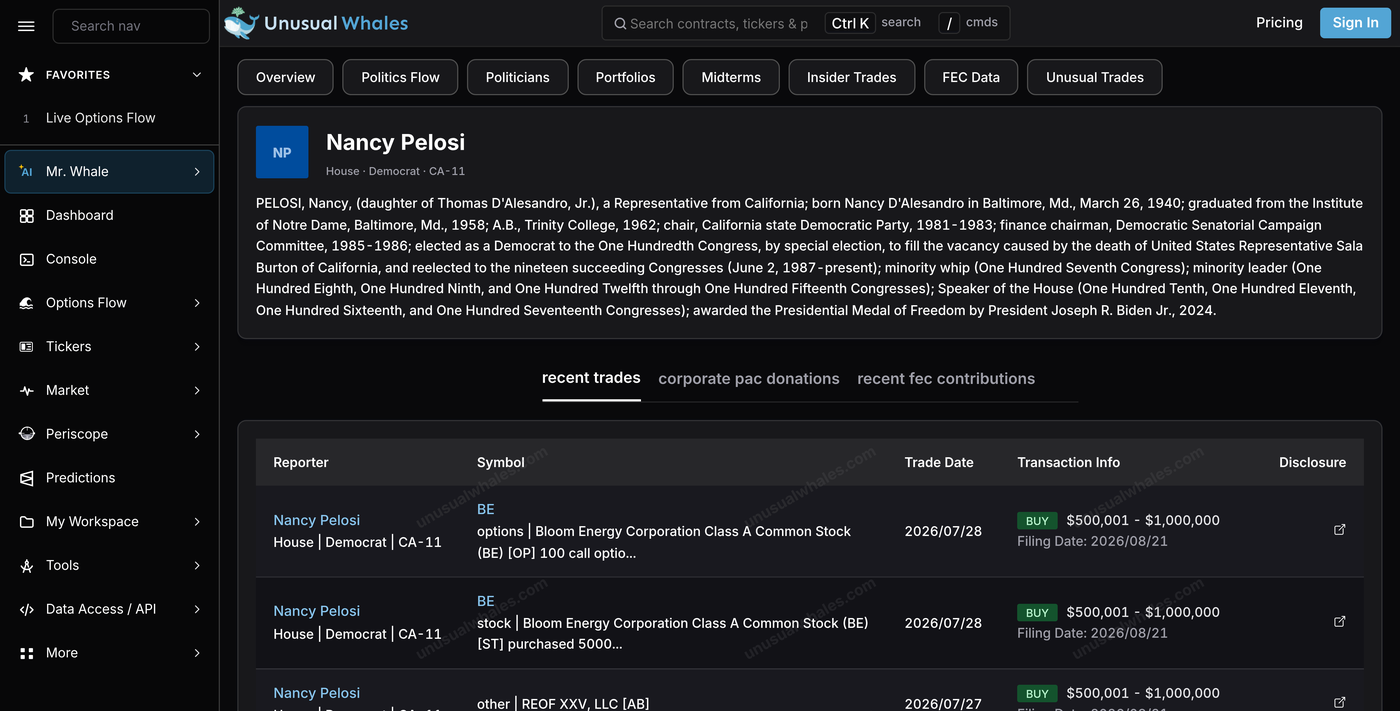
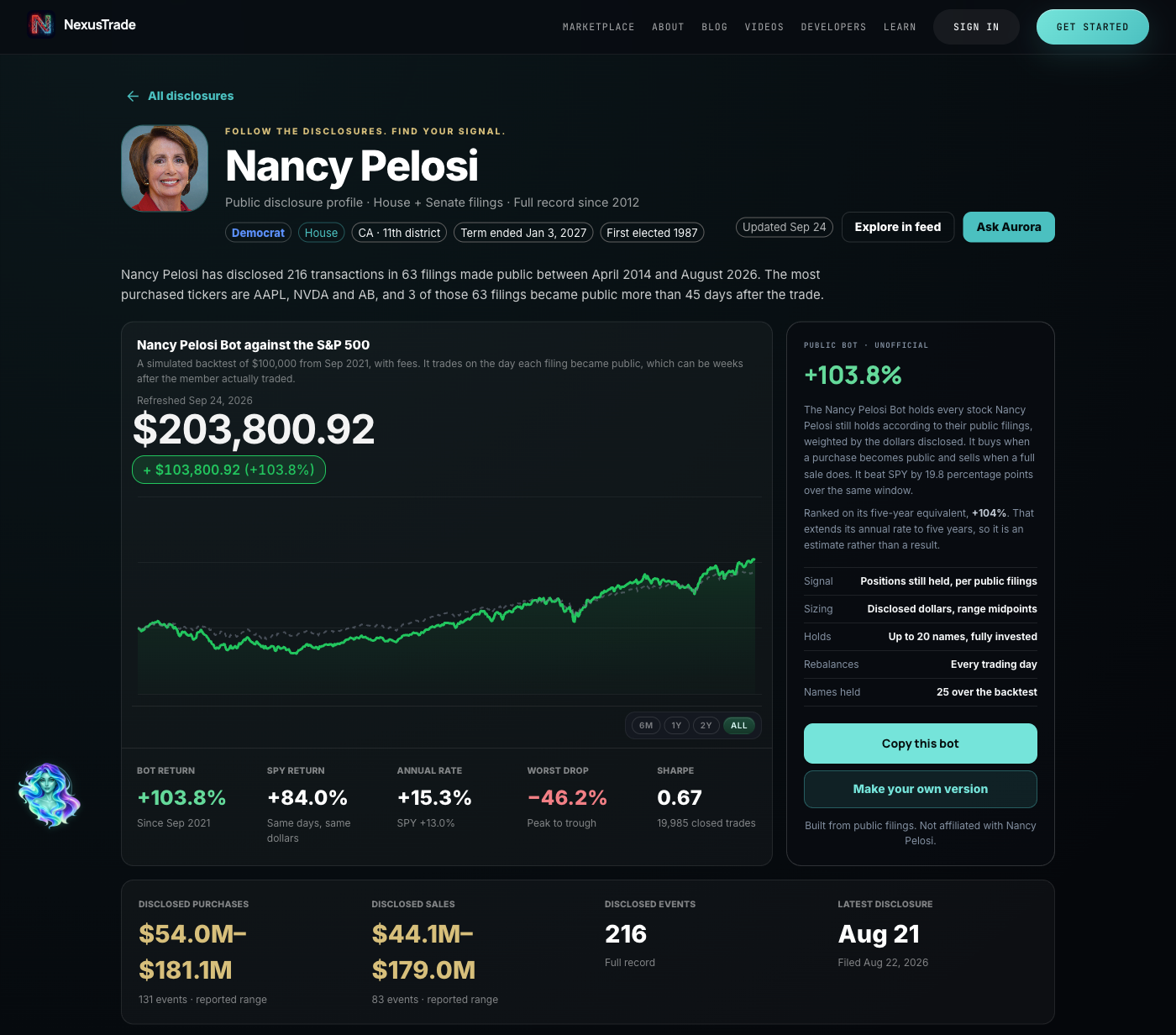
A tracker is downstream of the filings
The data underneath the tracker
Congressional trades begin as records published by the Office of the Clerk of the U.S. House of Representatives and the U.S. Senate Electronic Financial Disclosure system. Those reports contain filing dates, transaction dates, dollar ranges, owners, asset descriptions, and sometimes enough option detail to identify a strike or expiration. Turning them into a clean table requires PDF handling, OCR, normalization, ticker resolution, amendment tracking, and visible failure reporting.
The download numbers above come from one snapshot of the dataset. Current row counts, file hashes, audit status, and freshness timestamps remain queryable in snapshot.json.
The most important research field is availableAt. A transaction may have happened weeks before it became public. A backtest that enters on the transaction date is answering a hindsight question. A reproducible tracker should preserve both dates and state which one drives its results.
Options need the same care, because Pelosi's disclosures can identify call purchases, exercises, strikes, expirations, and disclosed value ranges. A system that collapses every option record into an ordinary stock purchase throws away information that materially changes portfolio construction.
The Pelosi test
I asked NexusTrade to build four Pelosi portfolios
I gave NexusTrade one instruction:
“Using only Nancy Pelosi's publicly disclosed trades as they became public, show her recent trades, then create four $100,000 portfolio variants: direct copy, disclosure-magnitude weighted, quality-filtered, and quality plus momentum; backtest each from 2024 through the latest available date.”
11 stocks · 579 completed trades · $3,827 fees · usually fully invested
11 stocks · 574 completed trades · $3,735 fees · usually fully invested
8 stocks · 474 completed trades · $1,638 fees · usually fully invested
8 stocks · 275 completed trades · $3.21M sold · $6,429 fees · usually held cash
SPY gained 66.10%, and its worst peak-to-trough decline was 19.95%. The two plain disclosure strategies gained more, but each fell roughly 34% to 37% at its worst point and earned less return per unit of risk than SPY.
The quality-and-price-trend version was entirely in cash on about half of all days, and its losses came from the days it was invested. It went into the early 2025 selloff holding stocks, sat in cash through the April to June rebound, and hit its low on July 11, 2025.
Its three conditions rarely lined up for long, so it kept buying and selling the same few names. That's how it completed the fewest trades while turning over $3.21 million and paying the most in fees. Every curve above uses the same dates and vertical scale.
The direct-copy portfolio equally weights stocks with a Pelosi purchase disclosed in the previous 90 days. The magnitude-weighted version sizes by the upper end of each reported value range. Both wait until the filing is public.
The engine checks each rule at the day's open and close and fills orders at the price printed at that check, so a disclosure can only affect a trade at the first check after it became public. Because the filing reports only a range, sizing by its upper bound is an assumption, and I didn't repeat the test with lower-bound or midpoint sizing.
Direct copy and quality filtered share the same 34.39% worst drop because they held exactly the same stocks from their January 23, 2025 peak through their April 4, 2025 low, the stretch where both fell furthest.
These were concentrated portfolios: each held only 8 to 11 stocks, the five largest names received 71% to 87% of the money allocated, and Nvidia alone received 18% to 24%. That matters in a 2024 to 2026 window dominated by a small group of large technology stocks. The results show what these four rules did in this period, and they cannot tell you whether the same return will repeat.
What the backtests assume:
- Trading costs. Every stock trade pays 0.1% of its value, which stands in for the spread and slippage on a commission-free broker. There is no separate slippage model for stocks.
- Disclosure timing. A filing becomes usable at 11:59:59 PM New York time on the date the House Clerk or the Senate recorded it, in every year of the data. The engine can act on it at the next open or close.
- Fundamentals. Profit and free cash flow become usable when the SEC accepted the filing that reported them, never at the end of the fiscal quarter they describe.
- Dividends. Every portfolio collects dividends. The Pelosi portfolios hold them as cash until the next rebalance, while the SPY baseline reinvests them immediately, which slightly favors SPY.
- Options. An option disclosure counts as a signal for the underlying stock. The contracts themselves are not reconstructed or priced.
This test stopped at backtesting. Optimization, out-of-sample testing, and deployment happen in the same workspace, and I left them out to keep the four results directly comparable.
The button opens Aurora with the exact prompt above already typed, and nothing runs until you press Send. You can change the dates or swap in another member of Congress first.
Open the prompt in AuroraPick for the job
Which one should you use
- Choose Capitol Trades when you just want to look up what Pelosi or any other member disclosed, for free, and you can check dates against the filing yourself.
- Choose Quiver for a focused political dashboard, alerts, leaderboards, and guided Congress research at the lowest paid entry price here.
- Choose Unusual Whales when political disclosures need to sit beside options flow, dark pools, volatility, custom alerts, and mobile notifications.
- Choose NexusTrade when the job starts with a custom question and continues through portfolio generation, backtesting, optimization, deployment, and custom alerts from scheduled agents.
- Choose the open dataset when you want the records, SQLite, exports, and complete control, and you are prepared to build and maintain the surrounding product yourself.
There is no universal winner. Capitol Trades is the best free lookup, Quiver is the most focused paid political-data product, Unusual Whales has the strongest surrounding options context, NexusTrade carries a custom idea furthest without leaving the product, and the open route gives up convenience in exchange for control.
Download the audited House and Senate records for your own stack, or use the same records inside NexusTrade.
Explore in NexusTrade Download the data
No comments yet.