A profitable result can still fail your strategy’s purpose
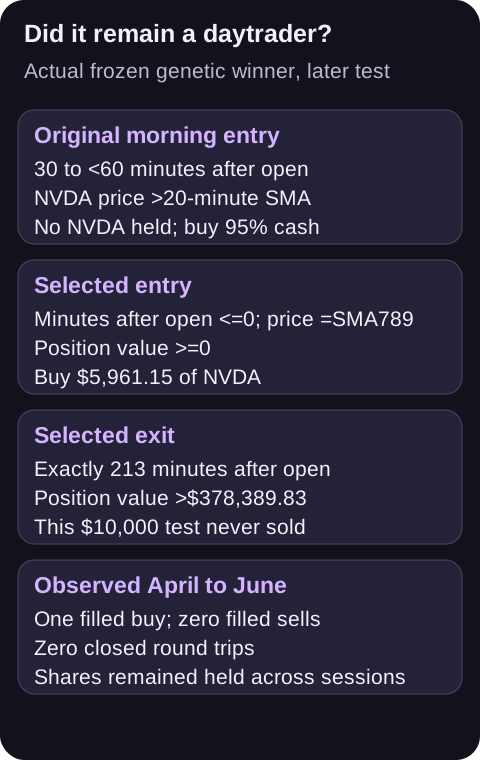
We chose a genetic NVDA version on January to March 2024, froze it, then tested April to June. It gained 22.06%, but bought once and never sold. The later test exposed a change from daytrading to holding shares.
Freeze what the optimizer actually selected
The original seed bought above a 20-minute average during the morning and sold later that session. The optimizer changed the entry to a 789-minute equality test at market open and the exit to a position-value threshold far above the initial capital. A familiar portfolio name did not preserve the original behavior.
Both complete strategies remain in the record. The selected exit needs a position worth more than $378,389.83 before it can sell.
Keep selection dates separate from the later test
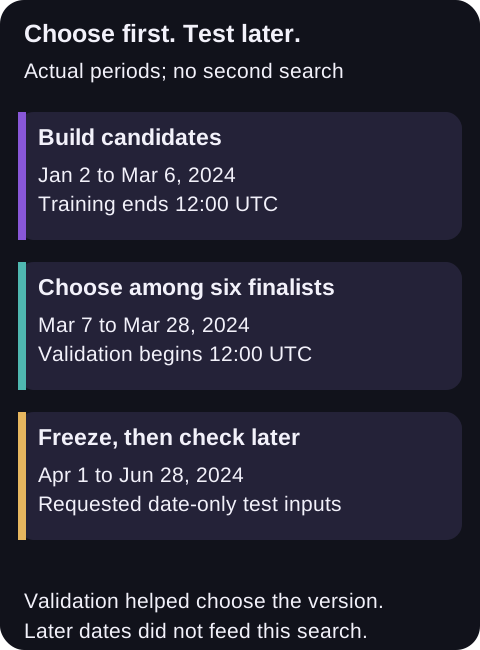
Training developed candidates; validation helped choose among the final six. Neither is the final test. We froze the selected configuration before the April-to-June check. The intervening dates are unused in this displayed plan, not an invented embargo setting.
The later test follows both selection periods and uses unchanged rules. These public historical dates are now reproduction dates for readers.
Choose the lines to compare
Compare the frozen version with both alternatives
The selected version gained 22.06%; the original morning seed lost 10.19%. NVDA buy and hold gained 36.00%. The selected version’s profit alone did not establish an improvement over holding NVDA.
All three curves cover the same later dates and start at $10,000. The seed and selected version are separate completed ordinary backtests.
Check the trades, not just the green return
The complete Filled-order query returned one NVDA buy and no sells. Shares remained held across sessions. The version passed positive return but failed the benchmark, drawdown, trading-activity and no-overnight requirements, all set before inspecting the later result.
- Filled orders
- 1 buy / 0 sells
- Closed round trips
- 0; required at least 10
- Maximum drawdown
- 12.73%; required at most 10%
- Observed fee
- $2.98
- Holding behavior
- Shares remained held to test end
- Requirement decision
- 1 pass / 4 failures
Four of five requirements fail. A profitable holding position missed the daytrading goal. This does not isolate overfitting as the sole cause.
Inspect the two frozen strategies in Aurora
Open the request carrying both complete configurations and the predeclared checks. Review it, then send. It asks for costs before any reproduction. For your own unseen check, freeze the rules before looking at reserved dates. If you retune after a disappointing result, keep it in the record and choose another untouched period.
View saved optimization resultsAurora receives both exact strategies and the later-test plan. Opening the request does not create a portfolio, run research or send a message.
Keep the failed version and its full record
View selection statistics, acceptance checks and exact rules
The selected candidate’s validation participation was zero. A top rank among six finalists did not establish profitable validation trades. The final leaderboard does not count every unique candidate evaluated during the search.
These later dates were excluded from this search, but the historical experiment cannot prove the prices were unknown to everyone. A chronological split alone cannot establish untouched information. Keep the failed objective rather than changing its requirements after seeing the gain.
| Positive later return | 22.06% | Pass |
| Beat the stored NVDA buy-and-hold return | 22.06% | Fail |
| Maximum drawdown at most 10% | 12.73% | Fail |
| At least 10 closed round trips | 0 | Fail |
| No position held overnight | One buy, no sells; position held to test end | Fail |
No matching rows. Clear the filter to see all records.