Example inputs are editable assumptions, not a published portfolio result.
Follow the example
Choose a step to follow the example. Opening a request lets you review it; it does not submit a job or change your account.
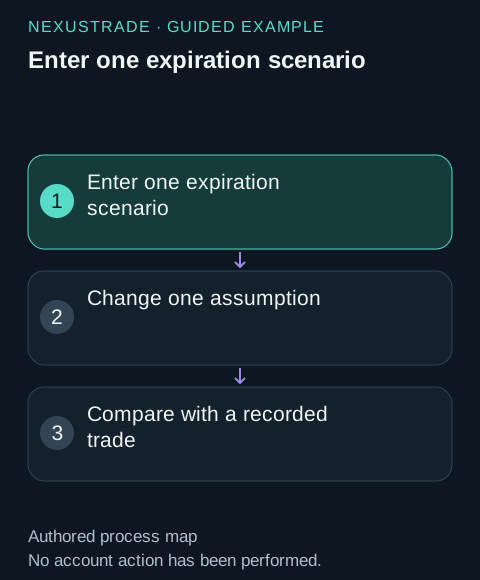
Enter one expiration scenario
Set the displayed strike, premium, size and underlying-at-expiration inputs. For a spread, keep the matched-leg and multiplier assumptions explicit.
Labeled hypothetical inputs in the calculator, not historical market observations.
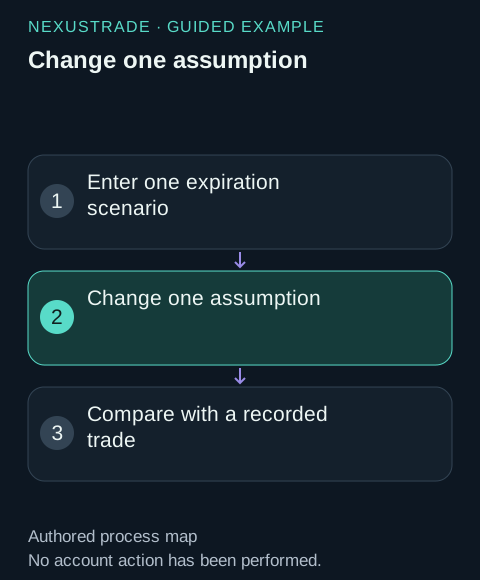
Change one assumption
Move the expiration price or cost and inspect the resulting payoff. Compare the maximum loss, break-even and gain under the stated inputs.
A deterministic recalculation. Time value and an earlier close are not captured by expiration intrinsic payoff.
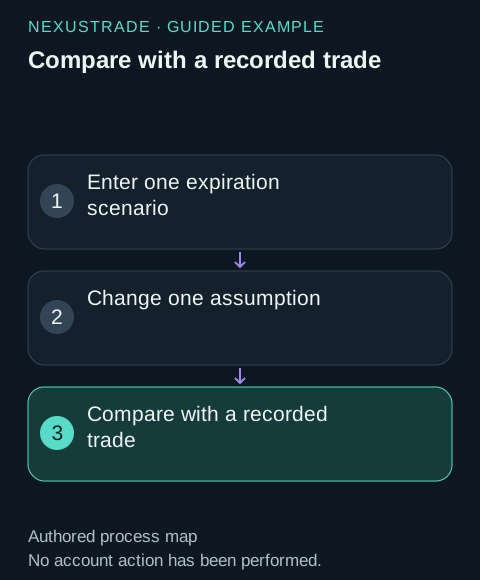
Compare with a recorded trade
Open the linked completed strategy and inspect actual selected contracts, Filled premiums and history. Keep the calculator scenario separate from the backtest.
A distinction between an editable payoff model and recorded historical execution.
What the cost scenario assumes
Each round trip opens and closes the same quantity on every leg. Contract fills = round trips × legs × contracts per leg × 2. Commission = fills × commission per contract. Half-spread cost = fills × multiplier × assumed half-spread × entered fraction. Enter gross P&L before these costs to avoid subtracting them twice.
This is a uniform cost scenario. It excludes variable spreads, differing leg quantities, liquidity impact, partial fills, exercise and assignment costs. The fraction is an arithmetic assumption; changing it here does not change the platform's persisted backtest fee contract. It does not reproduce the engine or repair missing quote data.
Inspect a real historical example
The strategy guides use saved selector rules and completed product simulations. Their captured fills and curves are separate from the editable assumptions above.