I just discovered Perplexity Sonar Reasoning, an LLM with real-time web access. Why is nobody talking about this??
 6 min read
The Achilles heel of large language models is the fact that they don’t have real-time access to information. In order for LLMs access to the web, you have to integrate with very expensive third-party providers, have a bunch of API calls, and forget about the idea that your model will respond in a few seconds.
Or so I thought.
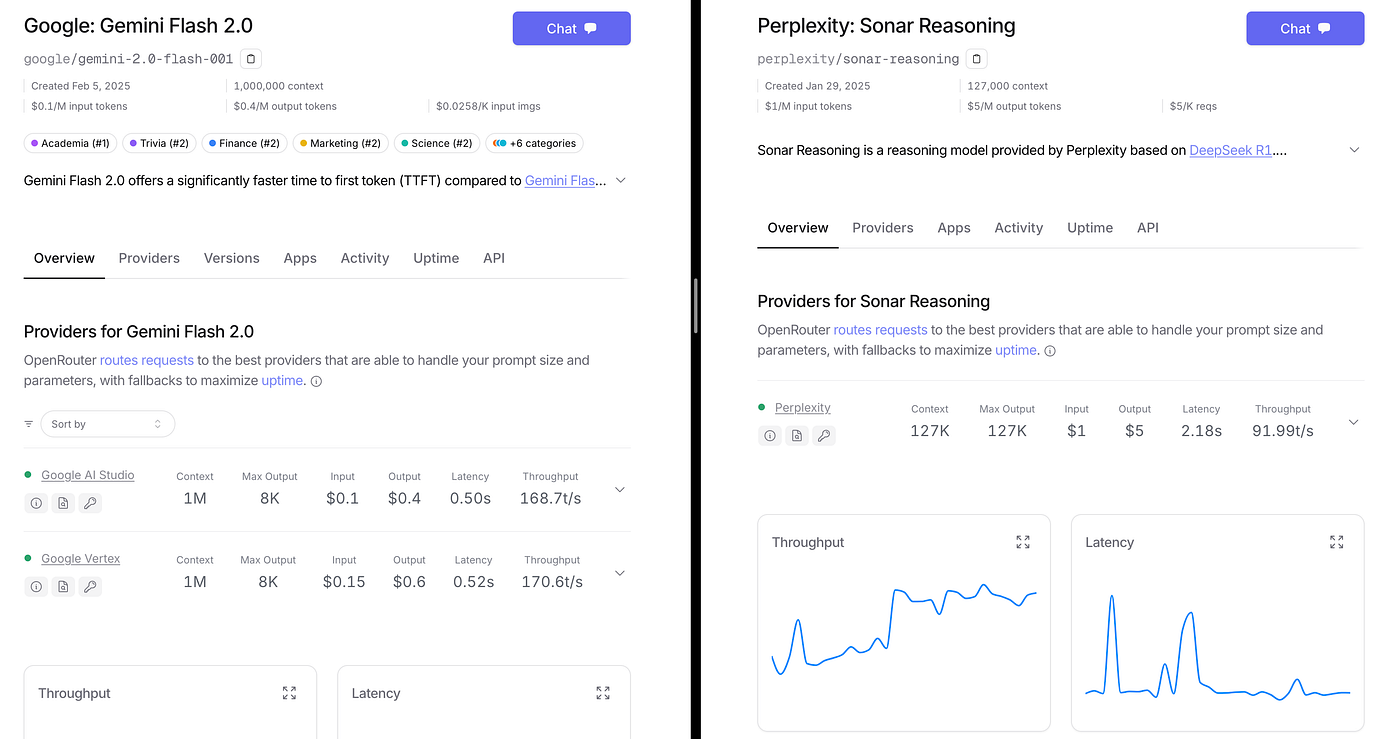
I was browsing OpenRouter and saw a model that I hadn’t seen before: Perplexity Sonar Reasoning. While I knew that Perplexity was the LLM Google Search alternative, I had no idea that they had LLM APIs.
So I thought to try it out and see if it could replace the need for some of the logic I have to enable real-time web search in my AI platform.
And I was shocked at the outcome. Why is nobody talking about this?
My current real-time query-based approach
To have a fair comparison between Perplexity with other LLMs, you have to compare it with an infrastructure designed to fetch real-time information.
With my platform NexusTrade, one of the many features is the ability to ask questions about real-time stock market events.
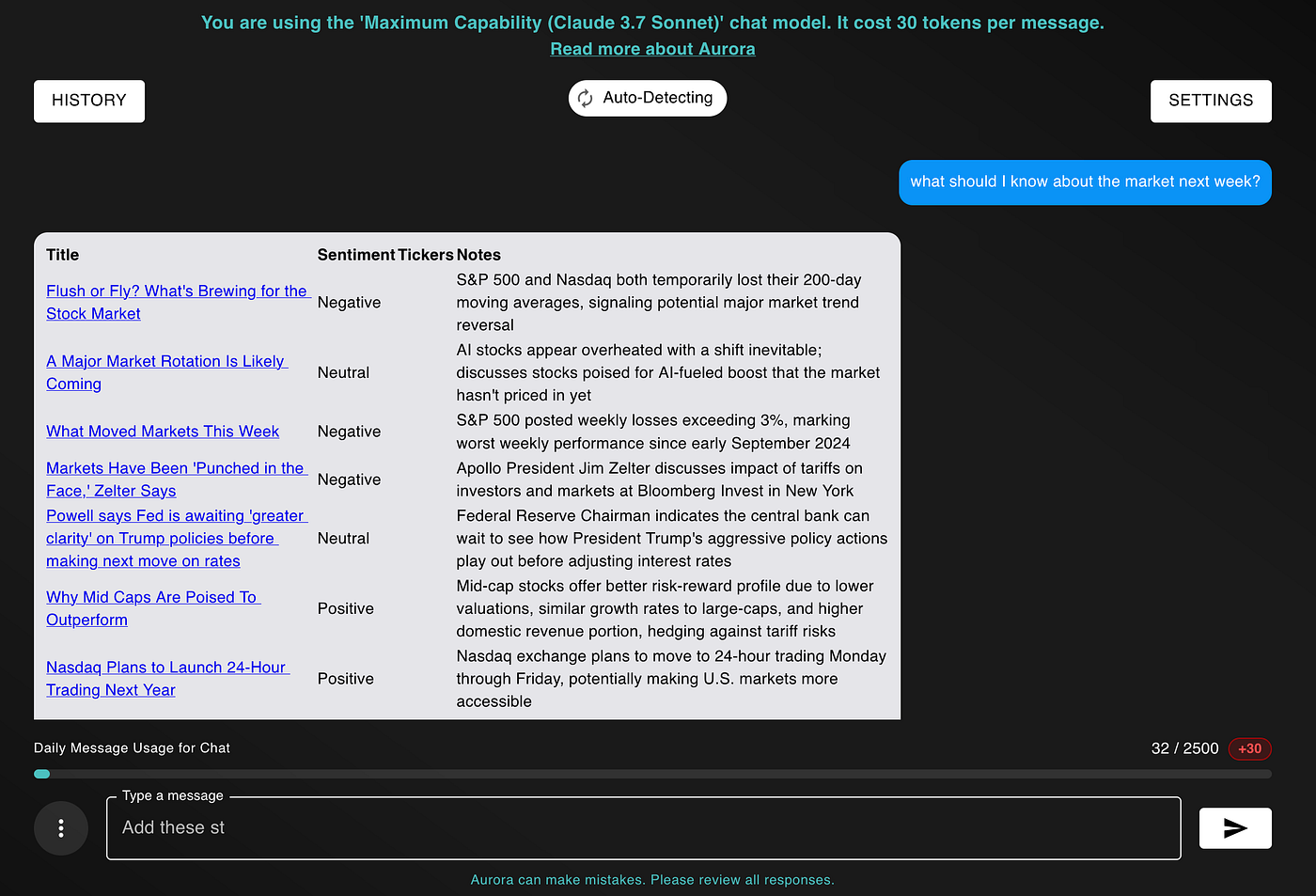
To get this information, I built an infrastructure that uses stock news APIs and multiple LLM calls to fetch real-time information.
Specifically:
- The LLM generates a URL to the StockNewsAPI
- I perform a GET request using the URL (and my API token) to retrieve relevant real-time news for the user’s question
- I get the results and format the major events into a table
- Additionally, I take the same results and format them into a bullet-pointed list and summary paragraph
- The results are combined into one response and sent back to the user

This approach is highly accurate, and nearly guarantees access to real-time news sources.
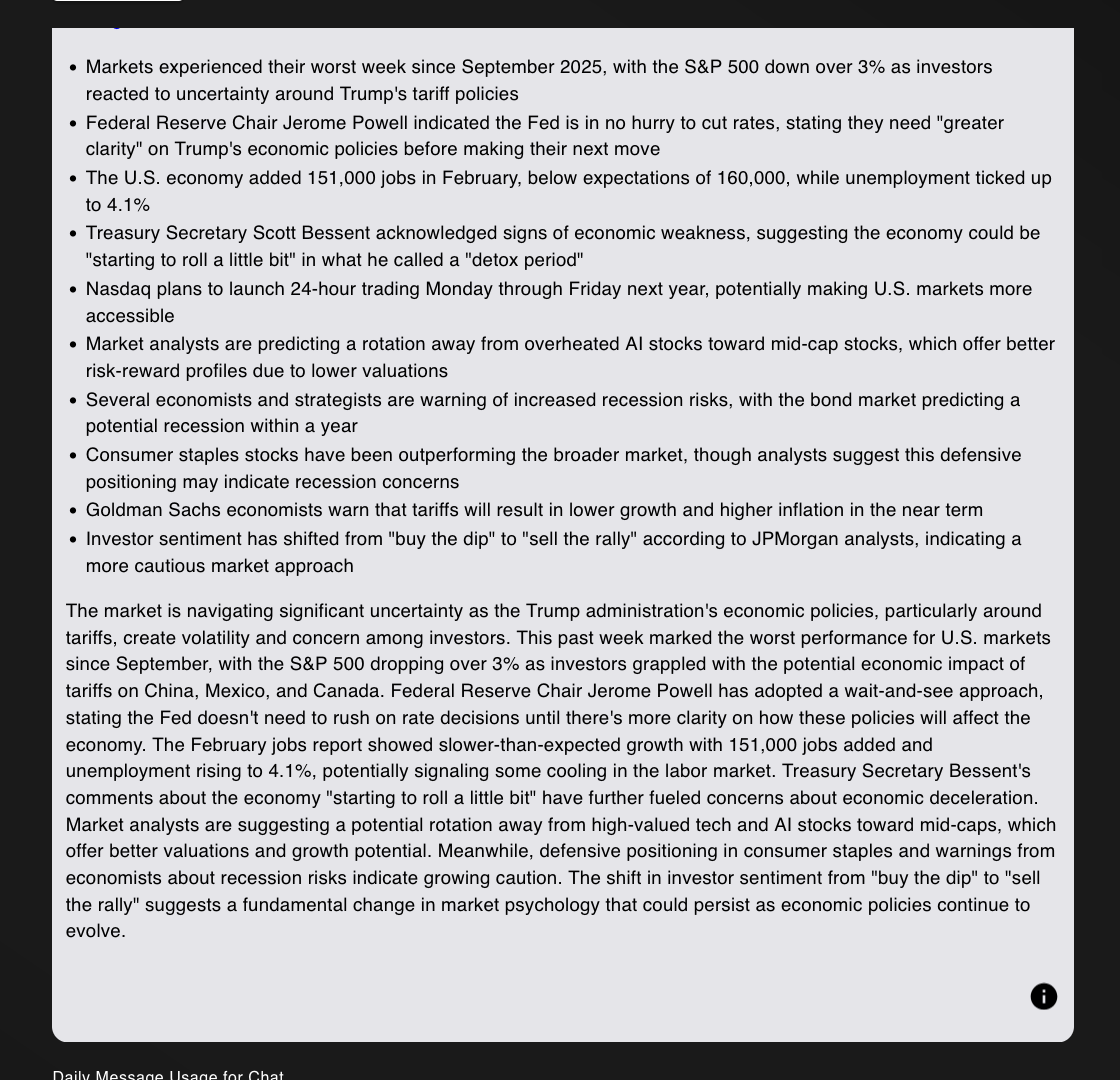
But it is complicated and requires access to APIs that do cost me a few cents. So my question is… can perplexity do better?
Asking Perplexity the same question
For this March 2025 comparison, I used OpenRouter’s response labelled Sonar Reasoning in the screenshots, then asked the same market-week question. The exact provider model ID is not recorded in this article.
what should I know about the market next week?
The response from the model was good. Very good.

First, the model “thought” about my question. Unlike other thinking models, the model also appears to have accessed the web during each chain of thought.
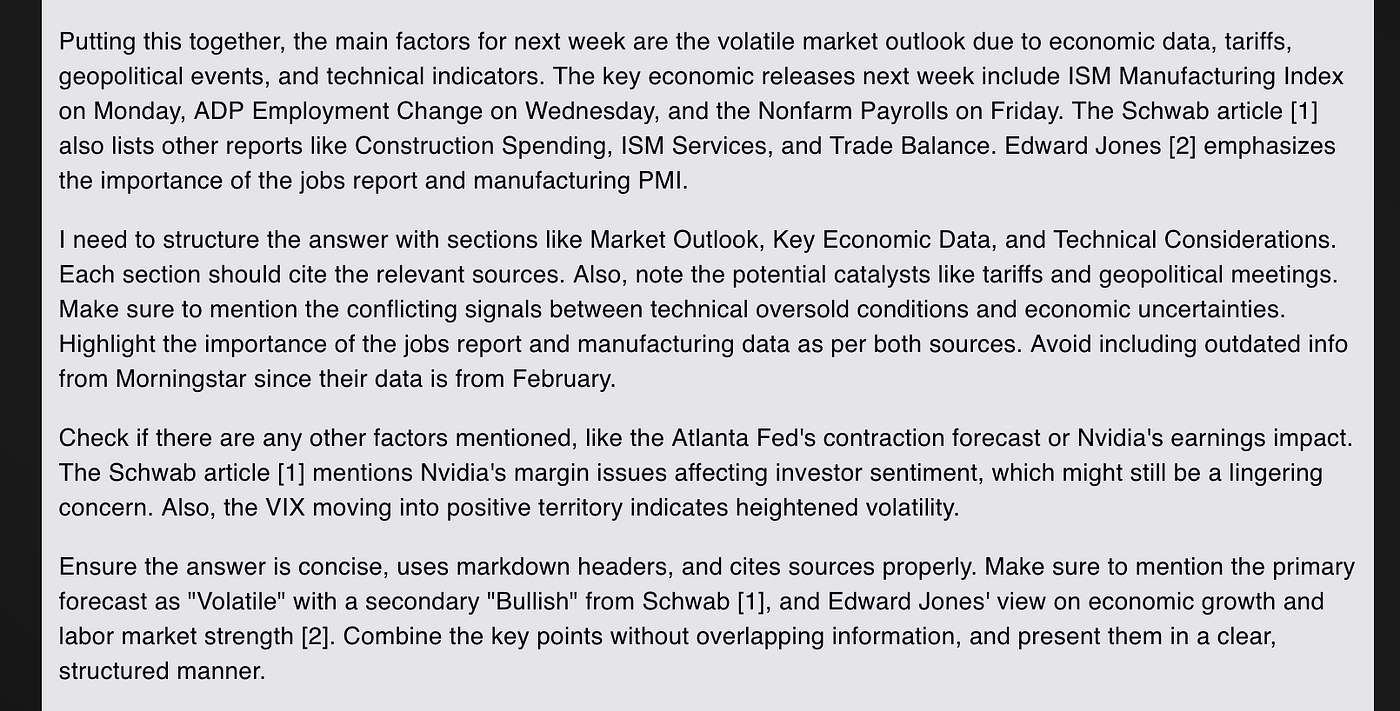
Then, the model formulated a final response.
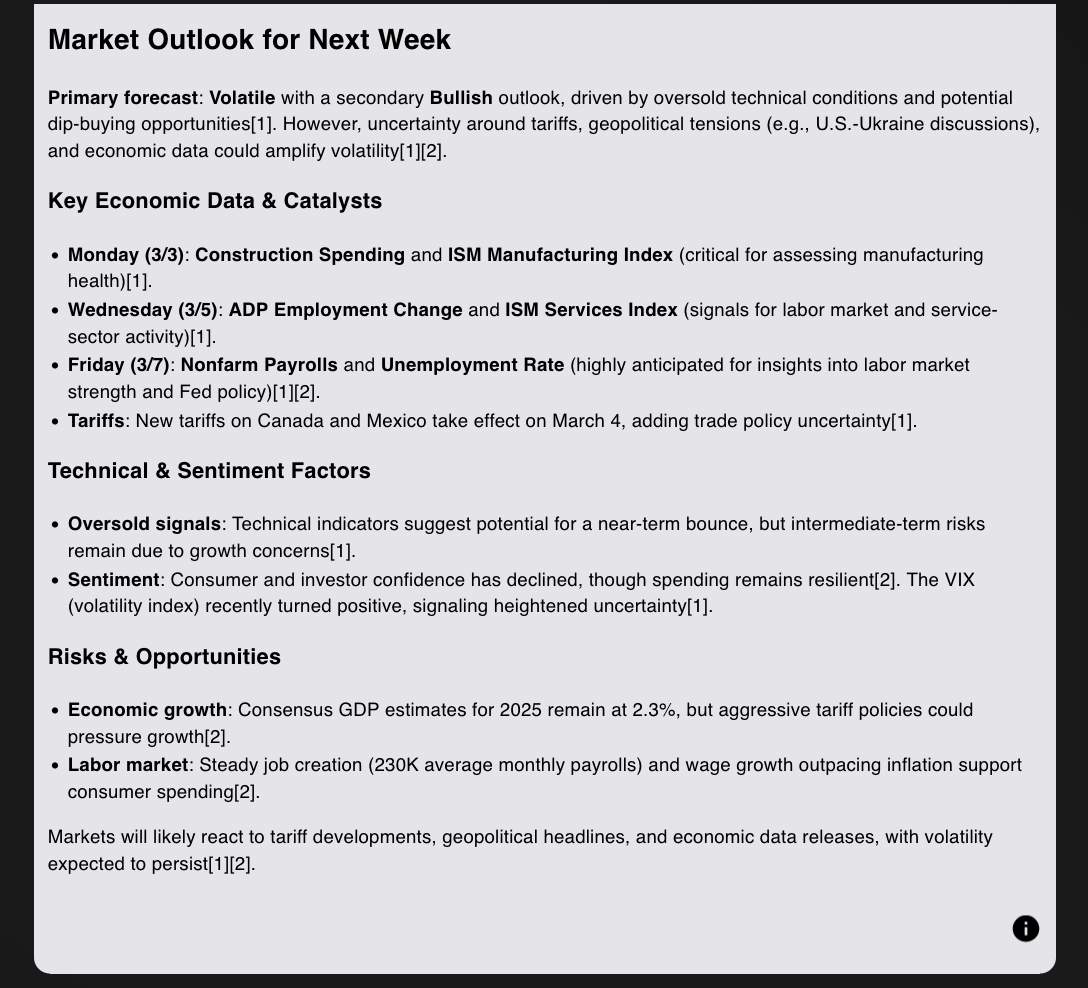
Admittedly, the response is better than my original complex approach from above. It actually directly answered my question and pointed out things that my approach missed, such as events investors should look out for (ISM Manufacturing and ADM Employment).
A generic model beat a purpose-built model for the same task? I was shocked.
The Downsides of the Perplexity Model
While the response from the Perplexity model was clearly better than my original, query-based approach, the Perplexity model does have some downsides.
The Cost
In March 2025, I quoted $1 per million input tokens and $5 per million output tokens for the model described here. Those historical rates and the screenshot comparison do not identify the exact provider model ID or establish present pricing.
Lack of Sources
In the OpenRouter response I inspected, I did not find usable source links for the generated claims. This article does not include the raw response fields or a direct Perplexity API trace, so that observation cannot establish what the direct API exposed.
Lack of Control
Finally, while the Perplexity approach excels with generic questions, it doesn’t work as well if the user asks a VERY specific question.
For example, I asked it
What is happening in the market with NVDA AND Intel. Only include sources that includes both companies and only results from the last week
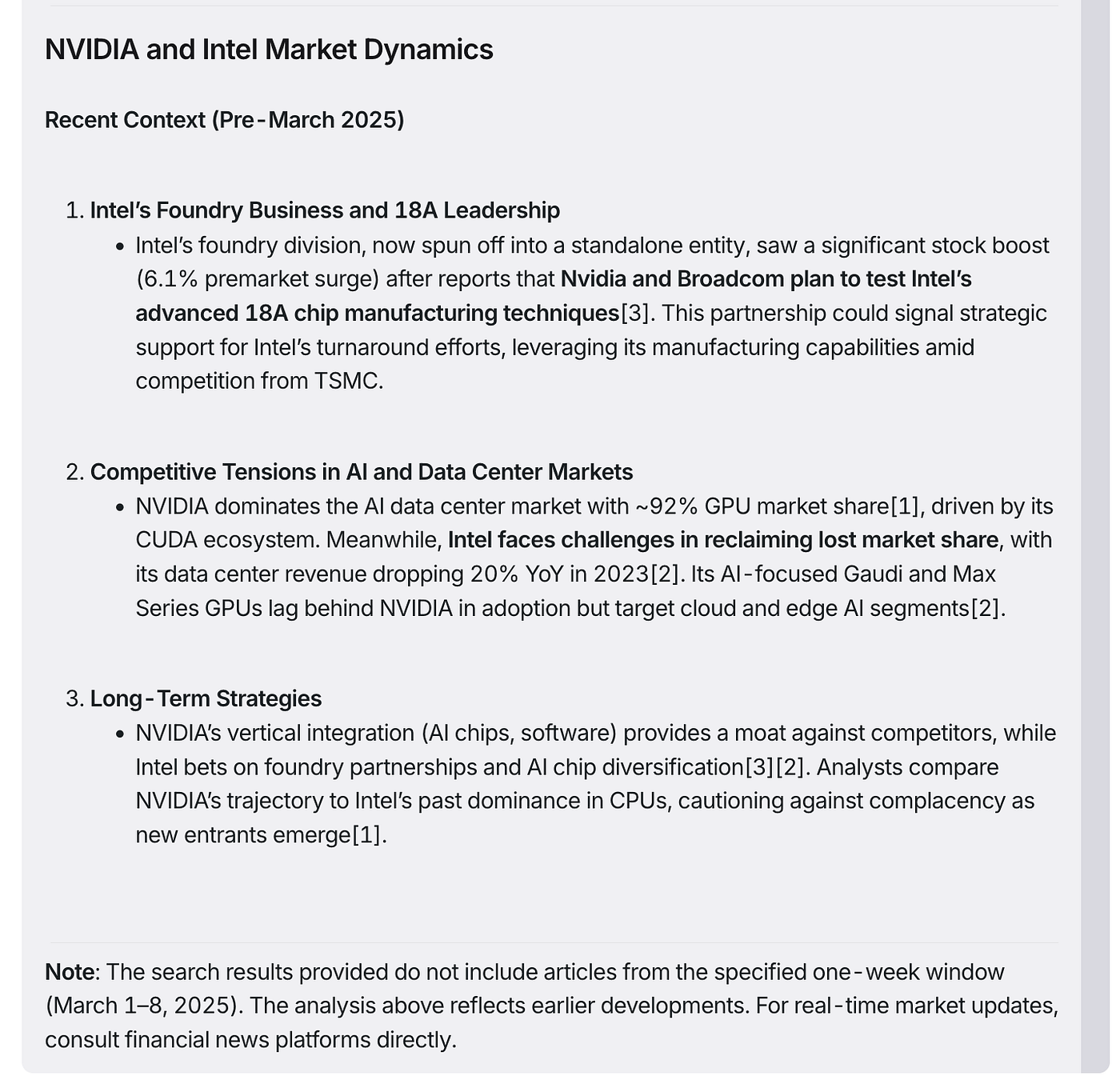
The shown response did not satisfy my requested March 1 through March 8 date filter. That is the observed failure in this example. The screenshots do not establish how the model selected its sources internally.
In contrast, the query-based approach works perfectly fine.
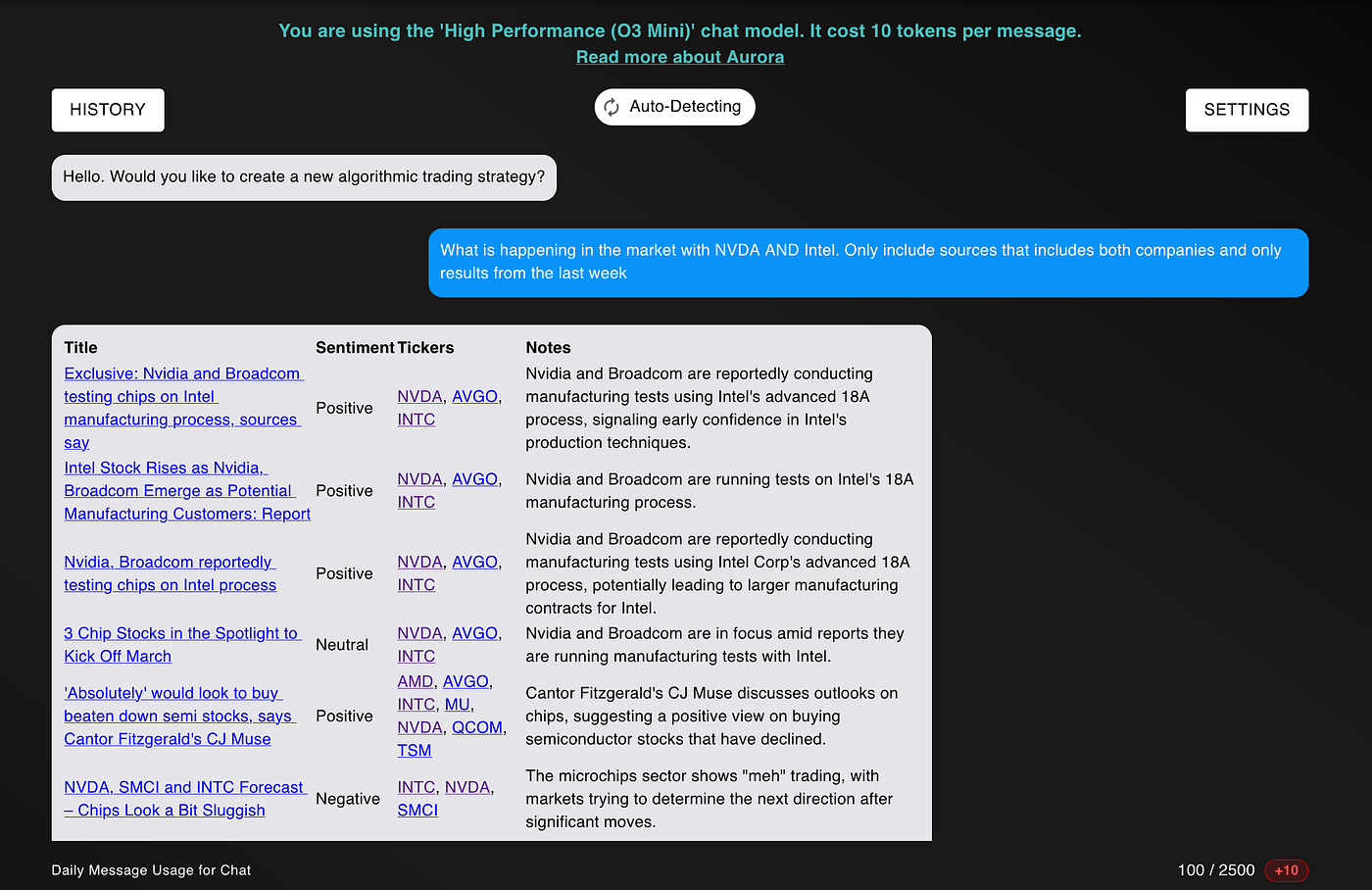
As we can see, both approaches have pros and cons.
So what if we combined them?
The combination of both
I couldn’t just ignore how amazing Perplexity’s response was. If someone could use an API that costs a couple of cents and beat my purpose-built app, then what’s the purpose of my app?
So I combined them.
I combined the financial-news API output with the web-model response, then displayed a summary, bullets and a source table. The table supports the API items it lists. Additional web-model assertions need their own matching source links; attaching the API table does not verify every sentence in the combined summary.
To make it more digestible, I even added a TL;DR, which gives a 1-sentence summary of everything from the model.
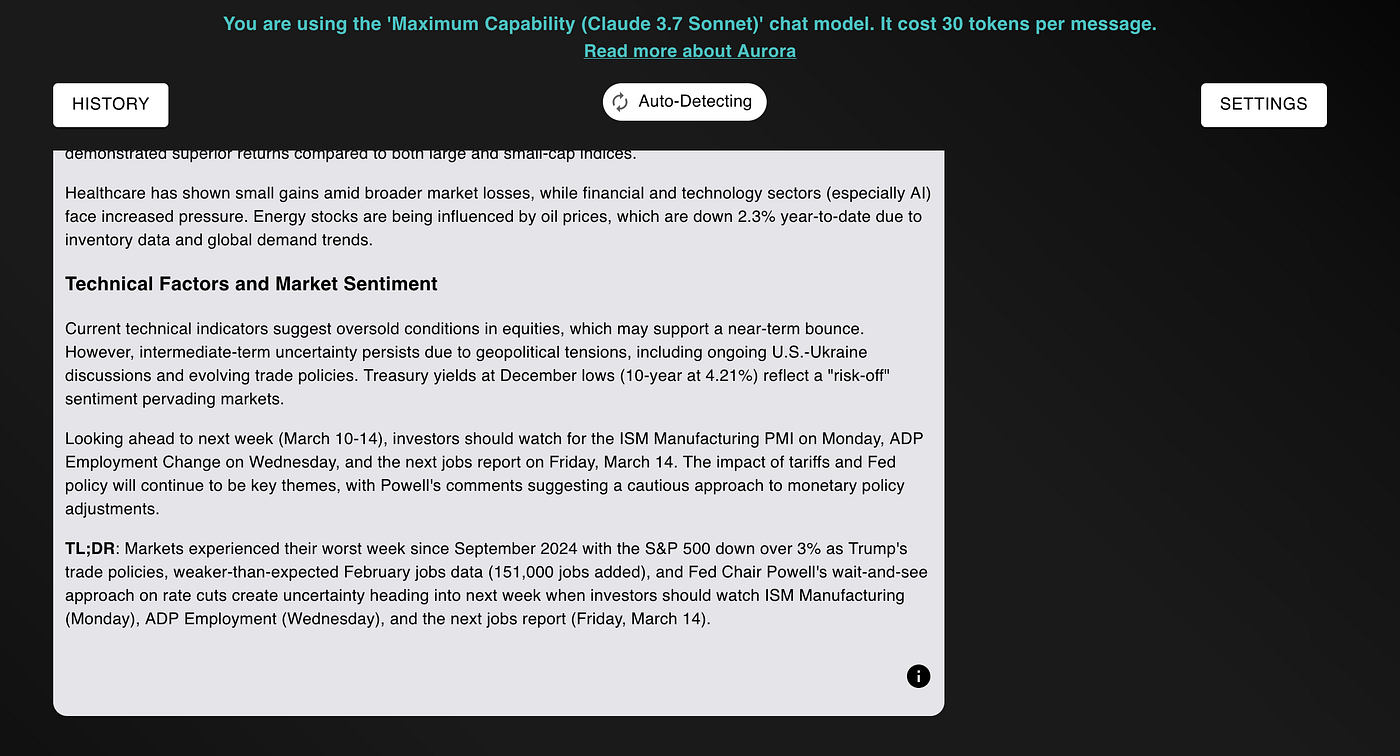
The combined response added about four to five seconds in this example. To inspect it, choose one assertion, open its matching source and confirm the company and publication date. Keep API-derived items and extra web assertions distinguishable. The article’s screenshot does not supply that complete mapping.
Concluding Thoughts
With all of the AI giants out-staging each other, Perplexity announcement must’ve been over-shadowed.
But this model is a game-changer.
This is an example of a amazing innovation caused by large language models. Being able to access the web in real-time with little-to-no setup is a game-changer for certain use-cases. While I certainly wouldn’t use it for every single LLM use-case in my application, the Stock News Querier is the perfect example where it neatly fits in. It gives me access to real-time information which I need for my application.
Overall, I’m excited to see where these models evolve in the near future. Will Microsoft release an AI model that completely replaces the need to use finance APIs to query for real-time stock information?
Only time will tell.
Thank you for reading! In this article, I briefly showcased NexusTrade, my AI-Powered algorithmic trading platform. In addition to real-time stock analysis, NexusTrade can help with:
- Finding fundamentally strong investment opportunities
- Deploying algorithmic trading strategies
- Earning passive income from your investment strategy
Getting started with NexusTrade is free! If you’re interested in how AI can make you a better, more systematic investor, check it out today!
NexusTrade - No-Code Automated Trading and Research
Perform financial research and deploy algorithmic trading strategies
nexustrade.io
No comments yet.