I gained 40% in a week because I understand basic fundamental analysis
Traders, like me, are not psychic. They make decisions based on the information available to them. Quant firms have the luxury of having an army of MIT PhD students, crazy sophisticated infrastructure, a warehouse of alternative data sources, and the ability to execute strategies that retail investors couldn't dream of, such as High Frequency Trading (HFT).
As retail investors, we can only work with what we got. For most of us, that's technical indicators and fundamental indicators [video]. These indicators help us rationalize price movement and understand a company's underlying health.
Fundamental indicators, in particular, are extremely important for long-term investors and active traders. They help us decide if a company is healthy and worth parking our money in. For example, if a company is REALLY good at making a return on an investment, then that might be a better investment than a high-yields savings account (HYSA). Alternatively, if a company burns a bunch of money each year and isn't really growing, then that's a signal that it's not a solid investment.
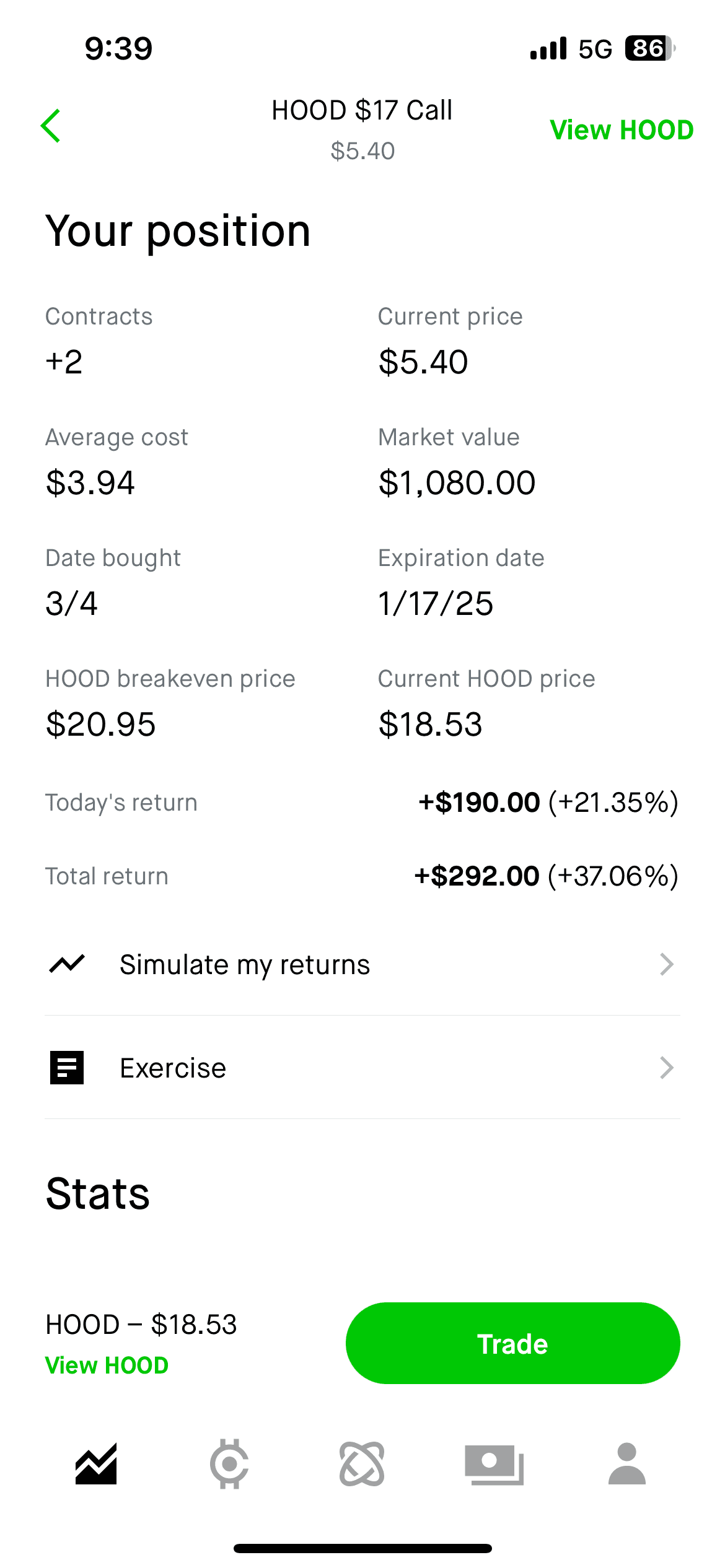
The rest of the article will explain my thought process on entering a trade with Robinhood (HOOD) call options.
Disclaimer: The content provided in this post is for informational purposes only and is not intended as financial advice or a recommendation to buy or sell any securities. I am not a financial advisor. The insights and analysis shared are meant to demonstrate the capabilities of NexusTrade in automating financial research. It's important to conduct your own due diligence and consult with a professional advisor before making any investment decisions.
Why did I buy Robinhood (HOOD) calls BEFORE it popped?
For context, Robinhood released February operating data on March 13, 2024. The linked March 14 report describes shares rising nearly 12%. I bought my calls before that jump, but this article does not give the exact entry timestamp or a realized sale record.
The first part of my decision-making process was based more on informal technical analysis. As a long-time trader, I noticed that Robinhood stock was doing really good year-to-date, and I wandered why. In my personal experience, stocks like this tend to have a lot of momentum. While other stocks like Intel (INTC) tend to have price action that is more mean-reverting, when a stock that hasn't moved a lot starts going up rapidly, there's usually a reason why.
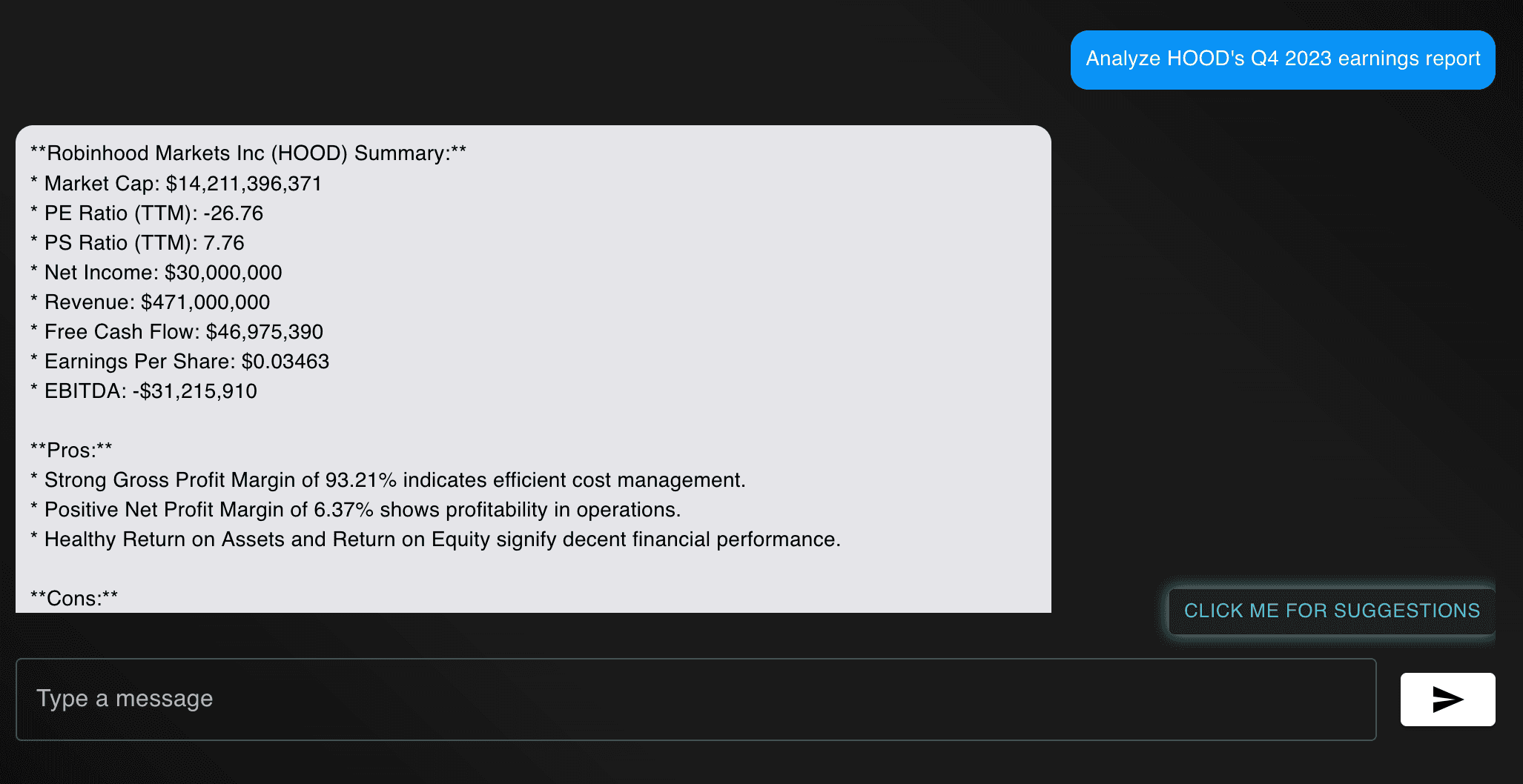
I used NexusTrade's AI chat and noticed that Robinhood had a profitable Q4. I then Googled information about Robinhood's earnings and saw that their revenue was increasing and they're aiming to deliver more profitable growth next year.
In March 2024, I asked readers whether a news integration would justify a Premium subscription. That was the feature request at this article’s publication, rather than a statement about current news availability.Finally, I noticed that HOOD's market cap was very low, especially when compared to a company like Coinbase (COIN).
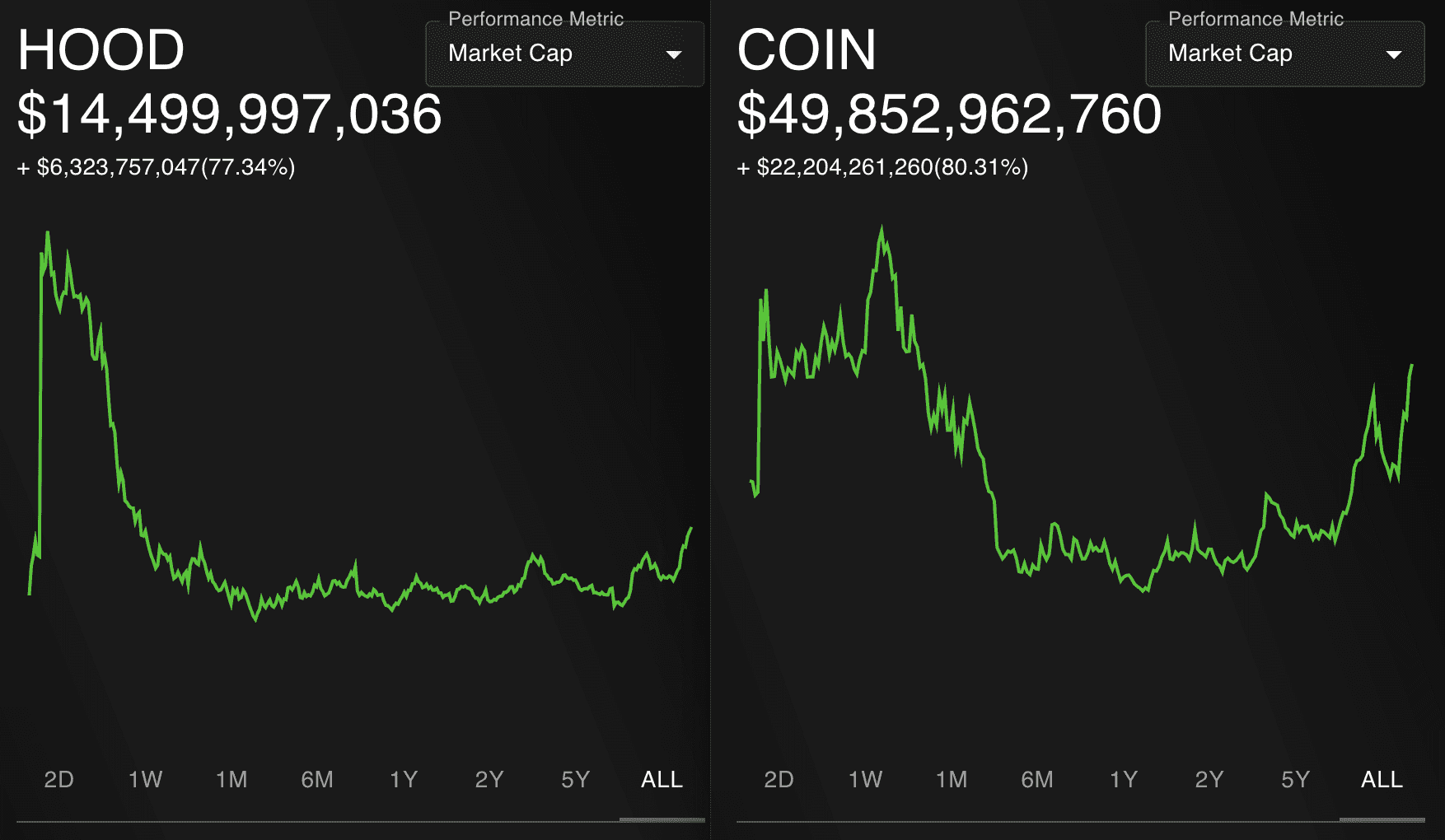
As someone who actually trades cryptocurrency, the experience between trading on Robinhood and Coinbase is night and day. HOOD is FAR superior. The main reason for that are transaction fees. The fees to sell a currency like Ethereum (ETH) are astronomical on Coinbase.
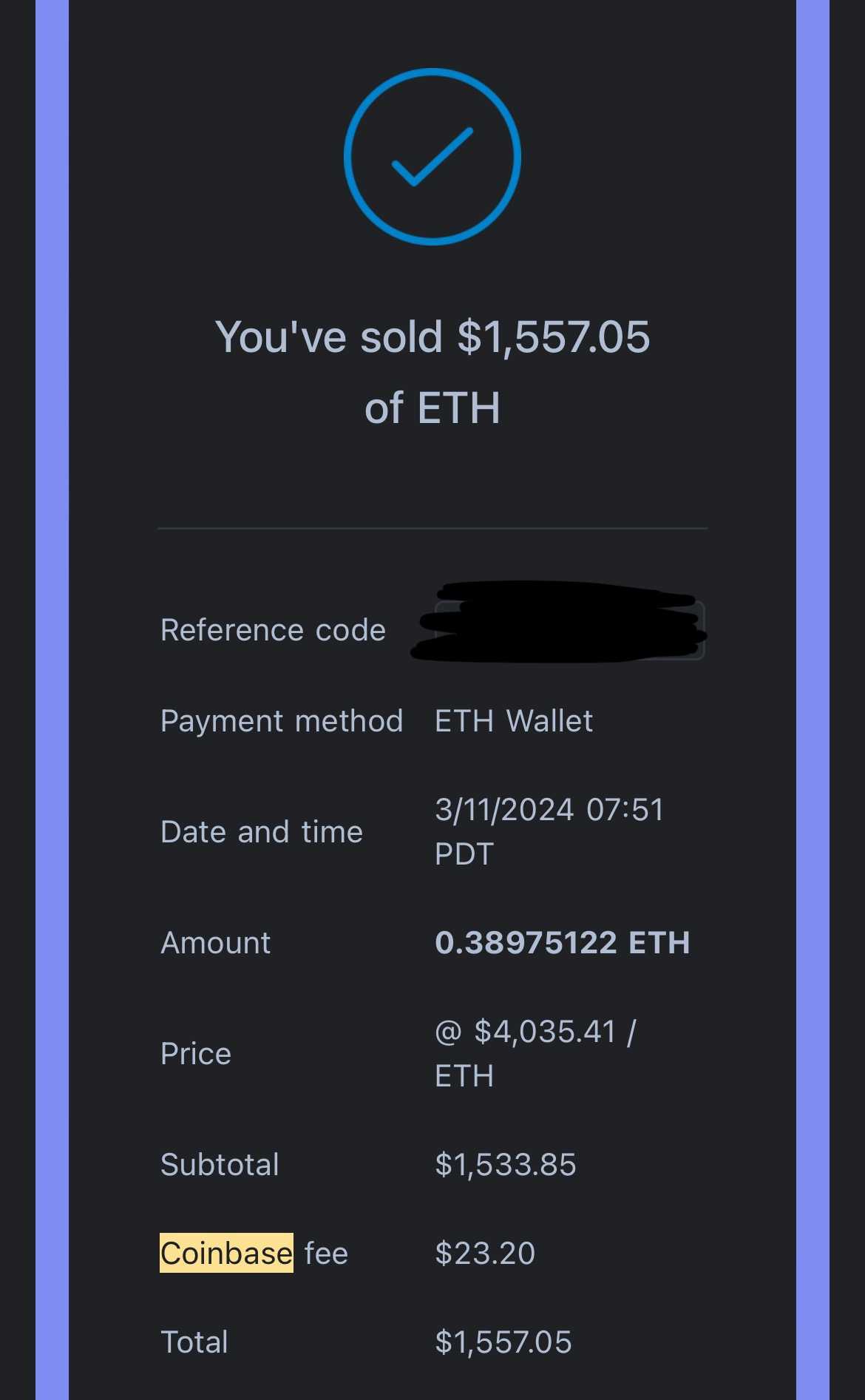
In comparison, Robinhood's fees are virtually nonexistent. Sure, there's a spread, but that exists on every brokerage (including Coinbase).
Finally, Robinhood does far more than just transactions with cryptocurrencies. Robinhood is a brokerage and a bank, with their own debit cards that they issue to users. They also have the option of doing Robinhood gold. Because of the strong momentum on Robinhood's stock price and their potential for future, profitable growth, I decided to enter a small position in 01/17/2025, 17c HOOD call options.
What's my next move with Robinhood?
I held January 17, 2025 $17 HOOD calls and proposed selling shorter-dated calls against them. With different strikes this is a call diagonal; with the same strike it is a call calendar. A short call brings premium proceeds and an obligation to deliver shares if assigned. The long call is a separate contract, so its later expiration does not automatically handle that obligation.
The long calls expired in January 2025. Their later expiration did not remove short-term price risk or the assignment obligation from the proposed short calls. I had not supplied their strikes, expirations or assignment plan here. My next research checkpoint was HOOD’s earnings report.
For a separate worked example, inspect the call-diagonal guide. It shows the requested long/short configuration and why that captured test was rejected. For the delivery obligation itself, read OIC’s assignment explanation. Neither is a completed backtest of my HOOD position.
Conclusion
The initial trade combined a momentum observation with research on profitability and growth. This article reports a 40% change in the option position over one week; it does not supply a realized sale receipt. The later short-call proposal would collect option premiums, not dividends, and adds the obligation described above.
I know this article is different from what I tend to write, but I hope its helpful in understanding how I use NexusTrade and AI to automate the financial research process and improve my investing decisions.
Subscribe to NexusGenAI Go to NexusTrade📚 Follow our thought pieces on Medium
🤝 Connect with me on LinkedIn
🐦 Follow me on Twitter
👨💻 Explore our projects on GitHub
📸 Catch us on Instagram
🎵 Dive into our TikTok
No comments yet.