Hey You! The original story is on Medium! Please consider reading the article there, clapping for it, and leaving some feedback in the comments!
|
As I’ve stated in the previous update, these are not backtesting results. These are results obtained via real-time paper-trading utilizing the NexusTrade platform. This article will describe the current, unadulterated results of these AI-Generated Portfolios, and also show a comparison between the world’s famous Buy and Hold strategy.
|
The purpose of this experiment was to show the average person that algorithmic trading and automated investing is no longer inaccessible to them. Prior to the advent of Large Language Models, prop shops and hedge funds single-handedly dominated the market with their exclusive access to Machine Learning tools.
|
However, thanks to the creation of ChatGPT and the OpenAI APIs, anybody can start learning how to perform algorithmic trading. And, they don’t need to buy a $10,000 course from a shady TikToker.
|
Here’s how I generated these portfolios:
- I logged onto my NexusTrade account.
- I generated a portfolio of trading strategies using the AI-Powered Chat.
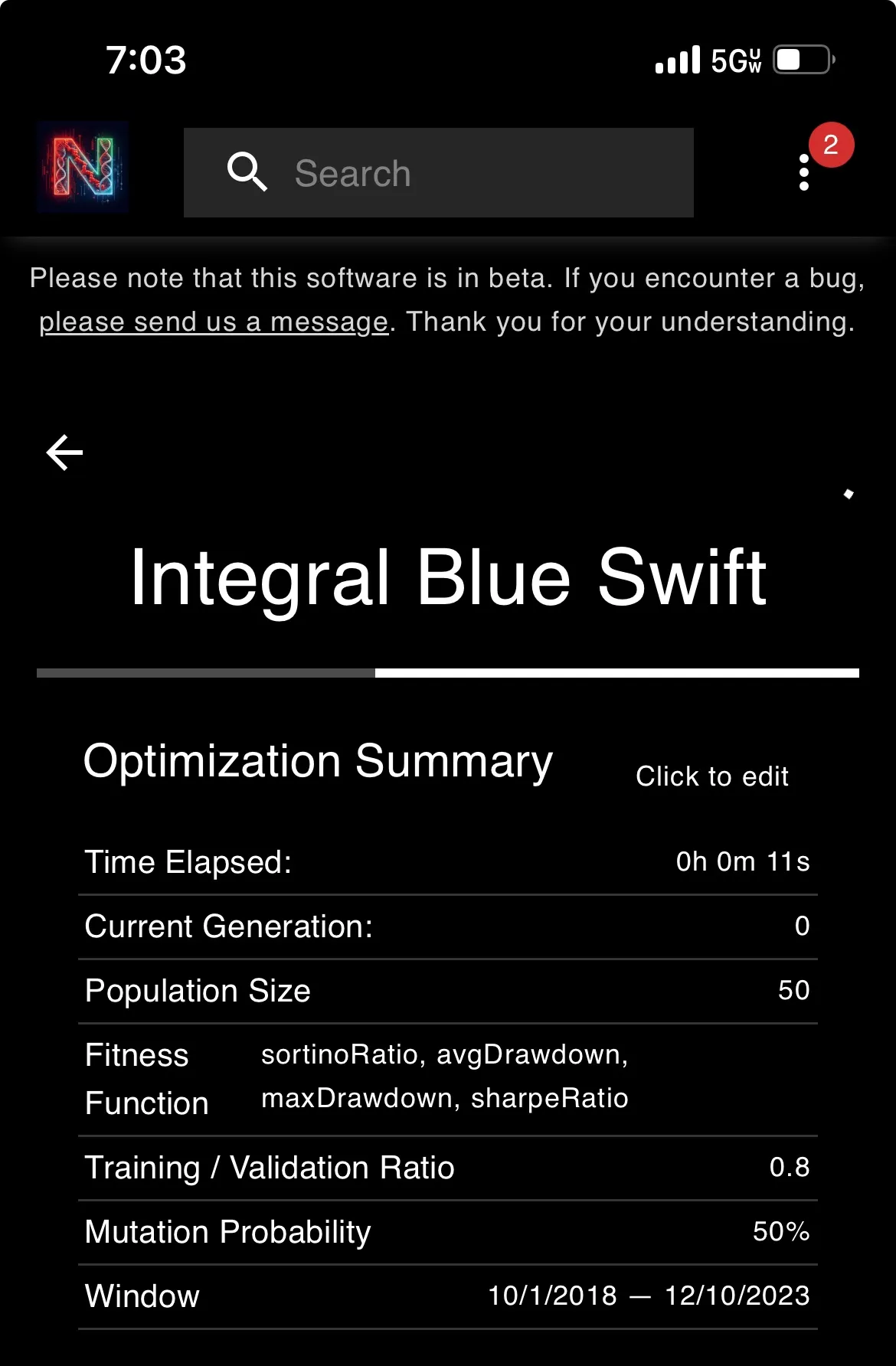
- I optimized my trading strategies using Genetic Optimization with the click of a button.
|
During this experiment, I wanted to test several different ideas to see how well each of them would perform in the market. This included:
- An “un-optimized” AI generated portfolio
- An AI-generated portfolio that was optimized at the start of the experiment
- Two AI-generated portfolios that are re-optimized in different ways.
- A portfolio with “Buy and Hold SPY” as the baseline
|
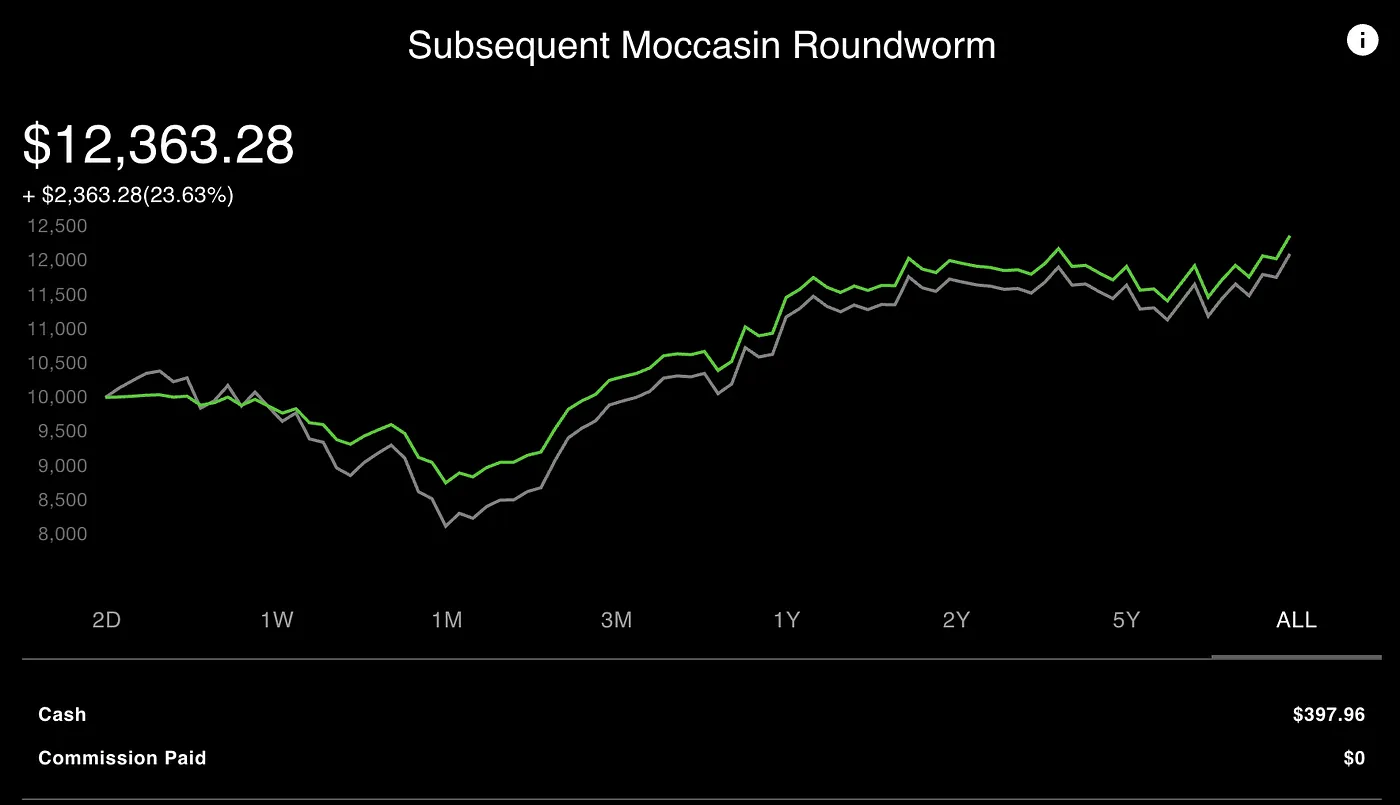
During the last update, I received feedback on how we don’t know how well these portfolios compare to Buying and Holding TQQQ. Thus, this article will also include backtest results to see which portfolio would’ve performed better.
|
Aside: NexusTrade’s Revolutionary AI-Powered Chat
|
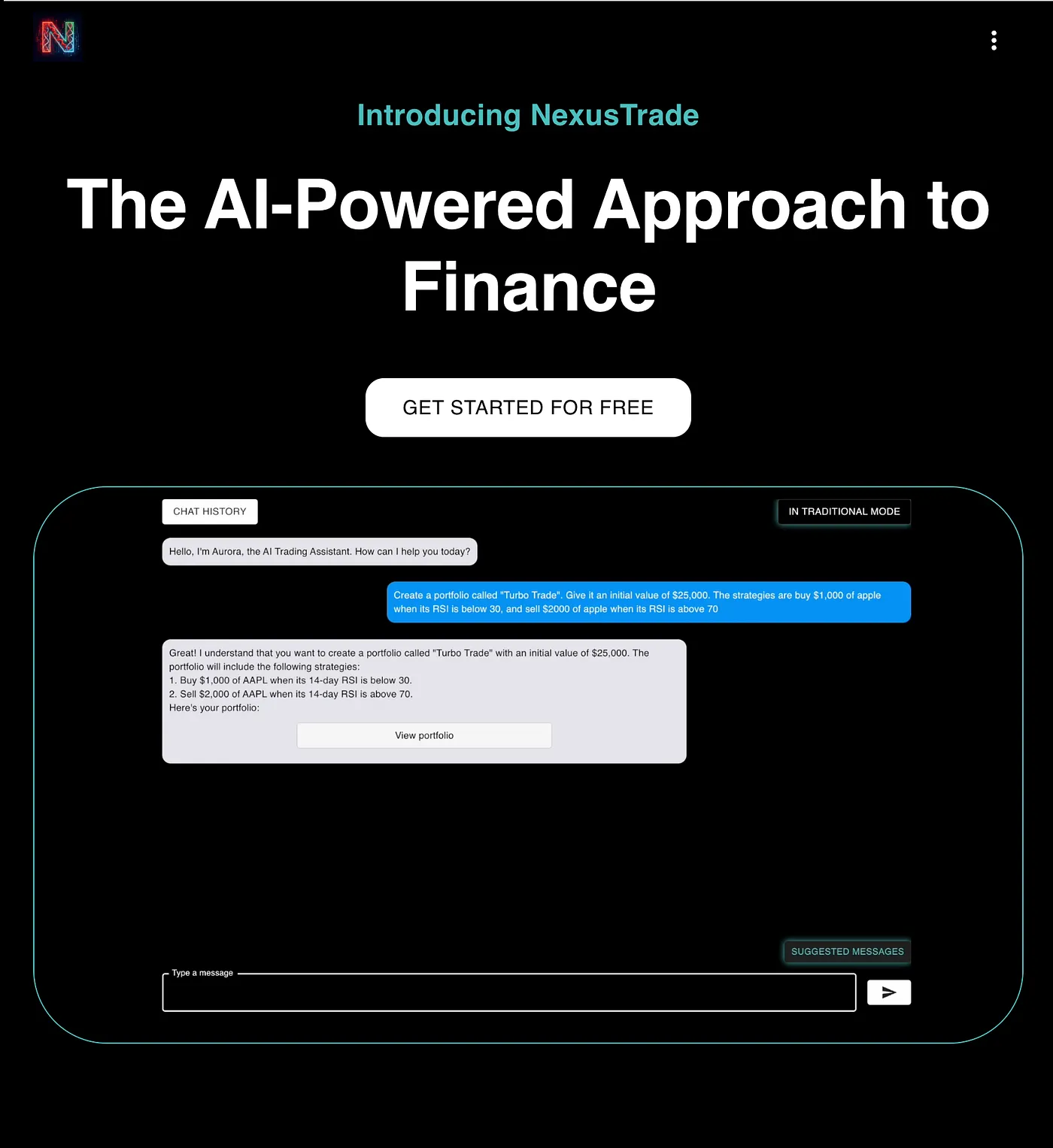
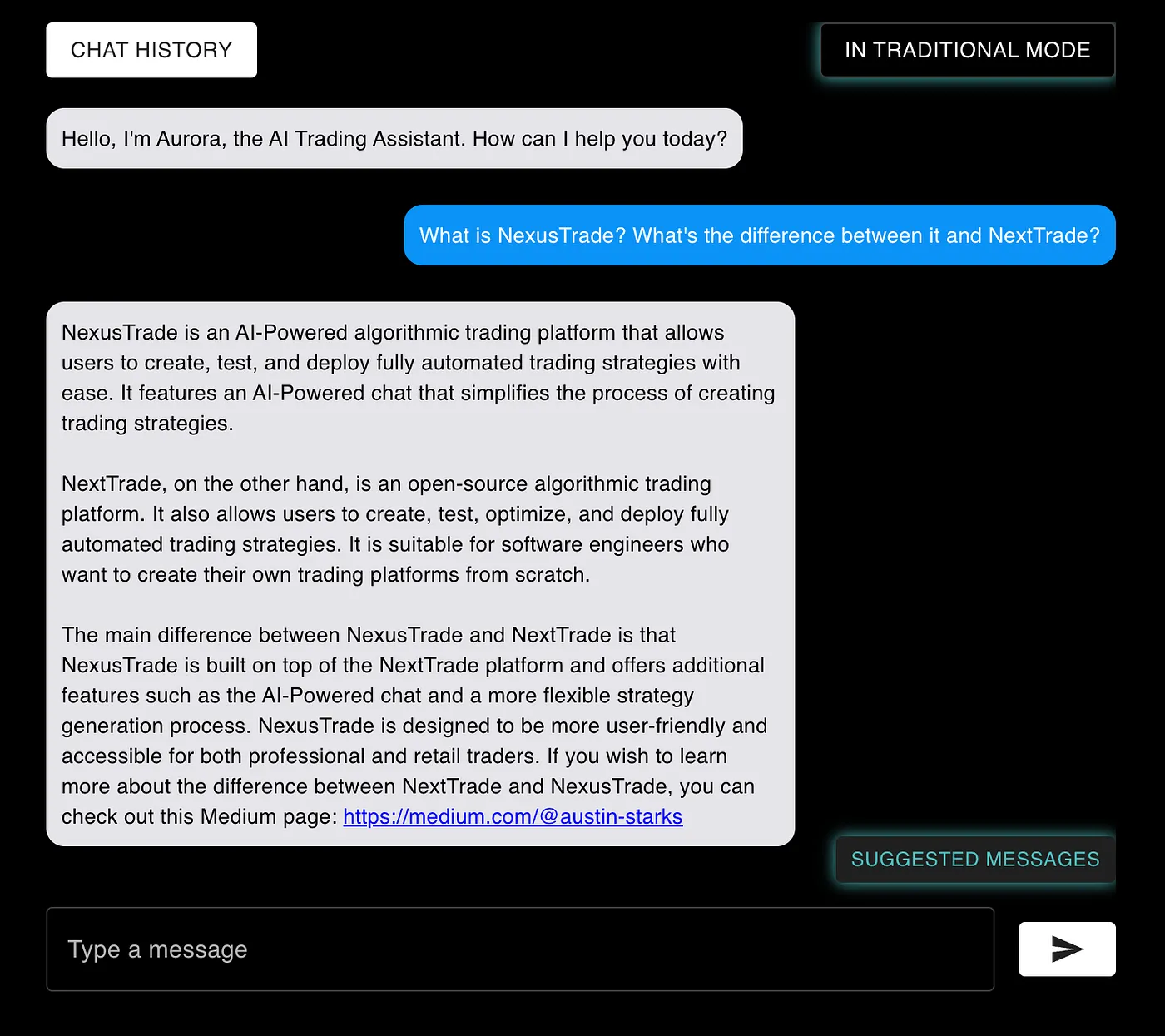
Without a doubt, NexusTrade’s most powerful feature is its AI-Powered Chat. It’s a technological marvel that NexusTrade can handle such a wide array of input, including analyzing a company’s financials, or questions about the NexusTrade platform itself.
|
NexusTrade’s AI-Powered Chat is applicable for a wide array of use cases. From education to content-creation, a no-code AI-Chat platform will allow the everyday person to unlock the full potential of LLMs for their unique use-cases. That is precisely why I developed NexusGenAI.
|
While currently NexusGenAI powers the AI-Chat in NexusTrade, it is highly applicable to different industries and use-cases. To try it out for yourself, join the waitlist for it today!
|
Buy and Hold Baseline Portfolio
|
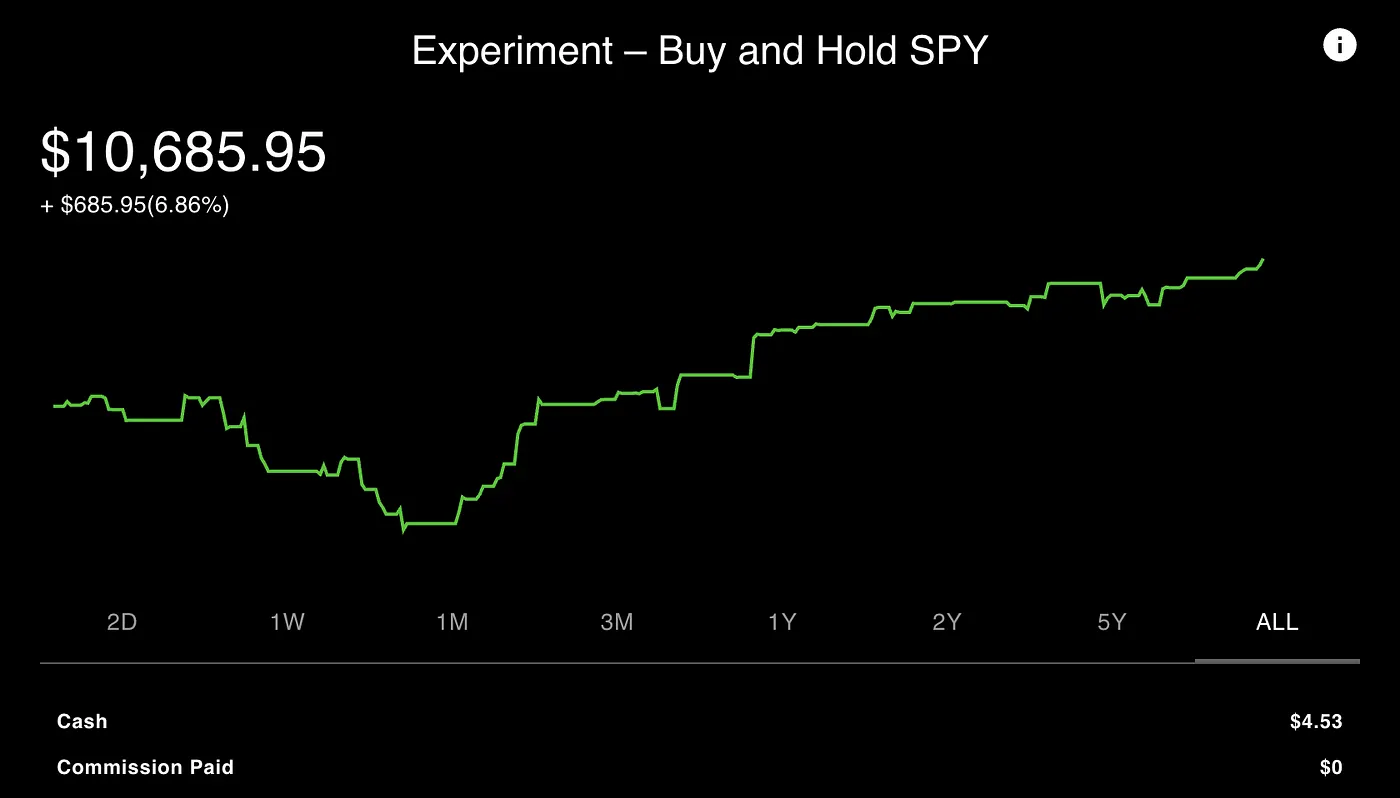
The Buy and Hold Method stands as the pinnacle among trading tactics. Its simplicity and efficiency surpass that of most hedge funds over extended periods.
|
One and Done Optimized Portfolio
|
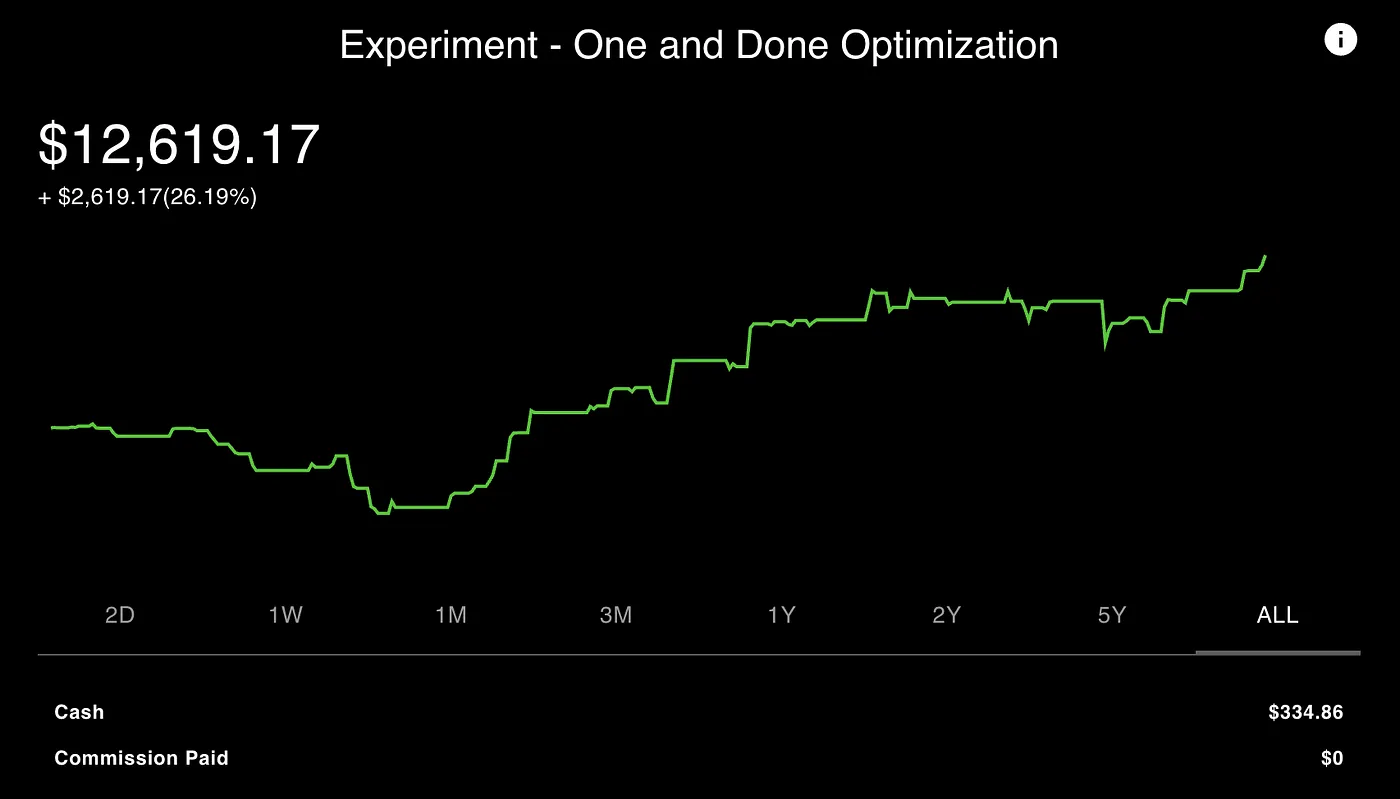
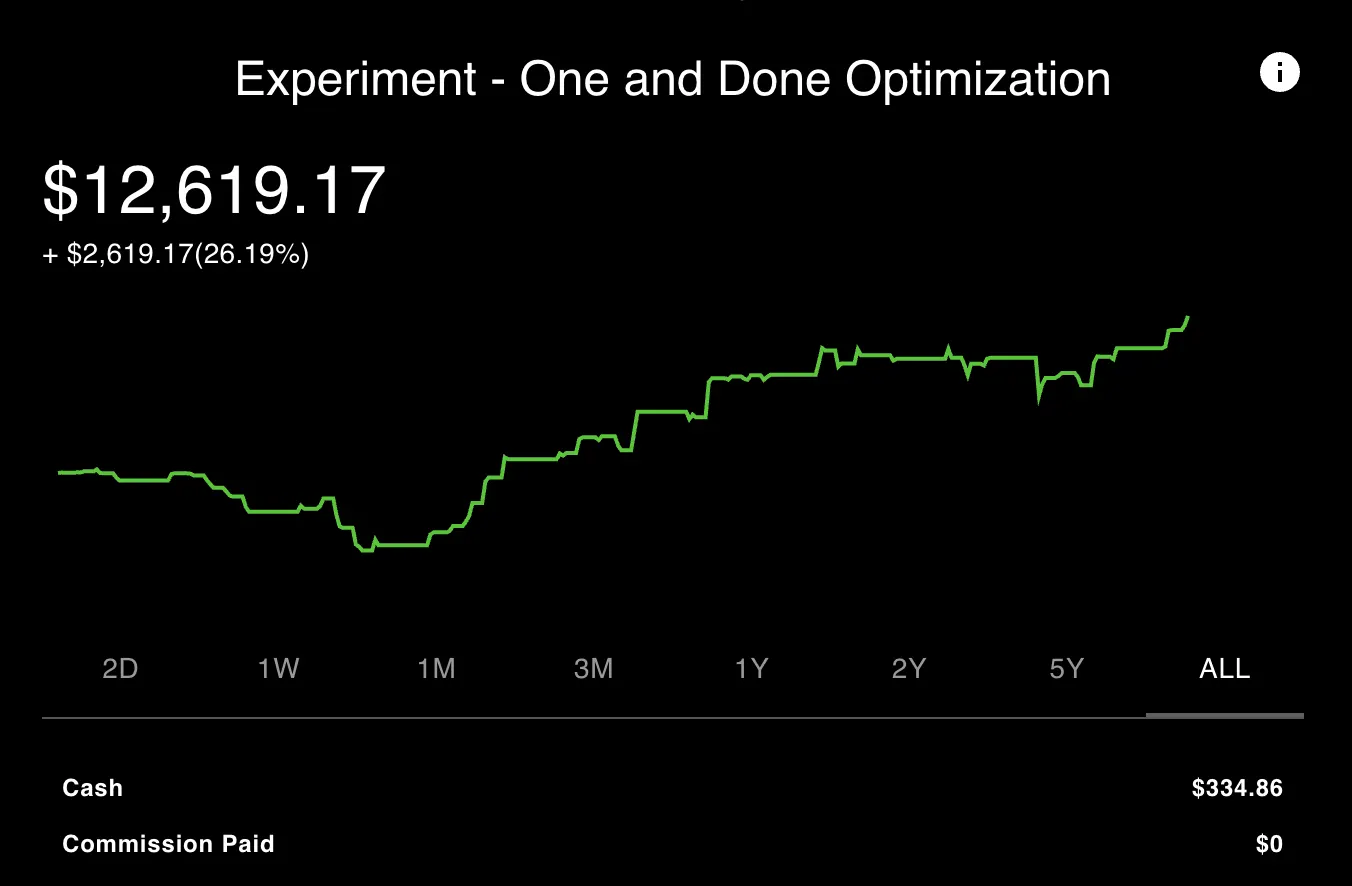
As mentioned before, the One and Done Optimized Portfolio was optimized at the start of the experiment and never re-optimized. Currently, it still has the best performance by far, boasting a savage 26% return since October 10th.
|
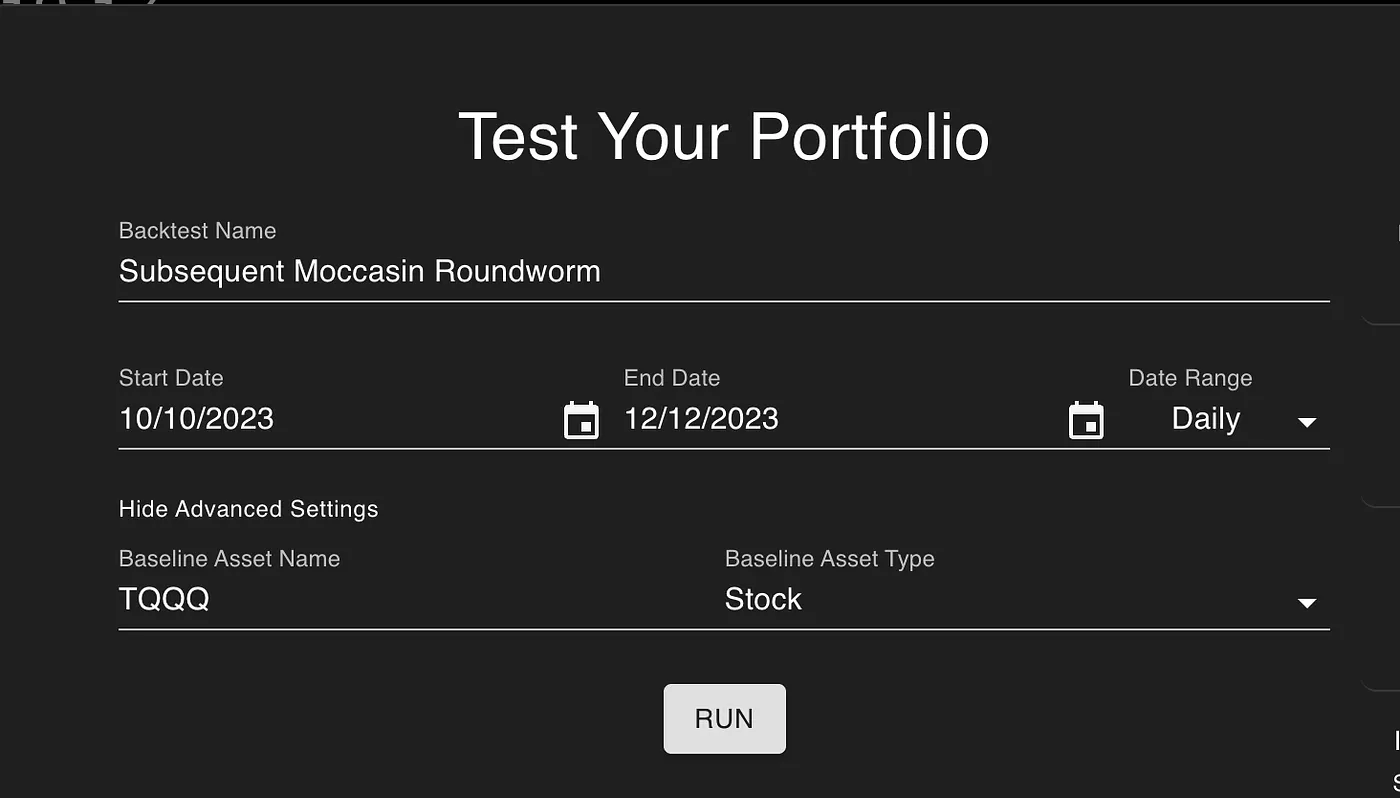
During the last update, people were wondering how this strategy fared against Buy & Hold TQQQ, the stock that these portfolios are trading. Because a Buy and Hold TQQQ portfolio wasn’t deployed, we can simulate the results using backtesting.
|
Theoretical Backtest Results vs TQQQ
|
Sliding Window Optimized Portfolio
|
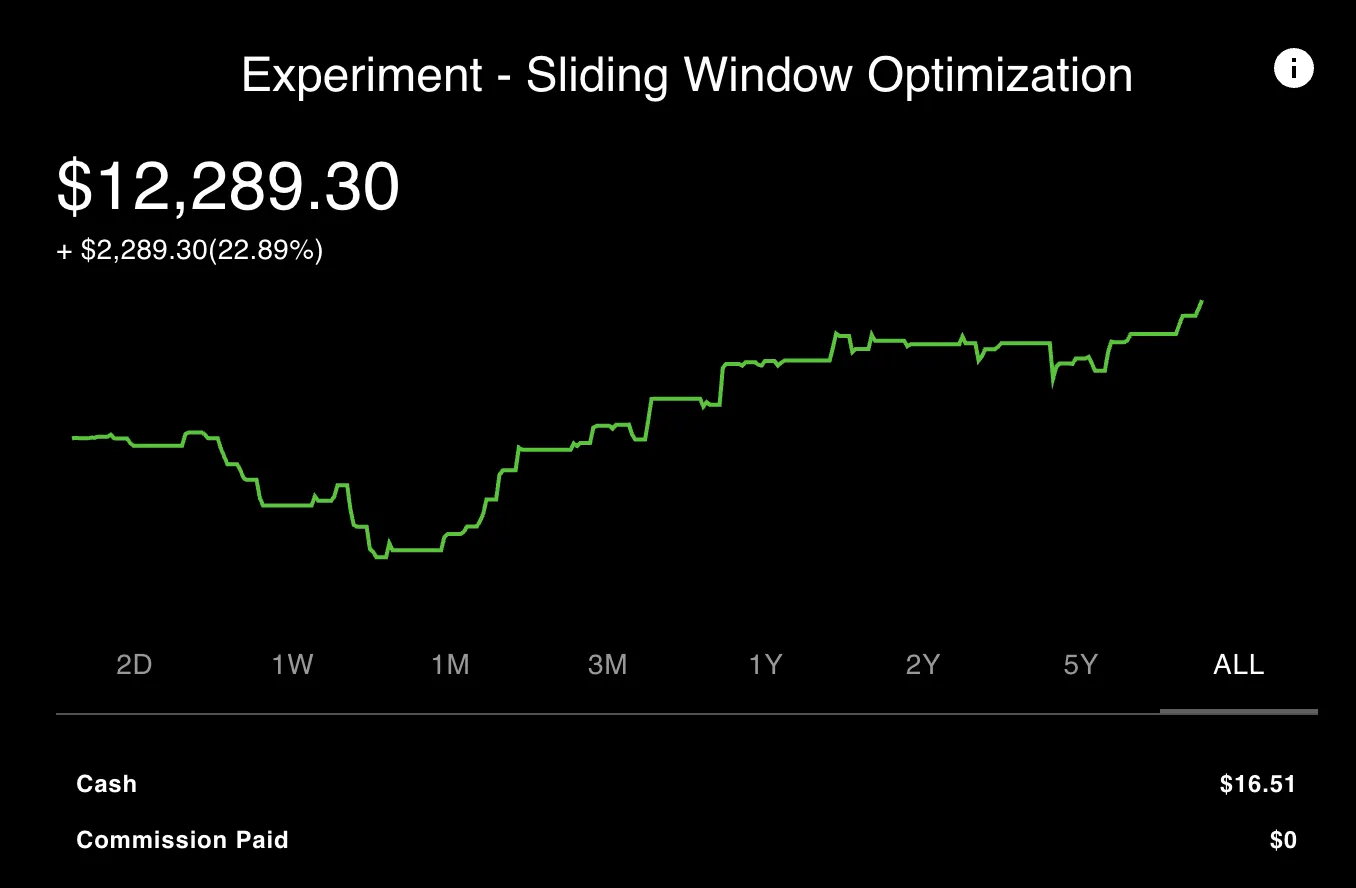
The Sliding Window Optimized Portfolio is initially optimized at the start of the experiment and undergoes subsequent re-optimizations every 1 to 2 weeks. In each re-optimization, we shift both the start and end dates forward. This approach ensures the model continually adapts its decision-making to the latest data, helping it adjust to changing market conditions.
|
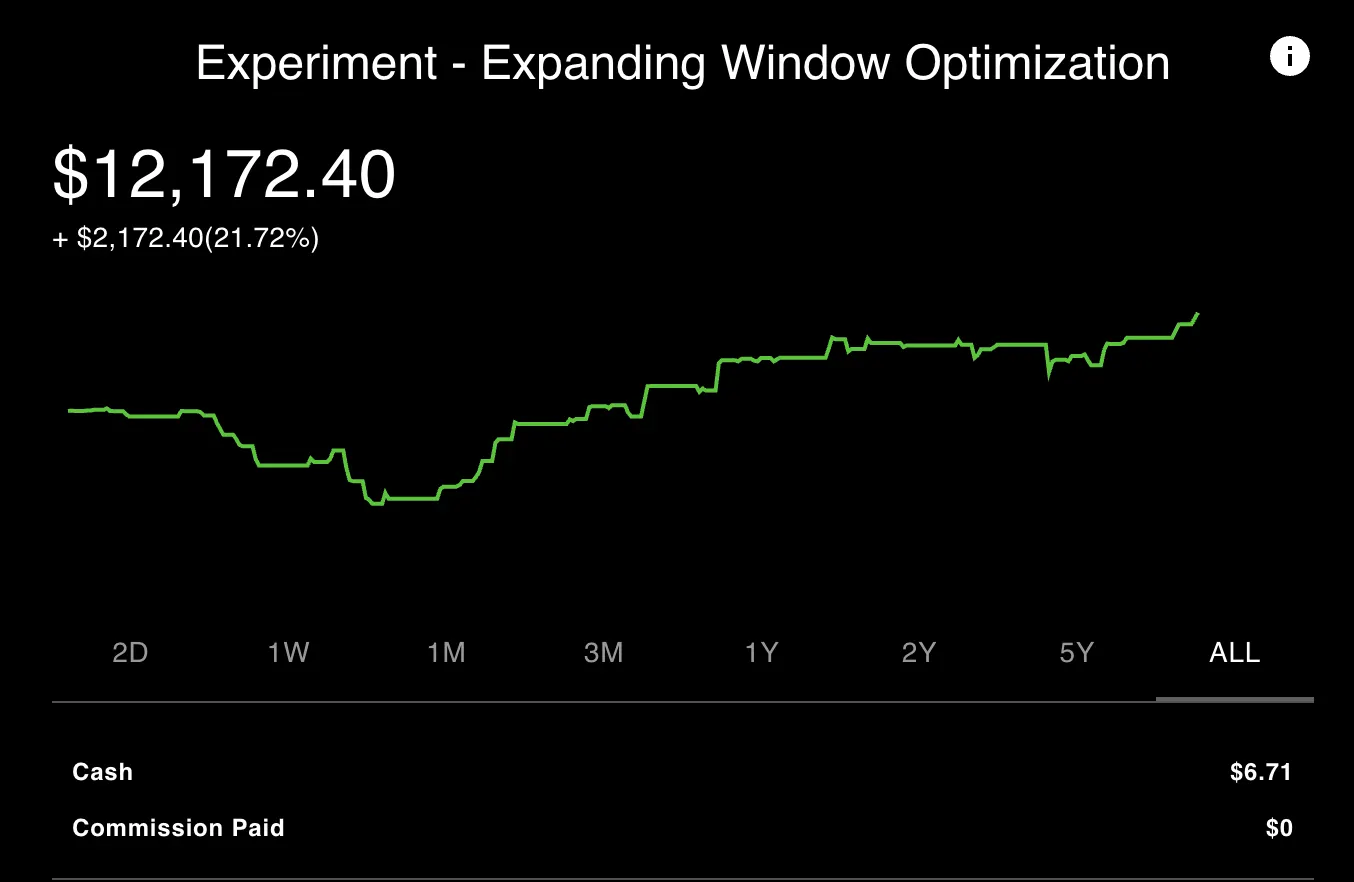
Expanding Window Optimized Portfolio
|
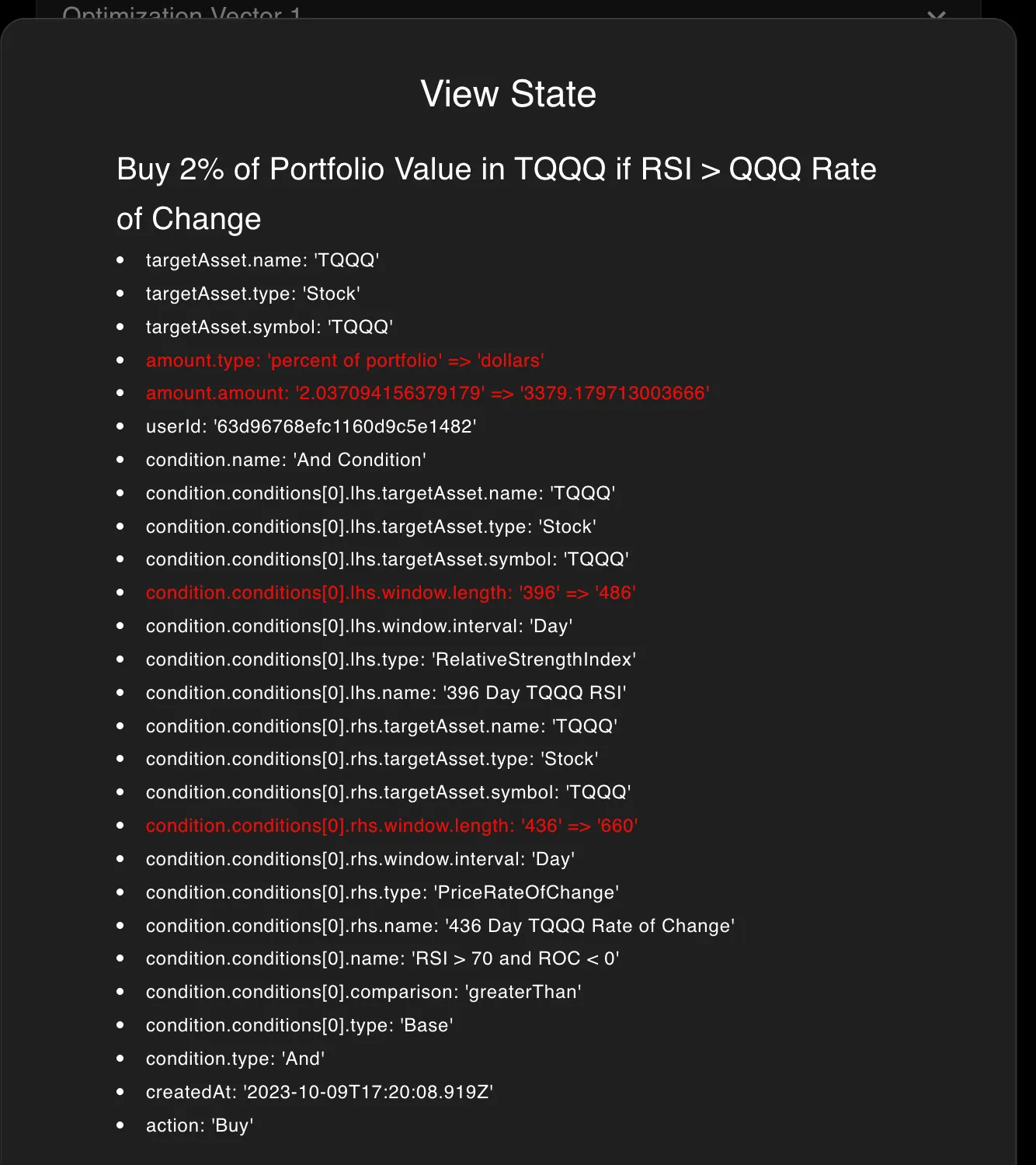
The Expanding Window Optimized Portfolio, distinct from the Sliding Window approach, was initially optimized at the experiment’s beginning and is re-optimized every 1 to 2 weeks. In this method, only the end date is advanced during each re-optimization, allowing the model to incorporate all historical data available up to that point. This strategy is based on the principle that every past market event is significant, and the model should be designed to retain and learn from this cumulative experience, in contrast to the Sliding Window approach, which continuously adjusts both start and end dates to focus on the most recent data.
|
(The boring unoptimized portfolio has been omitted, as it still hasn’t initiated a single trade 🙃)
|
While it is easy to get overly-excited over these amazing results, I recommend exercising caution and additional testing. The reason for this is simple; the ChatGPT-generated trading strategies hasn’t significantly outperformed buy and hold on TQQQ.
|
Don’t get me wrong; these results are undeniably outstanding. But while we’ve shown that the optimization process learns how to enter into a position, we haven’t shown evidence to be remarkably good at exiting a position. These past couple months were a pure bullish rampage, and the portfolios can go down as easily as they go up.
|
Of course, if this were trading with real capital, I could just hit the sell button, and be done with it. But that would ruin the beauty of the experiment. If I wanted to demonstrate that ChatGPT-human hybrids are DEMOLISHING the market, I should start a separate series 😉.
|
Nonetheless, I will still attempt to guide the optimization process in that direction. The beauty of genetic optimizations is that you can choose your fitness functions, and thus, your portfolios can adapt like organisms in the world trying to survive.
|
This simple demonstration shows how AI can help the average investor create, test, optimize, and deploy algorithmic trading strategies. The fact that our portfolios are beating even the best strategies is unbelievable, especially with how simple these strategies are.
|
Nonetheless, we must exercise restraint and continue to monitor the performance of these portfolios. While the optimization process has shown to be very effective at entering into TQQQ positions, we haven’t shown evidence that the portfolio will exit the market at the right time. Ideally, by optimizing towards minimizing drawdown, we can show that AI is able to continuously update a portfolio in accordance with the investor’s financial goals.
|
|

No comments yet.