Last year, I used GPT o1 to create a trading strategy. It is the WORST strategy I’ve ever seen
A 40% paper loss, a 52% drawdown and an exit rule that ignored the position’s cost basis.
 Austin Starks10 min read
Ten months ago, OpenAI shocked the world with their O1 model.
O1 was the first of its kind Large Reasoning Model, a special class of language models that are capable of thinking before it responded. It transformed the world.
To demonstrate its abilities in finance, I had it generate an algorithmic trading strategy. The backtests showed 277% returns over 4 years. I was shocked!
I used OpenAI’s o1 model to develop a trading strategy. It is DESTROYING the market
It literally took one try. I was shocked.
medium.datadriveninvestor.com
I deployed this portfolio for real-world paper-trading, hoping to prove to everybody the insane power of these language models. And for a while, I was correct. It was DOMINATING the market.
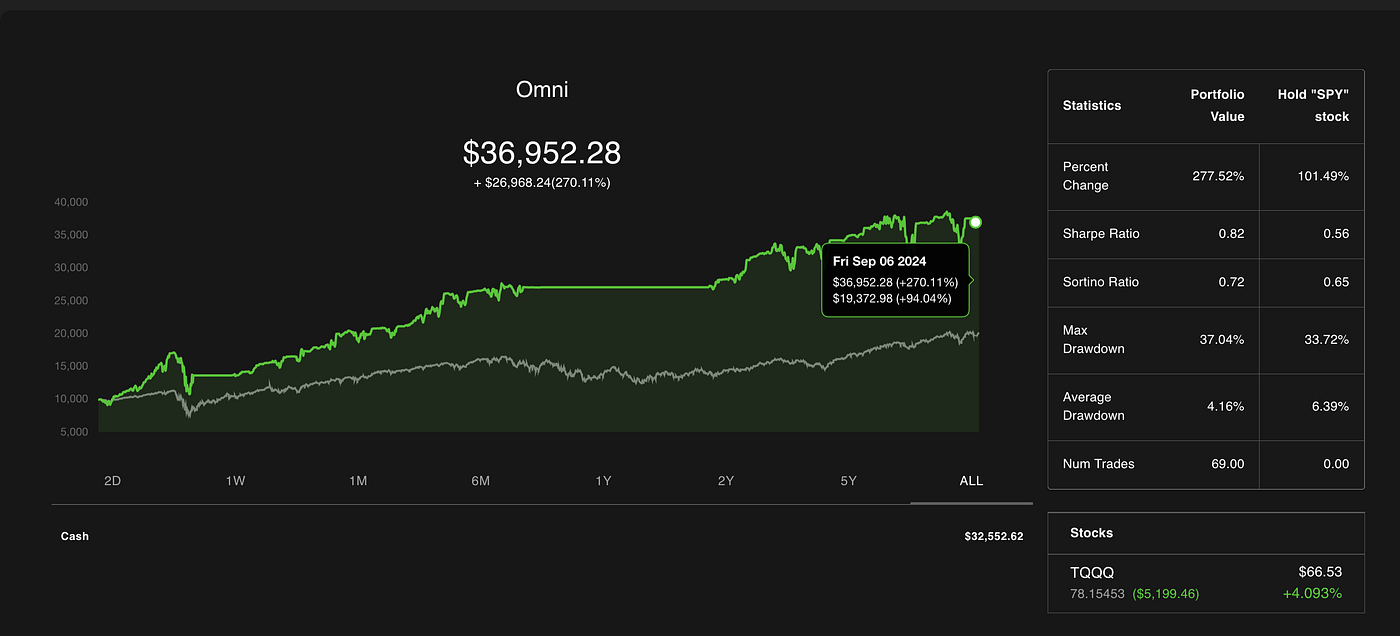
By the July 12, 2025 update, the forward paper portfolio was down about 40%. That record is separate from the earlier four-year backtest. The article calls the experiment ten months old, but does not supply a dated original deployment receipt; the later comparison backtest starts October 15, 2024.
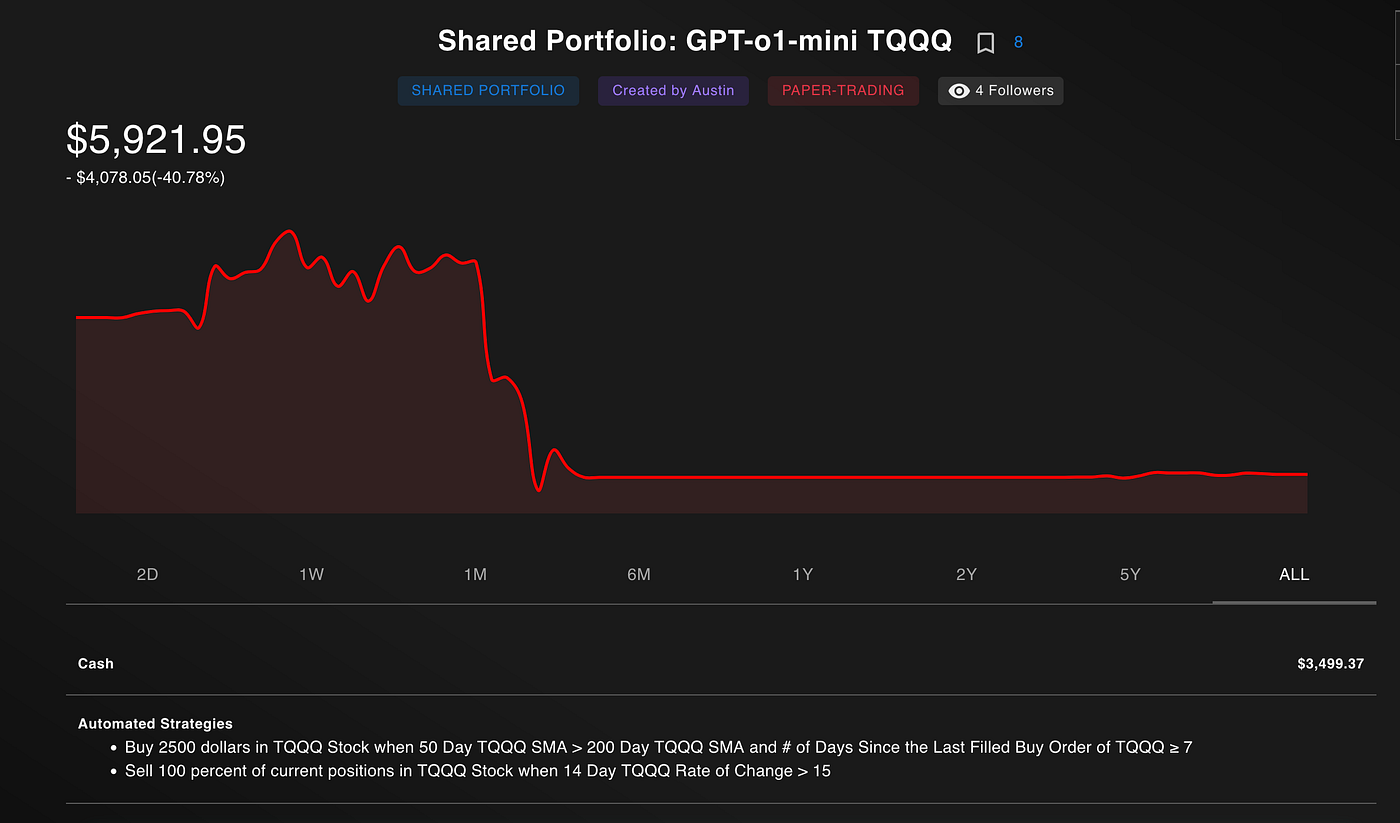
The reported forward paper Sharpe ratio was negative and maximum drawdown was 52%. Those are severe results without needing an unmeasured penny-stock comparison.
Here’s what happened in this 10-month long, real-world algorithmic trading experiment.
Recapping How I Got GPT o1 to Create an Automated Trading Strategy
First, let me explain how I was able to use GPT o1 to create a trading strategy.
I built NexusTrade, a no-code platform to help savvy investors create their own algorithmic trading strategies.
NexusTrade - No-Code Automated Trading and Research
Perform financial research and deploy algorithmic trading strategies
nexustrade.io
I integrated large language models to reduce manual configuration effort and allow the creation of strategies using natural language. When creating a portfolio, the process is as follows:
- Send Request: The message from the user is sent to the server
- Classify Request: From a list of prompts, such as the “AI Stock Screener Prompt” or “Create Portfolio”, the model determines the most relevant prompt to process the request
- Forward to Prompt: We send the message to the most relevant prompt and get a response, often containing initial details and configurations.
- Post-Process Response: Depending on the prompt, we’ll perform additional actions. With the “Create Portfolio” prompt, it goes through more steps.
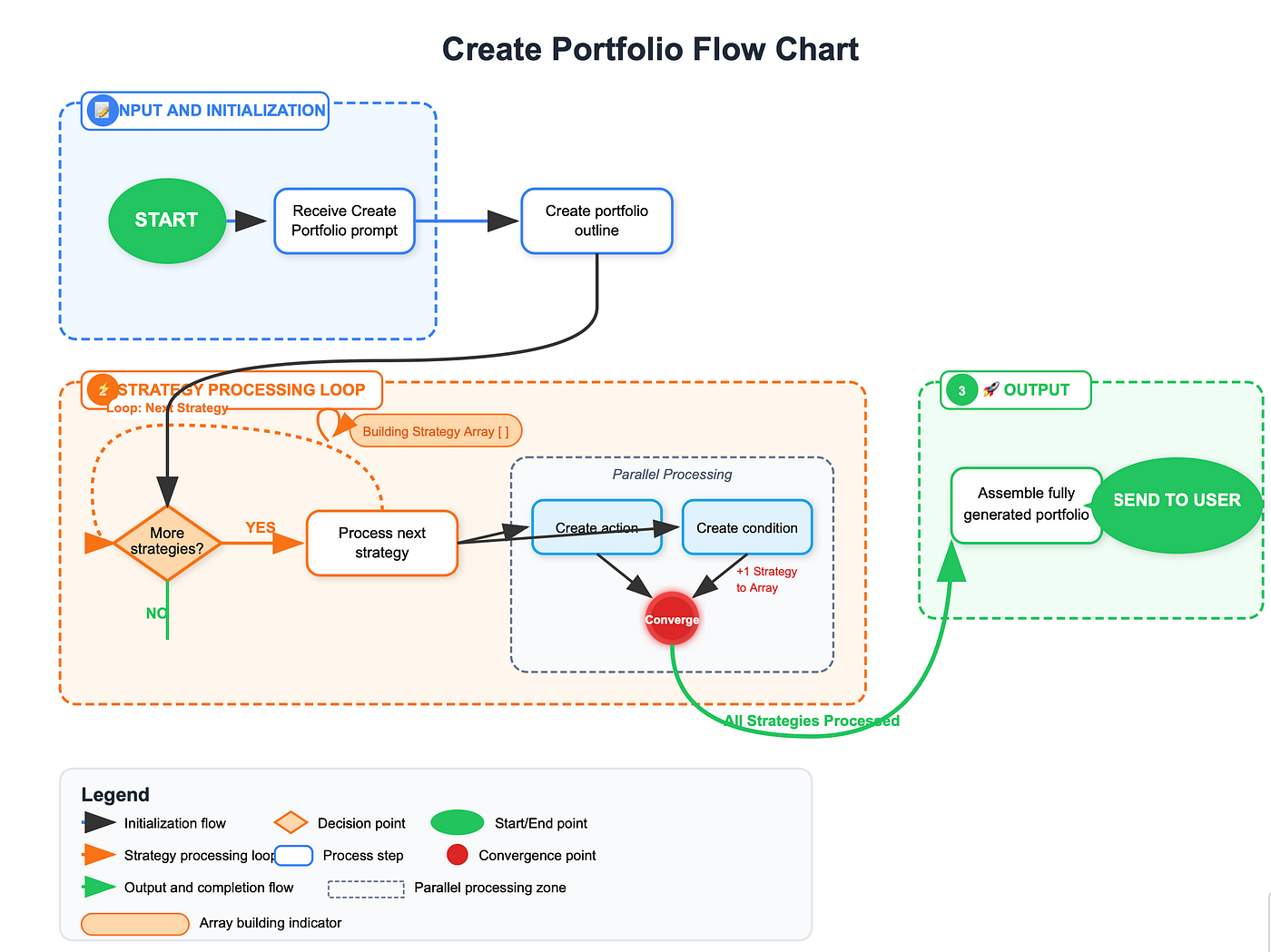
The system first detects that we need to create strategies and so generates a portfolio outline. This includes a description of the trading strategies.
Then each strategy is processed further with LLMs. We generate an action (such as buying or selling an asset) and a condition (such as a stock’s price falling below its 30-day average price).
We then take all of the strategies, combine it with the portfolio outline, and send it back to the user.
In this case, I chose to create a portfolio of trading strategies using GPT o1. And wow, it didn’t disappoint.
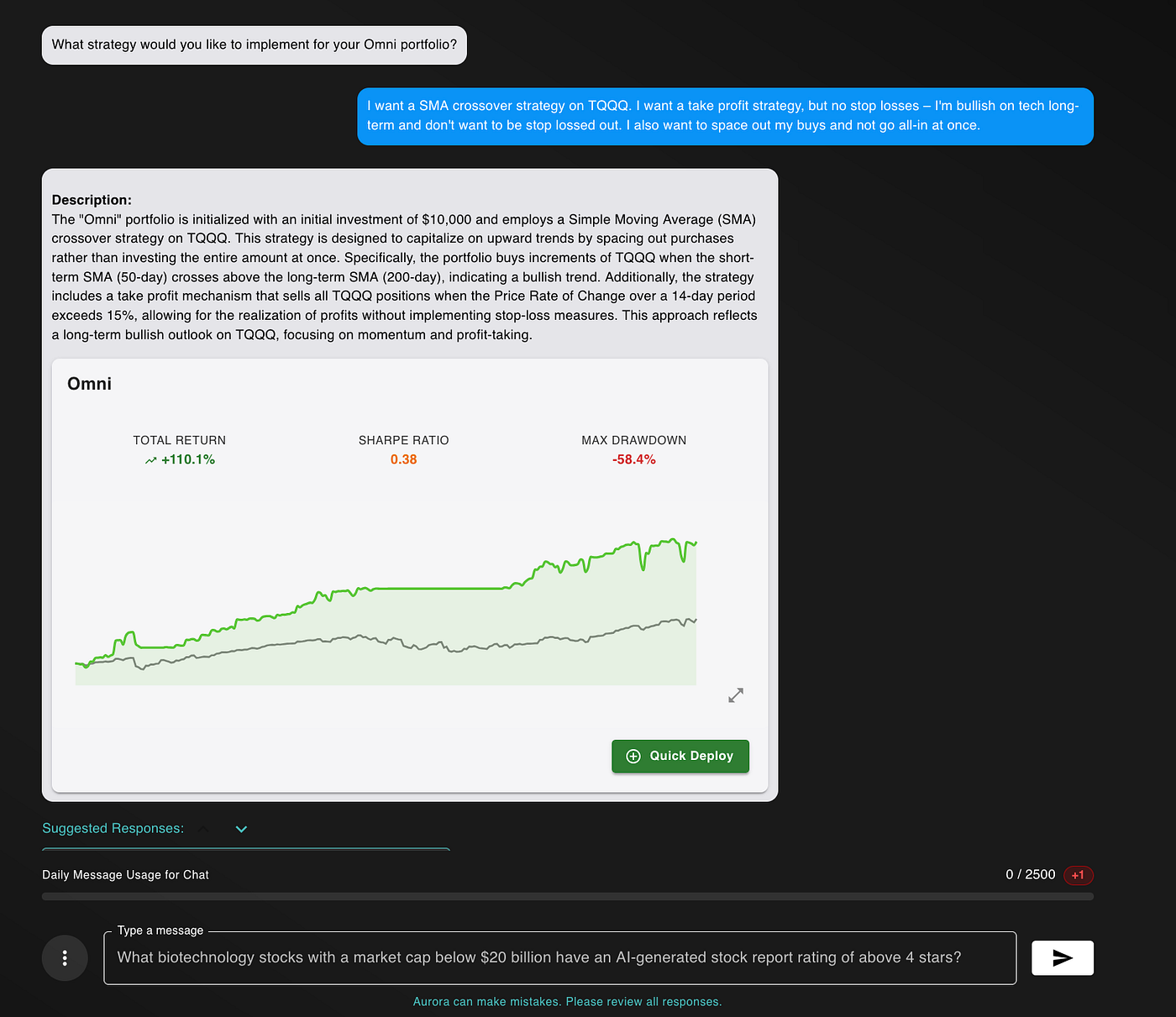
Using the prompt:
“I want a SMA crossover strategy on TQQQ. I want a take profit, but no stop losses – I’m bullish on tech long-term and won’t want to be stop lossed out. I also want to space out my buys and not go all-in at once”
The AI generated a portfolio with a 277% 4-year gain. It has the following rules:
- Buy 2500 dollars in TQQQ Stock when 50 Day TQQQ SMA > 200 Day TQQQ SMA and # of Days Since the Last Filled Buy Order of TQQQ ≥ 7
- Sell 100 percent of current positions in TQQQ Stock when 14 Day TQQQ Rate of Change > 15
These simple rules had insane results. I decided to launch and paper-trade it, to show the world that AI can be used to fully automate algorithmic trading.
The automation did execute the rules. What failed was this one-shot TQQQ strategy’s ability to sustain profitable forward paper performance. That distinction is the point of the experiment.
I Spent 3 Years Building a Trading Bot UI. Then Claude Made Me Start Over
A No-Code Guide For Deploying Trading Strategies With my app NexusTrade, you can create any trading idea you can…
nexustrade.io
Discovering the Failed Promise of the Market Beating AI Strategy
The way I re-stumbled on this portfolio is by pure coincidence.
I recently redesigned a large portion of my algorithmic trading platform, including the Public Portfolios (now called Community Portfolios page).
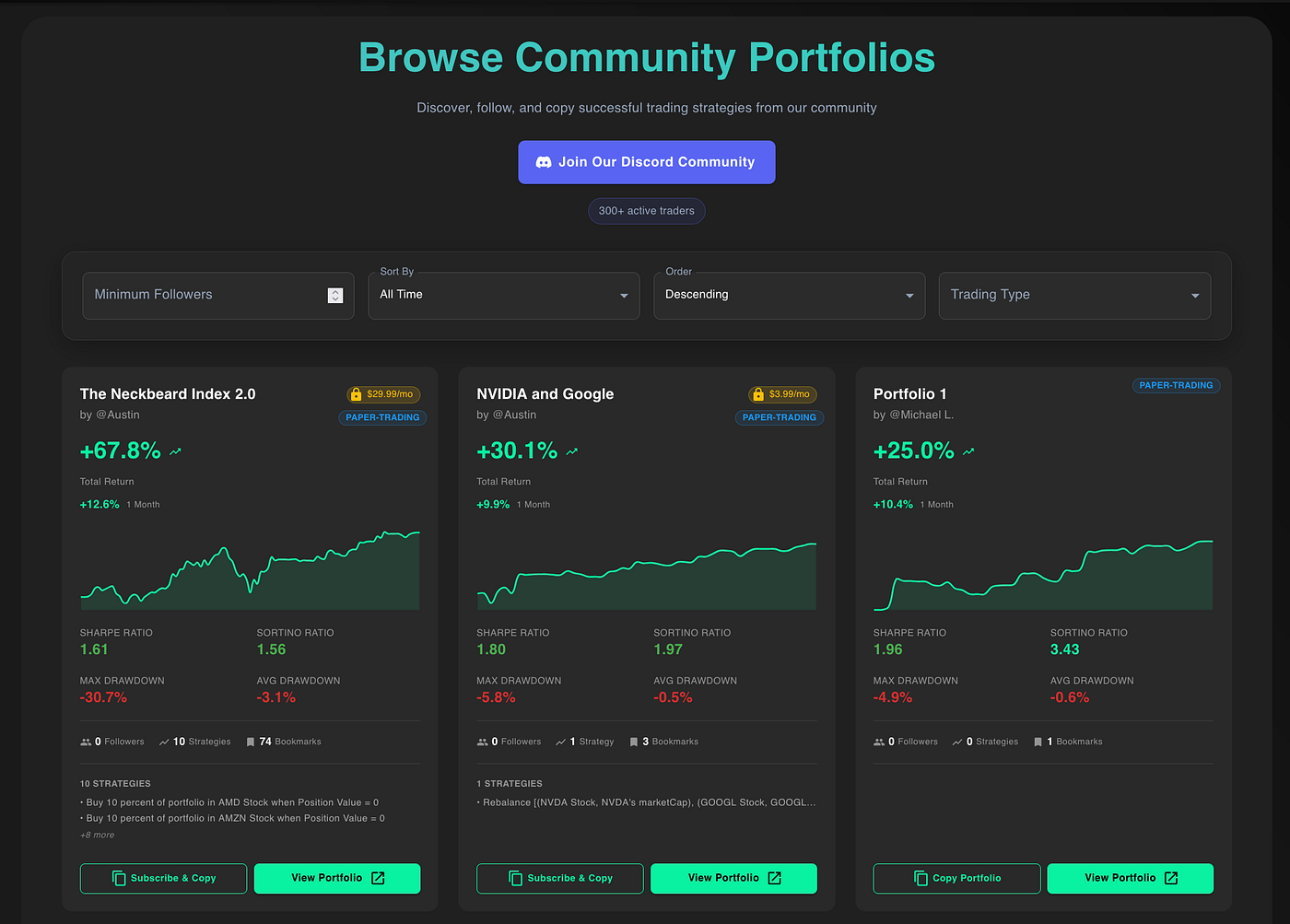
With this redesign:
- I added performance metrics, graphs, and other indicators onto each card
- I created a button to allow users to clone these strategies with the click of a button
- Users can sort through the best (and the worst) portfolios
Going through my UAT testing for this work, I noticed that the worst portfolio by far was the OpenAI o1 one.
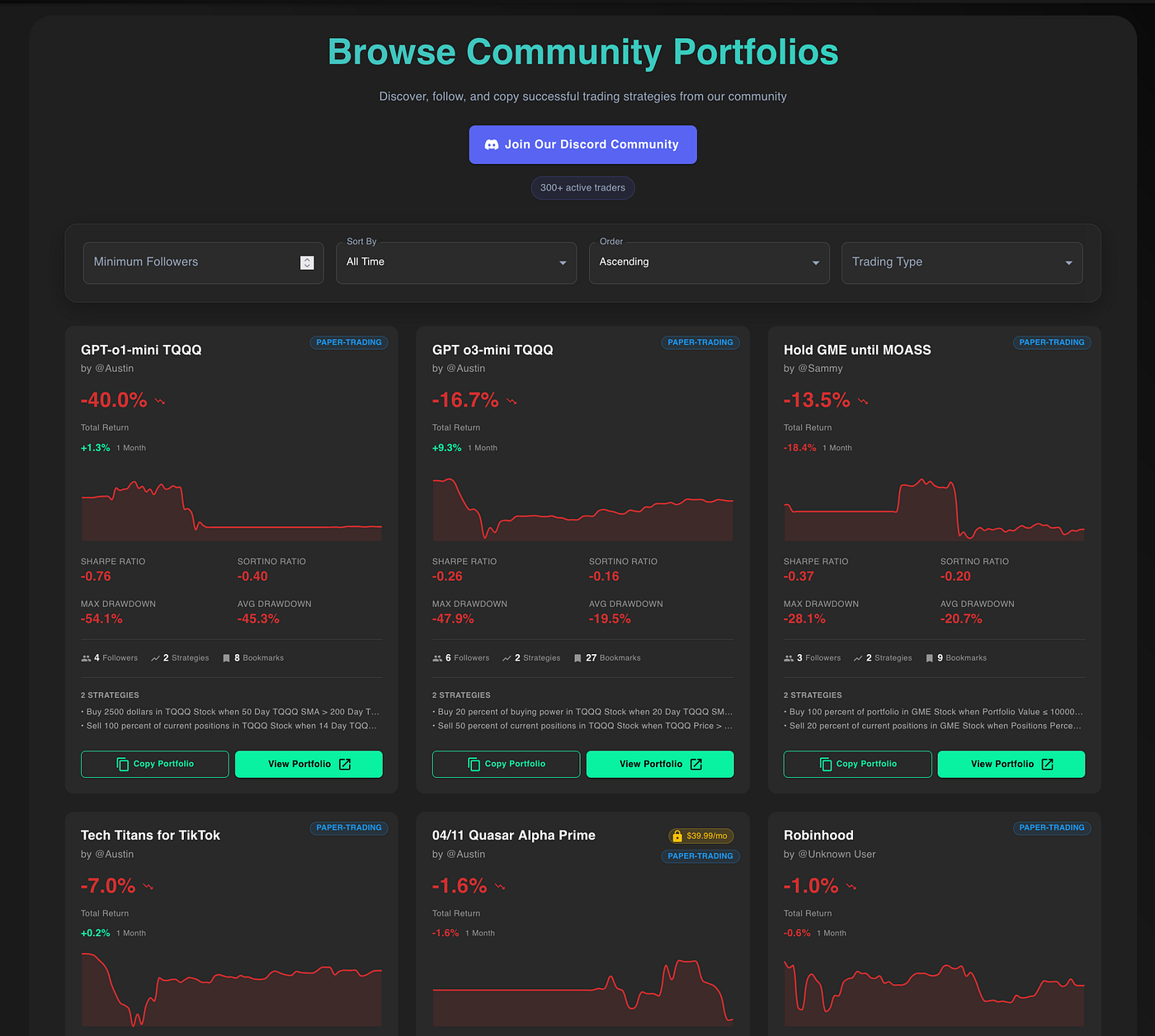
But it’s not the only strategy that failed. Many of the worse trading strategies deployed on the platform were fully generated by AI.
But why?
The Worse Trading Strategies on the NexusTrade Platform
It’s okay. You can laugh. It’s funny.
nexustrade.io
Tracing the AI-Generated Portfolio’s Downfall Step-by-Step
Let’s trace the portfolio’s history to see where it went wrong.
1. Initially soars 22% by December
At the very start of the experiment, the portfolio soars, gaining 22% of its portfolio value in 3 short months.
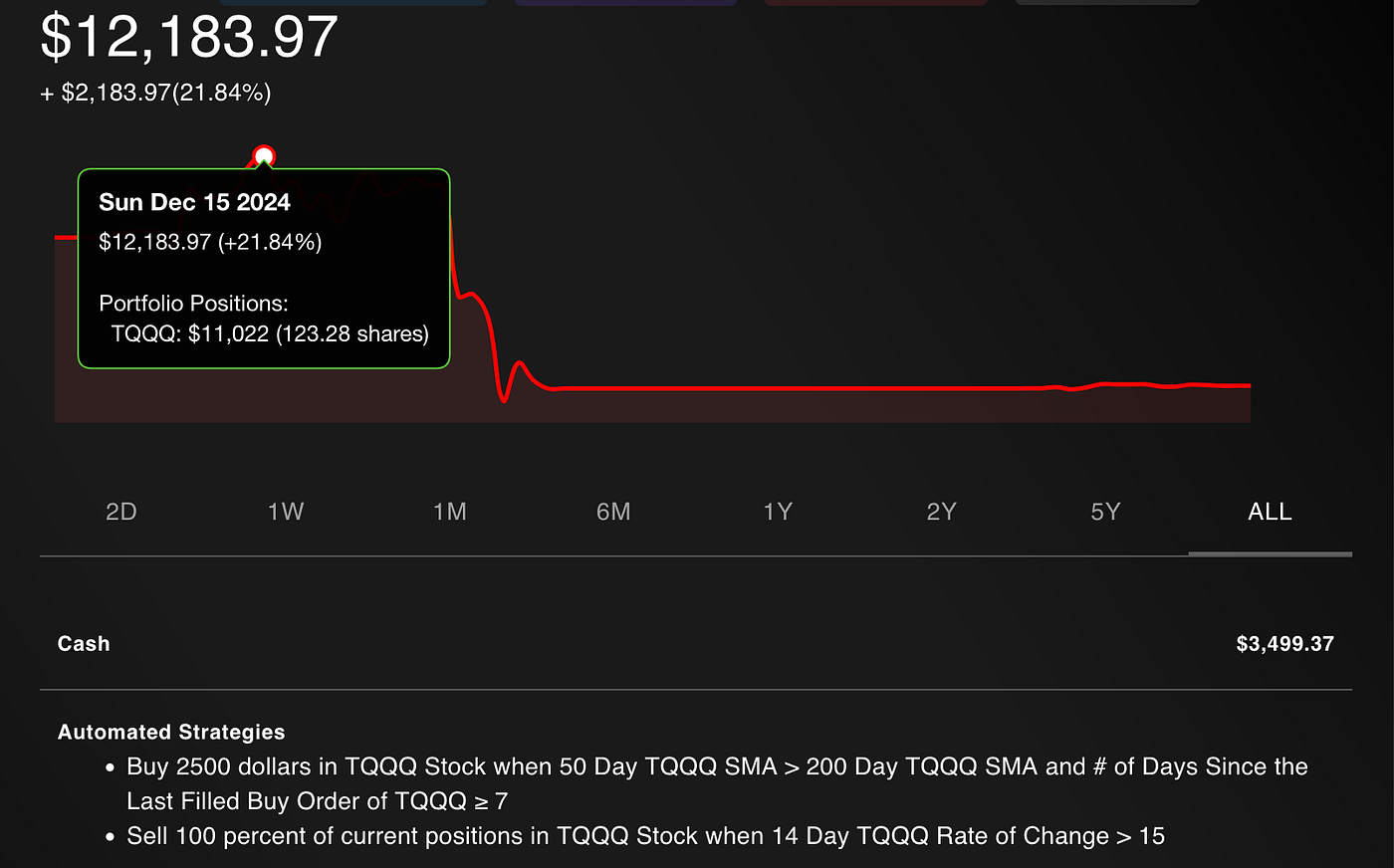
It went downhill after this.
2. Holding during a dramatic downturn
After that, the market became choppy, remaining roughly flat after the election of President Trump. It stayed this way until March.
Then, an incredible downturn happened. Trump announced tariffs on most of the world, which shocked the global economy.
From Feb 14th to April 7th, the S&P500 fell roughly over 18%. The portfolio was fully allocated throughout the worse of the bear market and loss over 44% from its starting value.
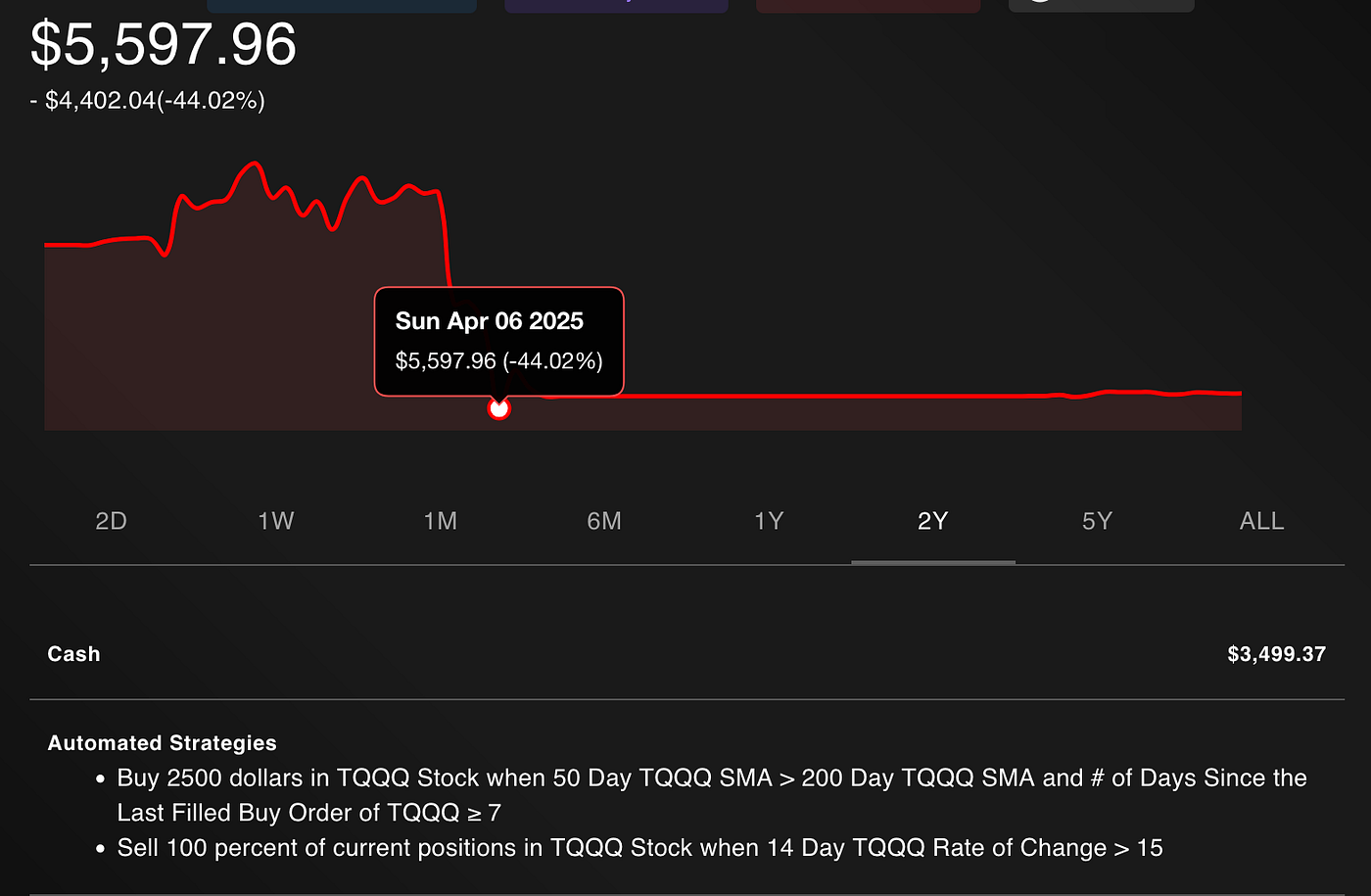
But it gets even worse.
On April 9th, Trump announced he was delaying the tariffs for 90 days. This caused the entire market to soar. TQQQ did exceptionally well, rising more than 38%.
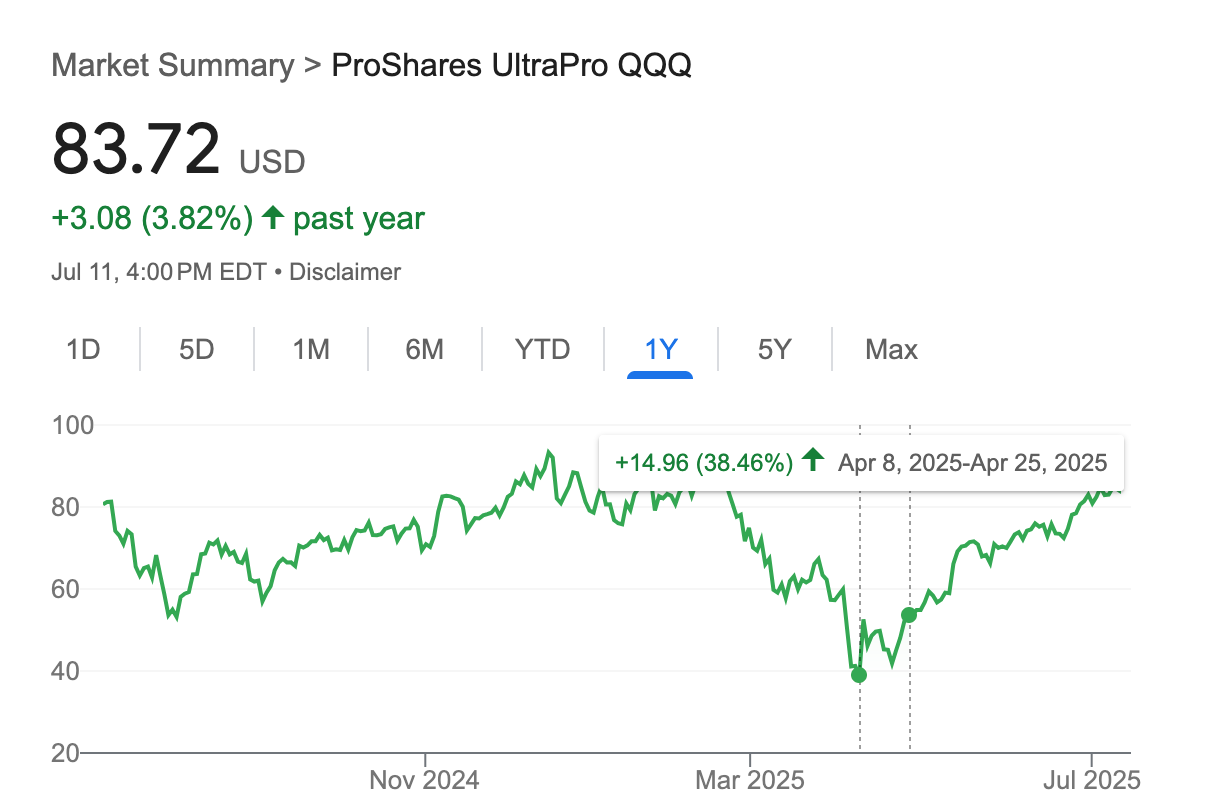
This caused our portfolio’s selling conditions to trigger right before the massive relief rally, solidifying its monumental loss permanently as the rest of the market soared to all-time highs.
This part is critical: the printed sell rule tests 14-day rate of change, not profit relative to the position’s purchase cost. A rebound can therefore trigger a sale while the position is still at a loss. Adding a “position not down” condition is a proposed variant, not a demonstrated improvement; it needs its own frozen test period and risk review.
Absolutely devastating.
A Graveyard of the Empty Promise of AI-Generated Trading Strategy
Scrolling through the Community Portfolios from worse to best, we see several trading strategies that were nearly 100% generated by AI, including:
- The linked portfolio is labeled GPT-o1-mini TQQQ The article calls the model o1 elsewhere; the source does not supply a provider model ID that resolves that naming difference. (Down a whopping 40.0%)
- GPT o3-mini TQQQ (Down a terrifying 16.7%)
But what happened?
Static and Unchanging Trading Strategies
These trading strategies aren’t actively being managed by me, an AI, or anybody.
They are “fire and forget”.
Because of this, they lack larger scale contexts on the market. When stocks turned previously, the specific rules did well on past data, but couldn’t translate to the real-world (nearly Black Swan-like) crash due to the tariffs.
That’s the biggest flaw.
Strategies That Aren’t Grounded in Evidence or Theory
But in addition to being fire and forget, these strategies don’t have real evidence that they will translate to outsized returns.
No journaling or self-reflection. No hypothesis for why the rules worked. Nothing.
Thus, there was nothing we could really blame… we don’t know why these strategies worked!
Incredibly High Risk Leveraged Trading Strategies
This goes without saying, but these strategies used leveraged instruments. They were designed from the get-go to be incredibly high risk! This high risk demonstrated itself clearly, as this strategy fell drastically as the overall market soared!
Evidence of the riskiness was evident (but not emphasized) in the original article, where we saw the sharpe ratio and max drawdown. This combined with the lack of a real risk management plan is a recipe for disaster.
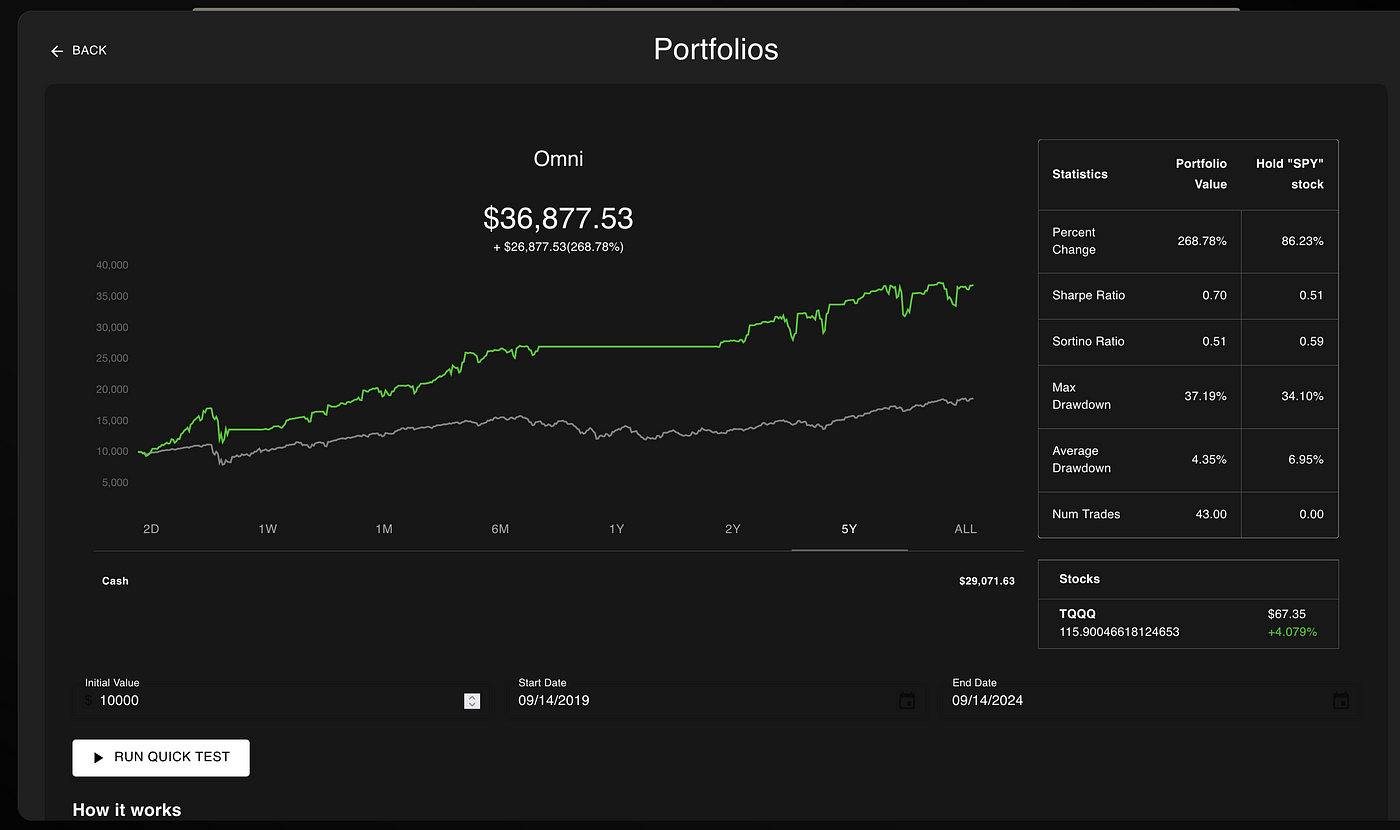
With many of these AI-Generated trading strategies being some of the worse in the platform, you would think that would be a massive blow to using AI for algorithmic trading.
You would be incredibly wrong.
The Great Deal of Silver Linings
This experiment marks one of the most successful experiments I’ve launched with the NexusTrade platform. I collected data to learn from, extracted real-world results, and gathered a large list of silver linings and future opportunities.
Discovering What Works and What Doesn’t
This experiment showed me exactly what AI is good for and what it’s not.
This example shows why I should not treat an impressive one-shot backtest as proof of a durable strategy. It does not establish that every one-shot strategy must fail.
However, AI can do other things which helps with algorithmic trading, including:
- Translating my ideas from natural language into insights.
- Help me prototype and test ideas with less manual configuration
- Filter out the noise to focus on the things that truly matter.
For example, if we sort the Community Portfolios from greatest to worse, we see several highly profitable trading strategies with insane sharpe and sortino ratios.
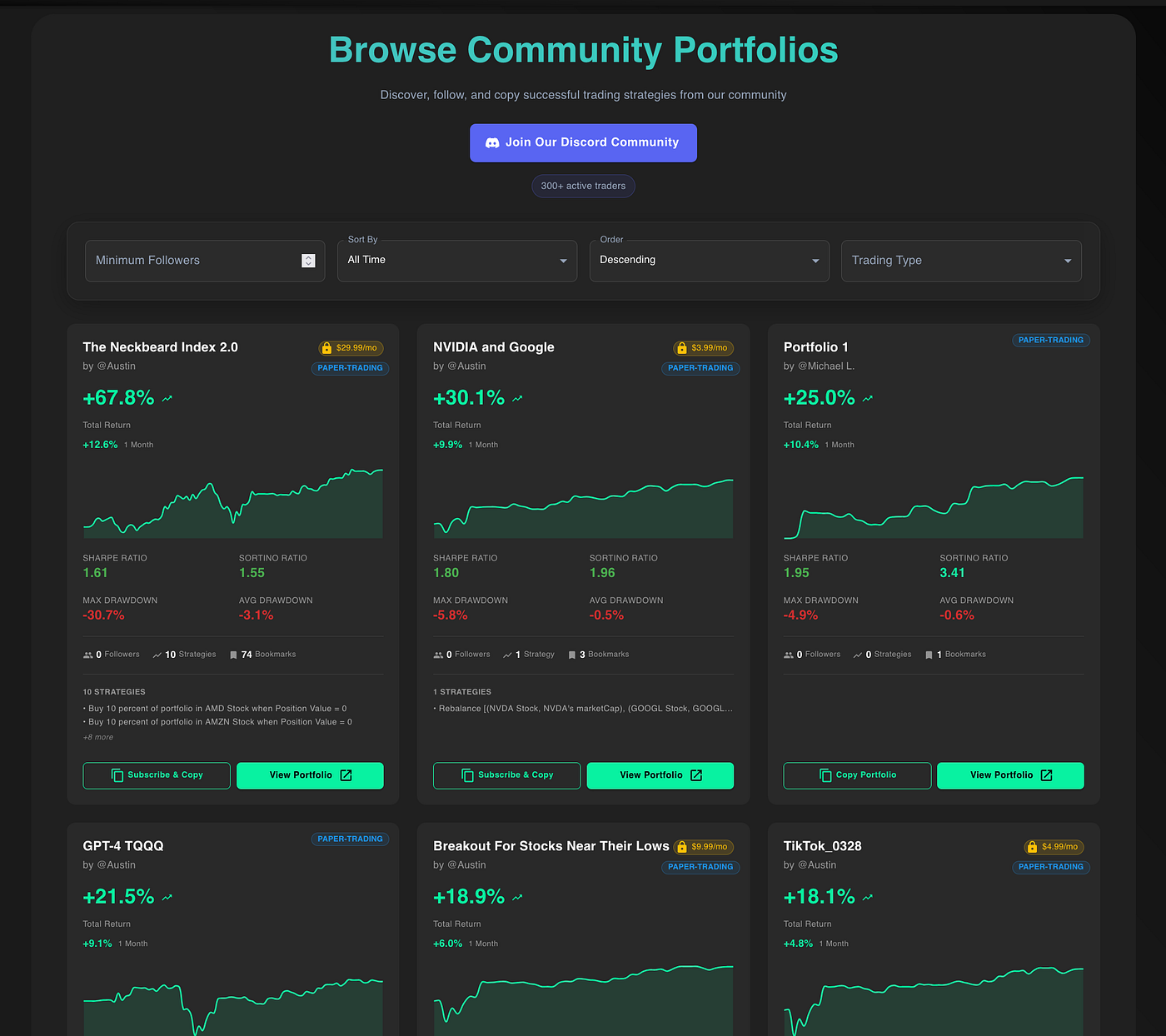
Many of the top strategies shows a clear pattern (with 5/6 of them were created by me). Of these, most of these capitalized on emerging trends (for example, the rise of artificial intelligence) or had robust backtest results more based on stock fundamentals.
For example, in this article, I talked about how NVIDIA and Google were some of the best AI stocks in the market.
These two stocks are by FAR the best investments for artificial intelligence
The ultimate algorithmic trading strategy for the AI revolution
medium.com
Since writing that article, this simple Google/NVIDIA rebalancing strategy is over over 30%.
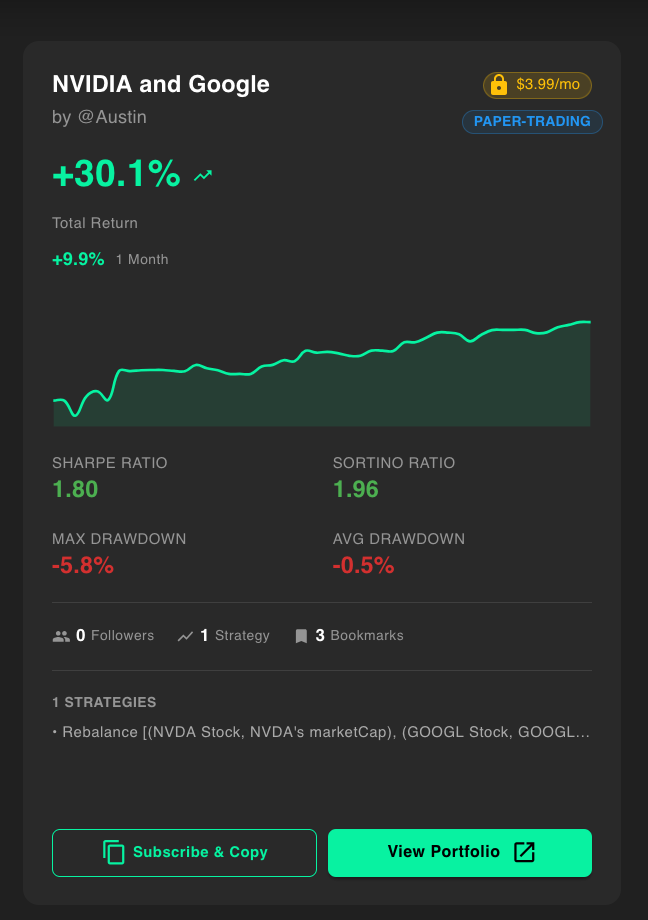
While we can’t say for sure what will happen in the future, we can continue to gather data, gain insights, and become more knowledgeable on what works and what doesn’t.
Massively Increased Confidence In Backtesting Accuracy
Another HUGE silver lining is that I gained MASSIVE confidence in my system’s backtesting accuracy.
I built NexusTrade to share code between backtesting and live-trading with an event-driven architecture. The idea is the system is agnostic to whether its performing a backtest or whether its running in the real world. It just runs the same for everything.
Being a software engineer (and not a financial engineer), I always wondered if I built the system correctly to accurately backtest strategies.
This experiment gave me massive confidence I did.
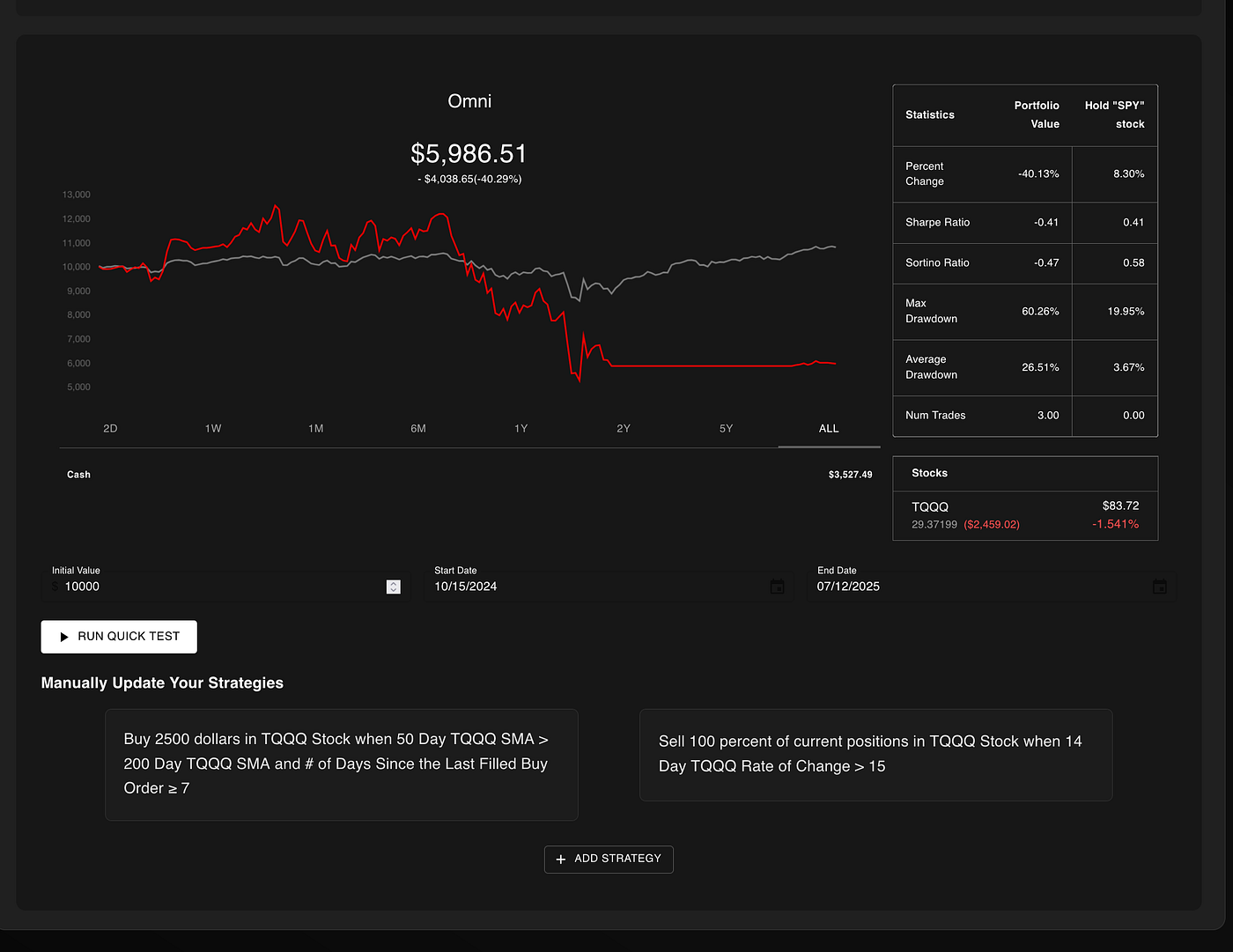
For the displayed October 15, 2024 to July 12, 2025 comparison, the backtest ended at $5,986.51 and the forward paper portfolio at $5,997.88: a difference of $11.37. That supports a close endpoint match for this example. It does not by itself verify every fill, cost, path-dependent risk metric or funded brokerage execution.
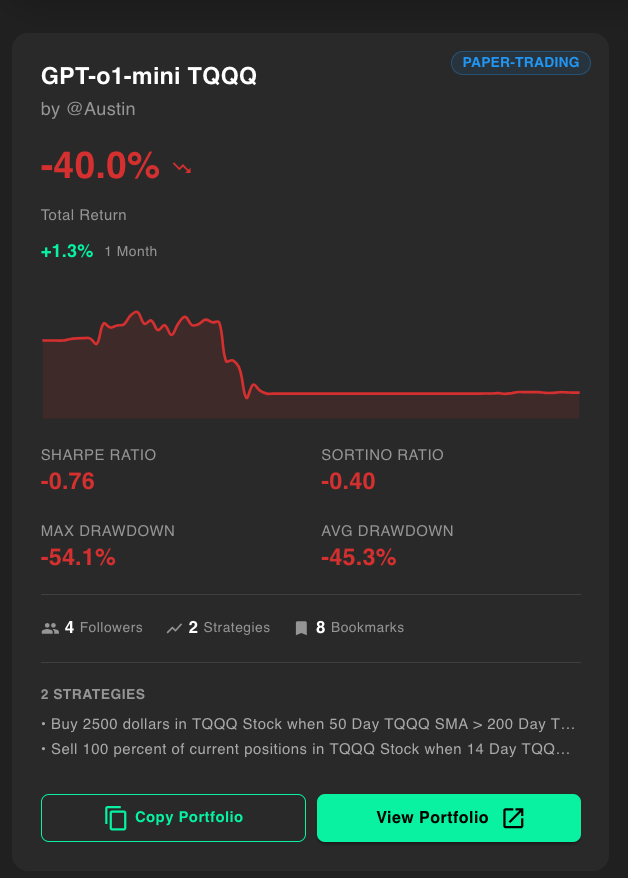
The displayed backtest and forward paper endpoints are close for this example. Their risk statistics use different recorded paths, so the endpoint match does not reconcile every metric or establish funded brokerage execution.
For a no-code trading platform, this is everything.
The Real Lesson: AI Amplifies, It Doesn’t Replace
After 10 months and a monumental loss, this experiment taught me something crucial: Language models are powerful tools, but they’re terrible fortune tellers.
The losing forward paper record led me to three lessons to investigate: active management, a clearer underlying thesis and risk controls. This experiment did not isolate which change would have improved the result.
- Active management — Markets change; static strategies don’t adapt
- Theoretical grounding — Without understanding why a strategy should work, we’re just gambling with fancy math
- Risk awareness — AI optimizes for backtests, not real-world volatility
But here’s what actually worked: When I used AI to accelerate my own ideas — like the NVIDIA/Google AI play that’s up 30% — the results were extraordinary. The difference? Human insight augmented by AI, not replaced by it.
This experiment answers a narrower question: the printed TQQQ rules executed automatically, but failed to preserve the apparent backtest edge in this forward paper record. Whether another one-shot strategy succeeds is a separate test.
But it raised better questions:
- What if AI continuously adapts strategies based on market conditions?
- What if we train models on why the best strategies succeed, not just their rules?
- What if we combine human expertise with AI’s processing power?
The graveyard of failed AI strategies on my platform isn’t a cautionary tale — it’s a roadmap. Every failure teaches us what doesn’t work, bringing us closer to what does.
Ready to build something better? Join me in exploring the intersection of human insight and artificial intelligence. Share your strategies, learn from others, and let’s discover what’s possible when we use AI as a tool, not a prophet.
NexusTrade - No-Code Automated Trading and Research
Perform financial research and deploy algorithmic trading strategies
nexustrade.io
Because the future of trading isn’t about replacing human judgment — it’s about amplifying it.
No comments yet.