I Switched from Claude’s Sonnet to OpenAI’s O1 Model for Financial Research. Finance Jobs WILL NOT Survive.
 7 min read
To preface this article, I want to say that I am not biased. If you search online critically, you'll find countless benchmarks explaining just how powerful this language model is.
But I am not one that's easily persuaded by a benchmark. Beating a benchmark is actually quite simple – simply train the model on the answers. I’ve used models like llama3 and phi, and while they are cute toys that I like to run on my laptop, I wouldn’t dare use them for a production app unless I had a ridiculously strong reason to invest the time and effort.
And the more I use O1, the more that I am mind-blown. I am not even waiting for the O3 model to say this – we’ve genuinely reached artificial superhuman intelligence. Traditional finance jobs will NOT be the same in the next 10 years.
Here’s why.
I just tried OpenAI’s updated o1 model. This technology will BREAK Wall Street
All of my articles are 100% free to read! Non-members can read for free by checking out this link.
medium.datadriveninvestor.com
Summarizing “Reasoning” Models
The O1 model is a Large Reasoning Model. Unlike traditional large language models, these models actually take time to “think” about the correct answer, employing complex techniques, such as chain of thought prompting and reinforcement learning.
You would think that this “thinking” is a marketing gimmick — that it doesn’t actually results in better outcomes, and it's just a way for OpenAI to siphon $200/month from the average Joe.
I’m here to declare that it is NOT a gimmick.
It IS super intelligent.
Here’s why.
What am I defining as Super Intelligent?
My definition of “super intelligent” is different than most people…
I will say a model is super intelligent if it is smarter than the majority of the population.
There’s already strong evidence that this is the case right now. The linked tester reported O1 scoring 120 on the Norway Mensa online test.
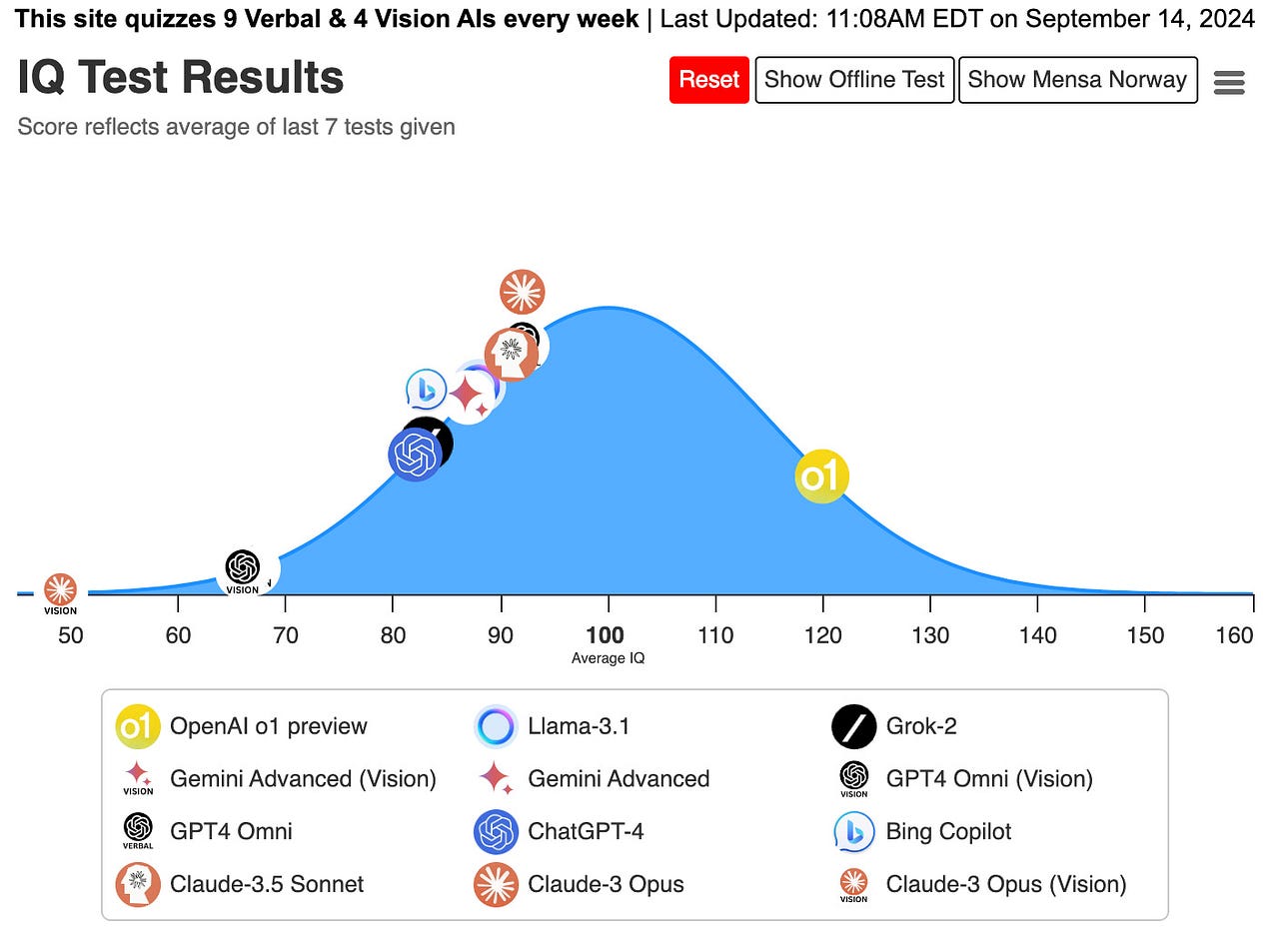
But for my definition of Super-intelligence, I am not talking about it IQ on a random test.
My definition here is proficiency on the complex financial tasks I am asking the model to perform. In these recorded examples, O1 made research queries much easier for me. I did not test a human population or establish how long those tasks would take 97% or 3% of people.
The task I’m talking about is complex financial analysis.
Using LLMs for Financial Research
Language models excel in financial research, but it sucks in the naive approach.
What you DON’T do in order to perform financial analysis
Naively, you’d ask an LLM questions such as “what AI stocks have the highest market cap?”
Because these models don't have access to real time information, they simply won't give you the correct answer.
At best, the model is smart enough to know that it does not know the answer. At worse, it will outright lie to you, a process known as hallucinations.
Instead, we can use large language models to generate queries.
What the prompt engineering experts will do instead
Smart people use platforms like NexusTrade instead.
NexusTrade - AI-Powered Algorithmic Trading Platform
Learn to conquer the market by deploying no-code algorithmic trading strategies.
nexustrade.io
NexusTrade is an AI-Powered algorithmic trading platform. It employs the following technique to facilitate financial analysis.
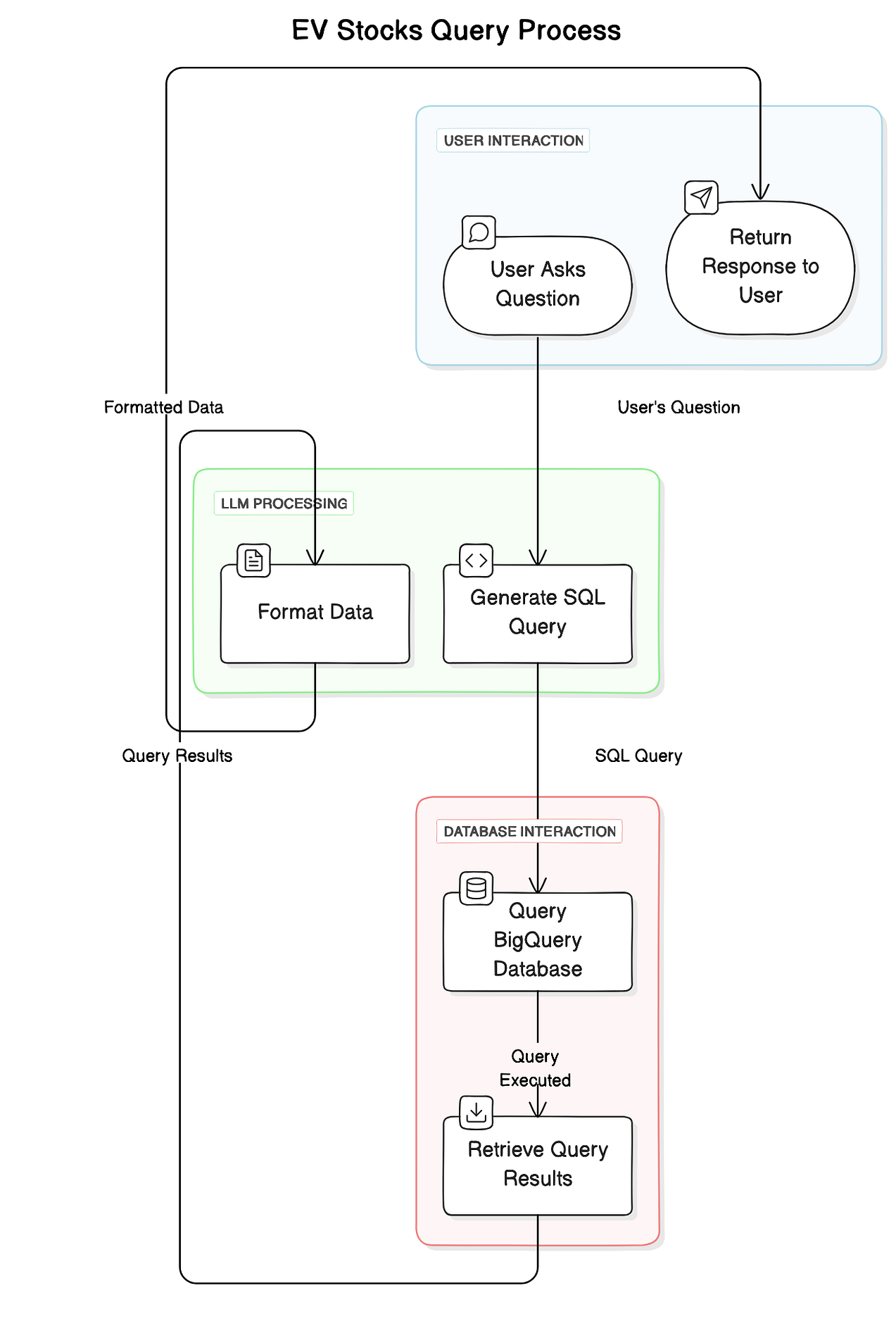
A query is used to retrieve data from a database. Data scientists and financial analyst write queries to find patterns in the stock market.
However, using the LLM to write the query, we allow an AI model to retrieve real-time financial information. After receiving the results, the LLM further process it either by formatting it, or combining it with other insights.
In theory, any LLM should be suitable, and for basic questions, they are.
In practice, O1 is at a level that no other language model is even close to.
The Stochastic Parrot Claude vs The Enlightened O1

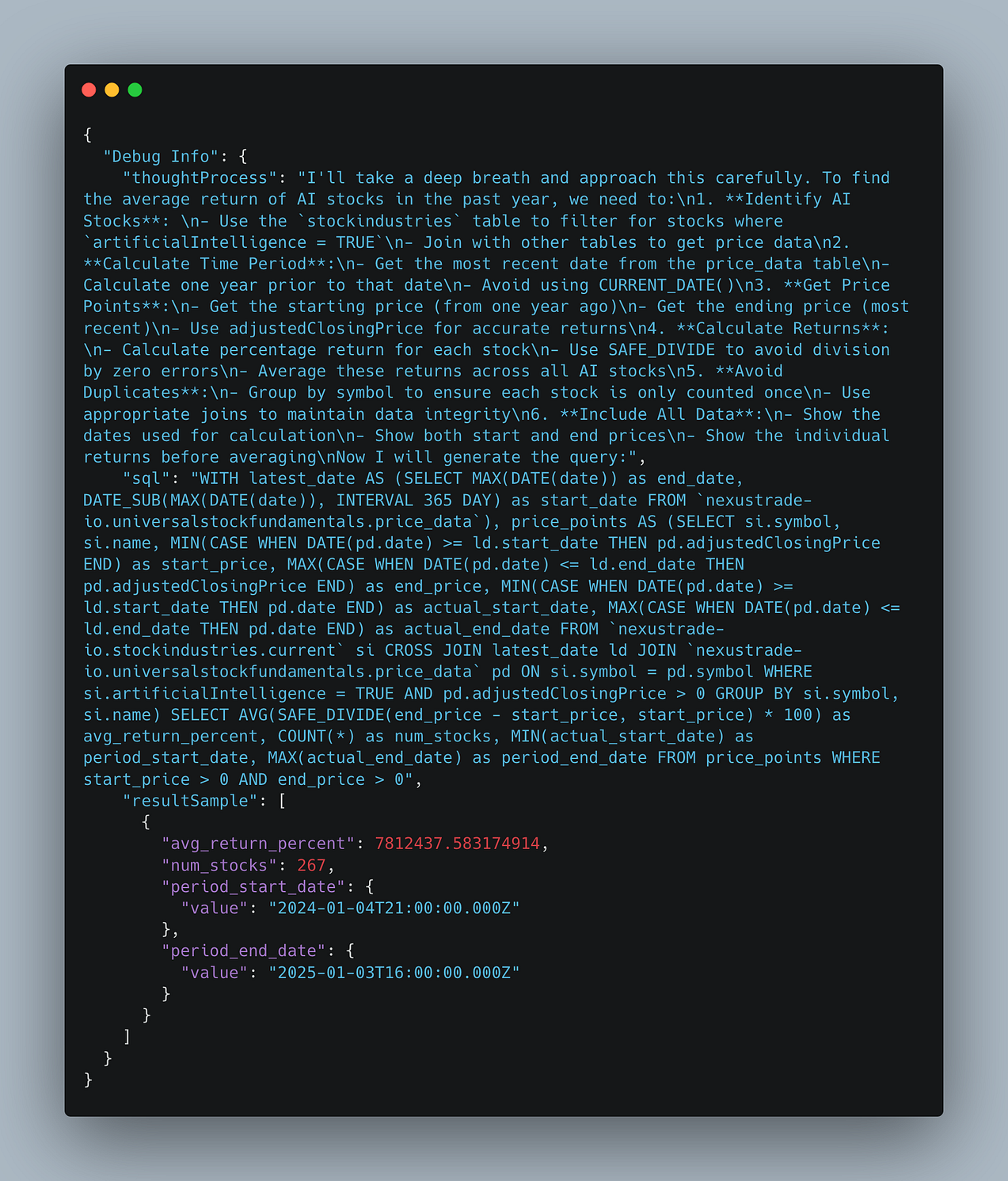
Using NexusTrade, if you were to ask Claude for the average return of all AI stocks in the past year, it’s embarrassingly wrong…
At a value of 7.8 MILLION percent.
Apparently, we could all be trillionaires right now…
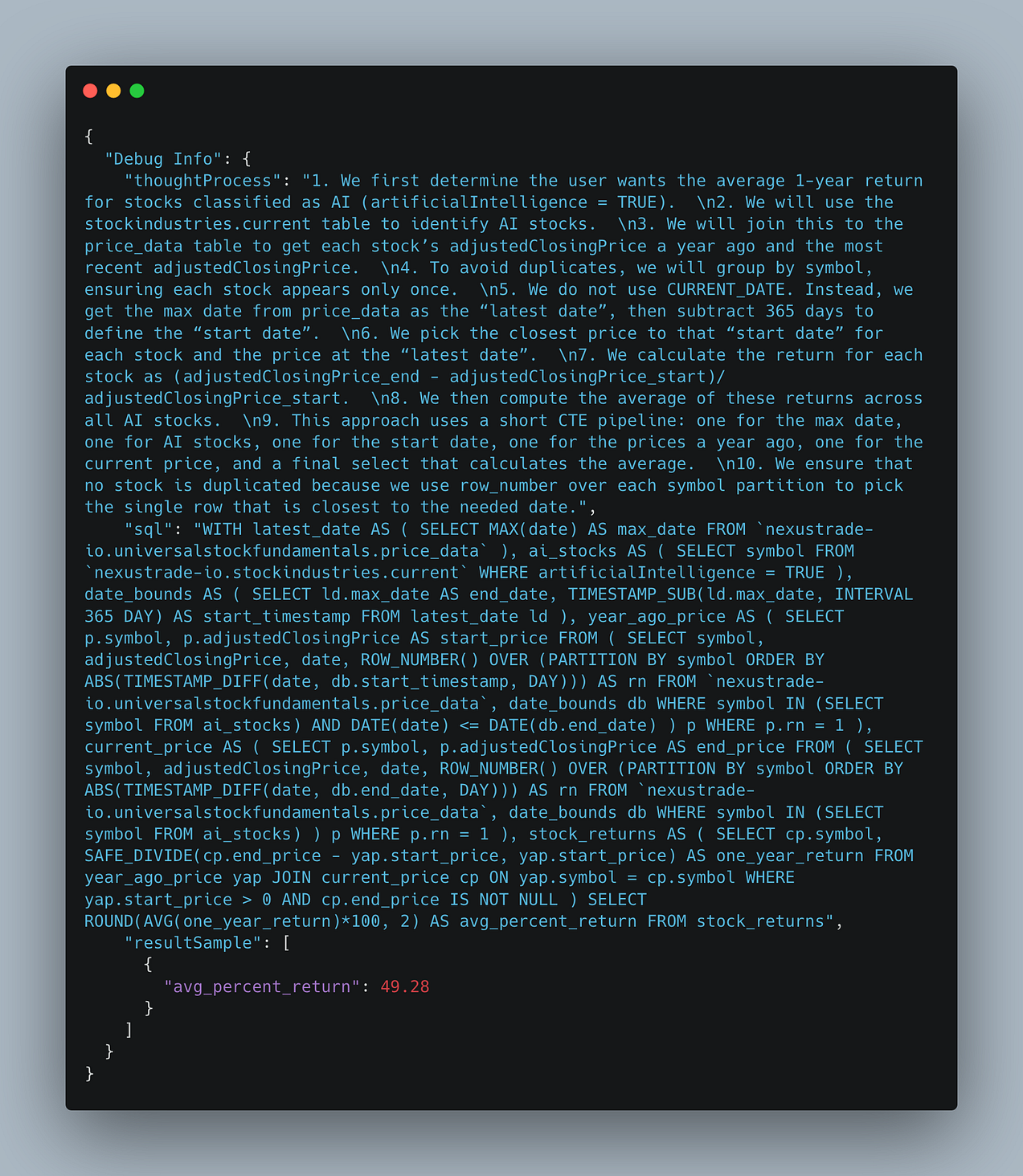
In the shown O1 example, the model returned an answer on the first attempt. I could inspect the query rather than spend that attempt manually assembling it.
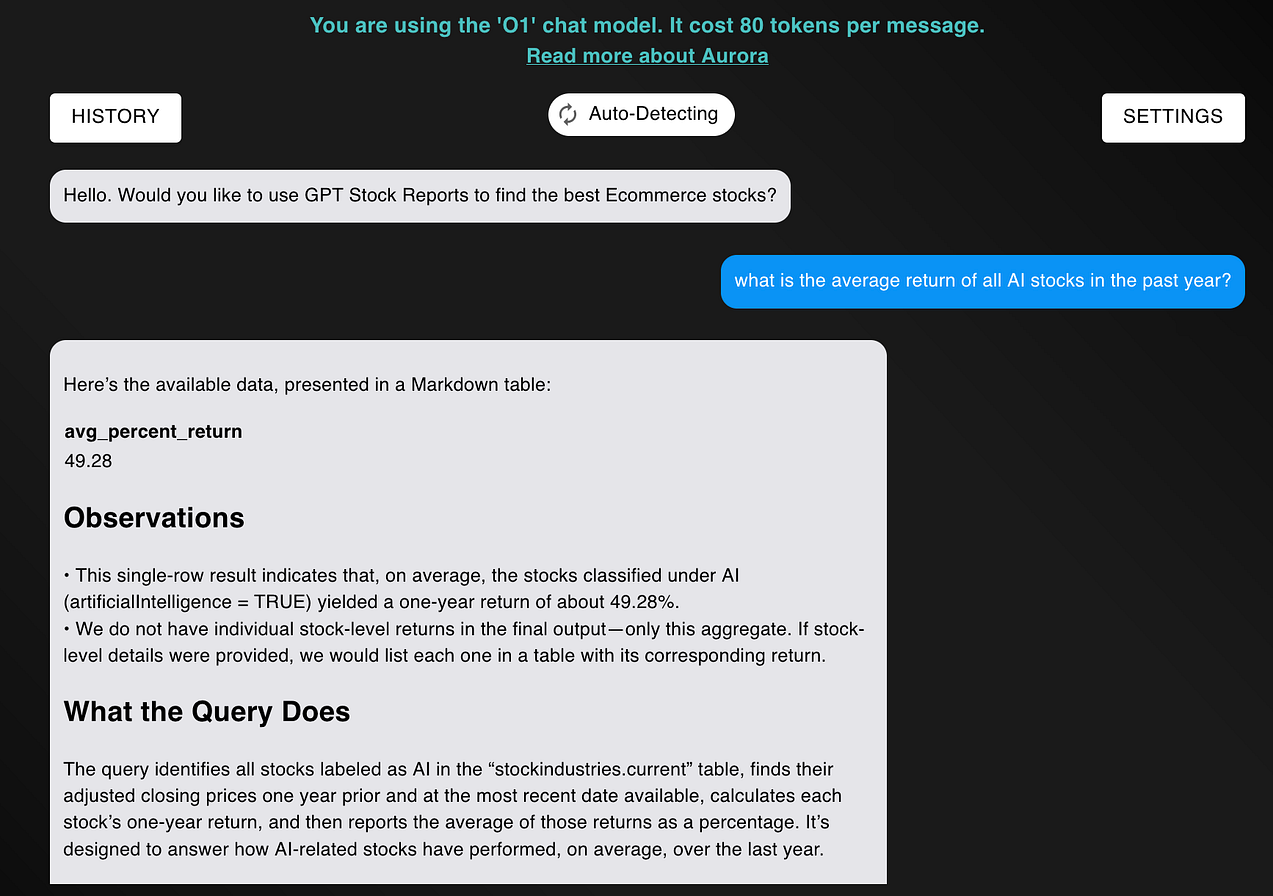
This is not cherry-picked. Throughout the past month, I have found that O1 is capable of answering EXTREMELY complex financial analysis questions.
For example, I took this question one step further.
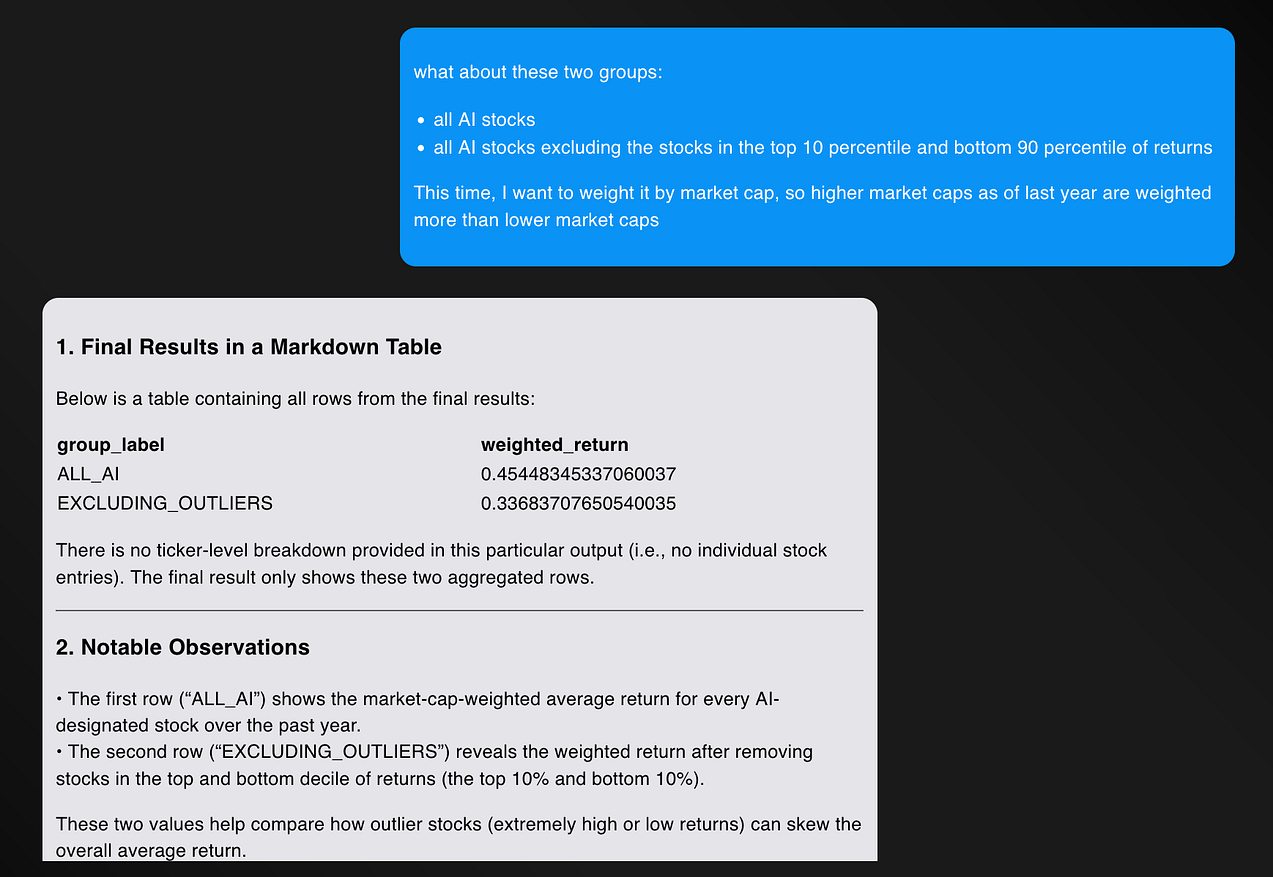
With O1, I could ask the challenging financial questions shown here and inspect its first-attempt answers within minutes. That convenience was why I preferred it for these tasks.
For example, I asked:
what about these two groups:
* all AI stocks
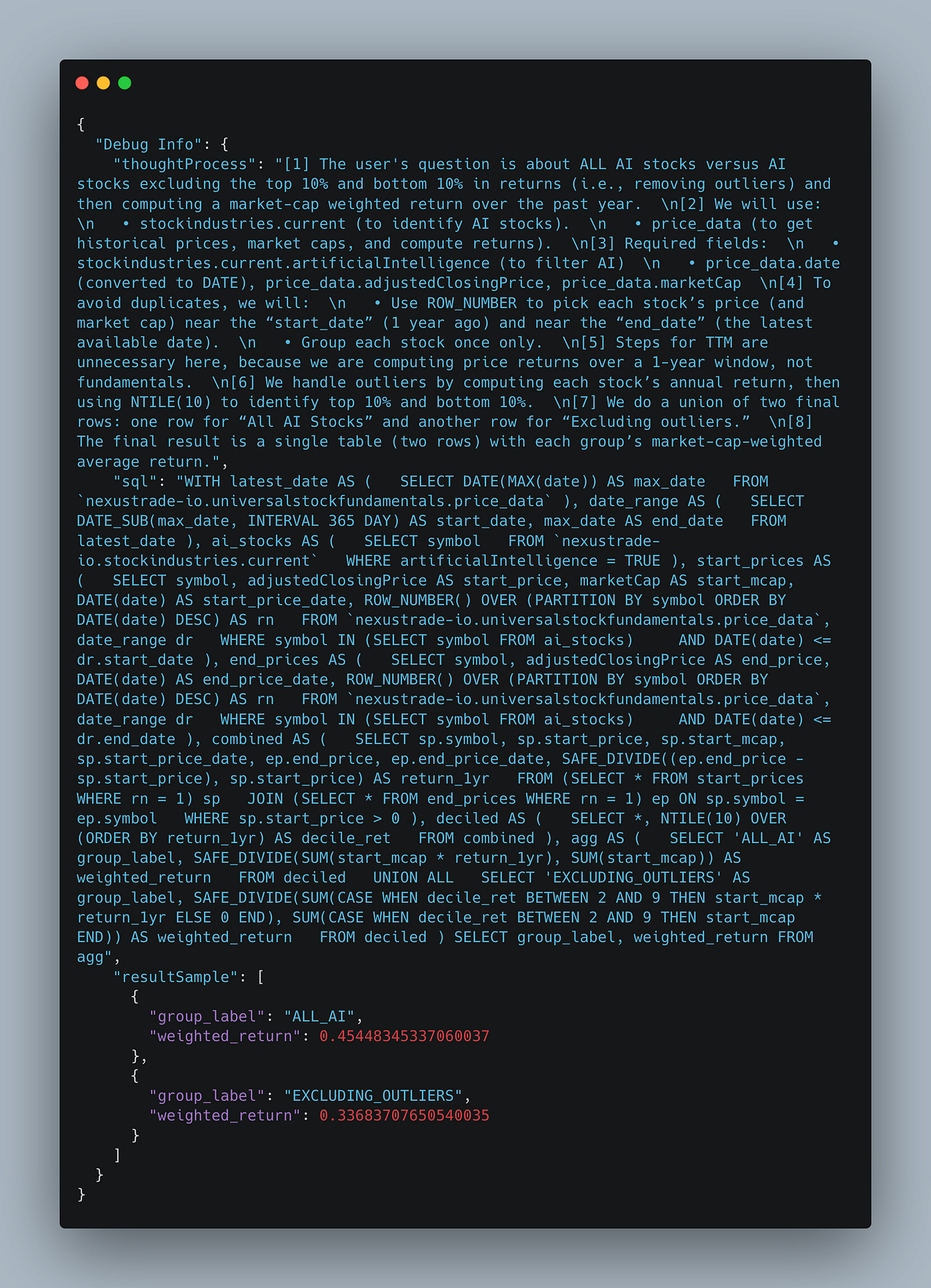
* all AI stocks excluding the stocks in the top 10 percentile and bottom 90 percentile of returnsThis time, I want to weight it by market cap, so higher market caps as of last year are weighted more than lower market caps
It returned the filtered analysis on the first try. The retained group still needs the predicate and row checks described below.
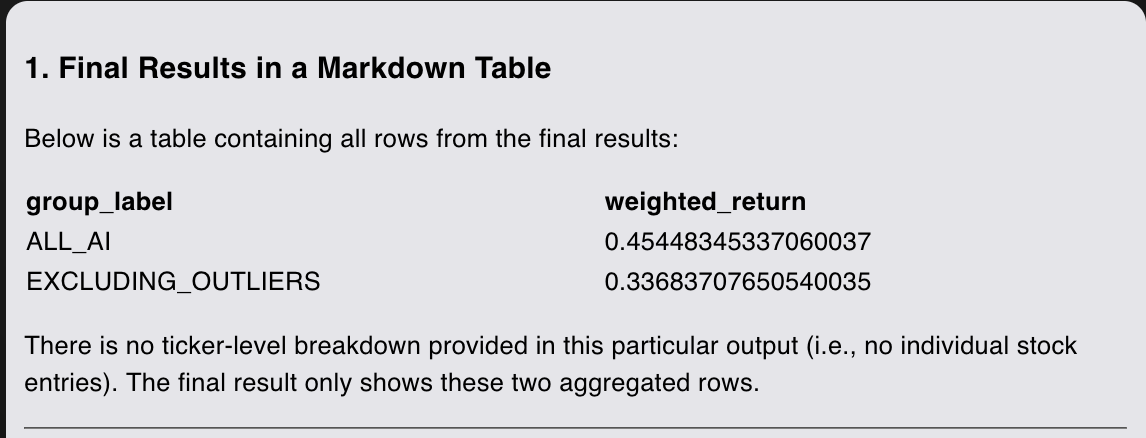
The reported outputs are about 45% market-cap-weighted return for all AI stocks and 33% for the filtered group. The request above says to exclude the top 10 percentile and bottom 90 percentile, which does not define a usable retained middle band. Before accepting the filtered figure, read Appendix 3’s exact predicates and the linked returned rows, state the retained percentile band and stock count, and verify the weights against the prior-year market-cap date. Those details are not given in this prose.
I can’t reiterate enough – I retrieved this answer in minutes. Even an experienced, highly intelligent SQL expert would likely need 30 minutes to several hours to write the same query.
I am dumbfounded. I couldn’t even perform the same analysis on Claude. I would need to do some complex prompt engineering, advanced techniques like retrieval-augmented-generation, and god-forbid fine-tuning.
But with O1, I can just ask my question.
In these displayed examples, o1 returned useful-looking queries without the additional prompt work I had needed with Claude. That is my January 2025 observation. Inspect the source dates, selected universe, grouping and arithmetic before accepting it. Read the original conversation and queries.
AI Stocks Average Return Analysis
An analysis of the average returns of AI stocks over the past year, including insights on market-cap-weighted returns…
nexustrade.io
Concluding Thoughts
For some reason, we moved the goalpost on what artificial super intelligence means.
If we use our common sense, we know that it means an AI model that's smarter than smart human beings.
And I don't know about you, but I personally know maybe one or two people that is smart enough to write a database query complex as OpenAI’s O1 model.
I preferred this recorded O1 response to the shown Claude 3.5 Sonnet response because it gave me a useful first query to inspect. The filtered result still needs the predicate, period and source-row checks described here.
Now, I'm not going to claim that this is perfect. Because of the significant increase in accuracy, we might be more prone to trusting the results out of the box whereas we may have applied more scrutiny with other models.
That is objectively a bad thing — the costs for mistakes for this model are higher because we hold it to a higher standard.
But objectively, this is a good problem to have. The OpenAI O1 model is super intelligent, but every reasonable definition of the words.
And this is the dumbest it’ll ever be.
My prediction is that this will transform traditional finance jobs over the next decade. What I demonstrated here is historical query generation and result formatting. Defining a sensible question, checking its data and interpreting what the answer means remain separate work; this comparison does not measure an entire analyst’s job.
For the query-writing work shown here, I expect models to change the time and staffing needed. The article does not provide a timed human comparison or a full-workflow cost and accuracy study.
The world will be a much scarier place in 2026.
Thank you for reading! As of January 5th, 2025, there are VERY few platforms that allow you to utilize OpenAI O1 for financial research. In my research, I found literally one: my app NexusTrade.
Prepare a defined weighted-return research request. Review the universe, endpoint dates, retained percentile band, query and stock counts before accepting an average.
Thousands of already have. Why haven’t you?
NexusTrade - AI-Powered Algorithmic Trading Platform
Learn to conquer the market by deploying no-code algorithmic trading strategies.
nexustrade.io
Appendix
The following appendix shows the exact queries and thought processes generated by the model. These are important for verifying the claims I make in this article, but wouldn’t flow well to insert into the middle of the article.
1. Claude 3.5 Sonnet query for “what is the average return of AI stocks in the past year”
2. OpenAI O1 query for “what is the average return of AI stocks in the past year”
3. OpenAI O1 query for “what about these two groups: all AI stocks and all AI stocks excluding outliers, with returns weighted by market cap”
No comments yet.